The GCC Compliance Puzzle: VAT, Arabic Invoices, and Hijri Calendars
If you're a contractor in the Gulf Cooperation Council (GCC), VAT compliance isn’t optional. Since its introduction in 2018, VAT has transformed how businesses operate in countries like the UAE, Saudi Arabia, and Oman. Add to this the requirement for Arabic invoicing and compatibility with Hijri calendars, and you’ve got a serious administrative headache.
We’ve seen contractors struggle with disconnected systems that don’t talk to each other. One software manages VAT, another handles invoicing, and yet payroll is a manual spreadsheet. Not ideal. The result? Missed compliance deadlines, messy tax filings, and penalties that eat into already thin margins. Let’s break down the issues and actionable solutions.
Why Your ERP Needs Arabic Support
Here’s the thing: many ERP systems weren’t built with GCC contractors in mind. They assume Gregorian calendars, English-only interfaces, and generic compliance frameworks. But GCC realities demand more:
1. Arabic Invoices
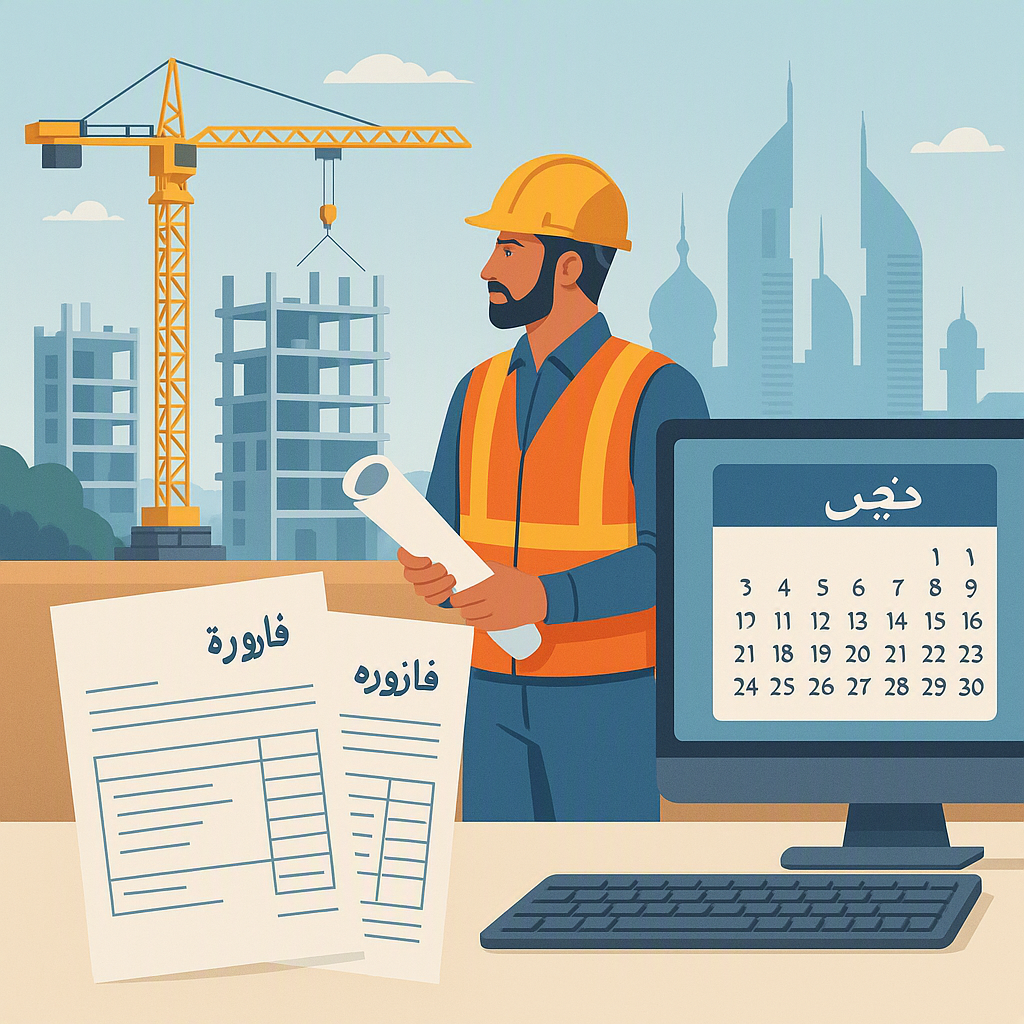
VAT invoices in GCC countries must be bilingual (English and Arabic). This isn’t just a suggestion; it’s a regulatory requirement. The absence of proper Arabic invoicing can result in penalties, rejection of invoices by clients, and unnecessary back-and-forth corrections.
Without an ERP capable of generating bilingual invoices automatically, contractors are often forced to translate invoices manually. This process is:
- Time-Consuming: Manually typing out invoices in Arabic doubles the workload and delays payment cycles.
- Error-Prone: Arabic is a complex language, and mistakes in translation can have legal and financial repercussions.
Actionable Steps:
- Invest in an ERP with built-in Arabic invoicing capabilities.
- Test the invoice generation feature to ensure it complies with GCC VAT laws.
- Train your team on the bilingual invoice review process to catch errors before submission.
2. Hijri Calendar Support
The Hijri calendar is used for payroll and government filings in Saudi Arabia, and contractors operating there must comply. If your ERP doesn’t support dual calendar systems, you’ll constantly recheck dates manually, which increases the risk of payroll errors and delays.
Actionable Steps:
- Confirm whether your ERP supports both Gregorian and Hijri calendars.
- Set up payroll systems to automatically sync with Hijri dates, especially for filings tied to religious holidays or local regulations.
- Regularly audit payroll workflows to verify calendar-based accuracy.
3. Right-to-Left (RTL) Interfaces
Arabic text flows right-to-left (RTL), which means that software interfaces must be optimized accordingly. A system that doesn’t accommodate RTL formatting looks unprofessional, confuses users, and may lead to data entry mistakes.
Actionable Steps:
- Choose an ERP system with RTL interface support.
- Test the usability of the RTL feature to ensure it’s intuitive for Arabic-speaking users.
- Solicit feedback from local staff who will use the system daily.
VAT Compliance: More Than Just Filing
VAT isn’t just about filing returns. It’s about tracking every transaction properly—from procurement to billing. GCC contractors often manage complex projects with multiple subcontractors and suppliers. Without an ERP that integrates VAT tracking into the entire workflow, you risk:
1. Revenue Leakage
Failing to apply VAT correctly to progress claims, supplier invoices, and subcontractor payments can result in lost revenue. For GCC contractors managing large-scale projects, even minor errors can compound quickly.
2. Audit Penalties
Tax authorities in GCC countries are strict about VAT compliance, and they conduct regular audits. Errors in VAT filings—whether intentional or not—can lead to fines, reputational damage, and even legal consequences.
3. Cash Flow Delays
If your invoices don’t meet VAT standards, refunds and tax credits can get stuck in bureaucratic limbo. This ties up your working capital and disrupts project timelines.
Actionable Steps for VAT Compliance:
- Implement an ERP system with end-to-end VAT tracking, covering material requisition, purchase orders, subcontractor payments, and client billing.
- Automate VAT calculations to reduce human error during invoicing and reporting.
- Conduct regular internal audits to ensure compliance before external audits.
- Stay updated on GCC VAT laws to incorporate changes into your workflows.
How ProjectsNext Fits the Bill
Many contractors use ProjectsNext to tackle these challenges. While the software isn’t a magic bullet, it’s designed specifically for GCC needs. Here’s what makes it stand out:
1. VAT Compliance Built In
ProjectsNext integrates VAT tracking into every project workflow. Whether you’re generating a material requisition or submitting a client invoice, VAT compliance is baked into the process. This ensures you meet regulations without extra effort.
2. Arabic-Ready Features
From RTL interfaces to automated Arabic invoicing, ProjectsNext aligns with GCC standards. This saves you time and ensures professionalism, reducing errors and improving client satisfaction.
3. Hijri Calendar Support
The system seamlessly accommodates the Hijri calendar for payroll and government filings, eliminating manual date adjustments and reducing compliance risks in Saudi Arabia.
Decision Framework: Should You Invest in ProjectsNext?
| Feature | Generic ERP | ProjectsNext |
|---|---|---|
| Arabic Invoicing | Manual translation | Automatic generation |
| Hijri Calendar Support | Limited or unavailable | Full integration |
| VAT Workflow Integration | Basic | End-to-end compliance |
| RTL Interface | Partial support | Optimized usability |
| Multi-Project VAT Tracking | Difficult to manage | Streamlined workflows |
Common Mistakes GCC Contractors Make
1. Ignoring Arabic Requirements
Some contractors assume bilingual invoices aren’t mandatory. They are. Non-compliance invites fines and delays payments.
2. Relying on Manual VAT Tracking
Using spreadsheets for VAT calculations is risky and inefficient. Automation isn’t a luxury—it’s a necessity.
3. Skipping Hijri Support
If your payroll calendar doesn’t align with local requirements, you’re creating extra work for HR and risking non-compliance.
FAQ
Q: Can I use a generic ERP for VAT compliance in GCC?
A: You can try, but it’s risky. Generic ERPs often lack features like Arabic invoicing or Hijri calendars. You’ll spend more time fixing errors than managing projects.
Q: How does ProjectsNext handle VAT compliance?
A: It integrates VAT tracking into every project workflow—from procurement to billing—ensuring compliance across the board. It also supports Arabic invoicing and Hijri calendars.
Q: Is an Arabic-ready ERP mandatory in GCC?
A: For VAT compliance and professional invoicing, yes. It’s not just about legality—it’s about operational efficiency and avoiding penalties.
Q: What’s the benefit of RTL interfaces?
A: It makes Arabic users more comfortable and reduces errors in data entry. If your ERP interface isn’t optimized for Arabic, users will struggle.
Q: Can ProjectsNext help with multi-project VAT tracking?
A: Yes. It’s built for contractors managing multiple concurrent projects, ensuring VAT compliance across BOQs, scopes, and estimates.
Call-to-Action
If VAT compliance, Arabic invoicing, and Hijri calendars are slowing you down, ProjectsNext can help. Get started free →
Learn more at JobNext.ai - Construction ERP