
How Electrical Project Estimating Can Prevent Cost Overruns and Improve Margins
Margins in electrical contracting are razor-thin. One mistake in your Bill of Quantities (BOQ), and you’ve underpriced the job before you’ve even started. Add disconnected workflows—manual procurement, inconsistent billing, and poor cost tracking—and those slim margins? Gone.
It doesn’t have to be this way.
The Real Problem: Estimation Errors That Snowball
Let’s start where it often goes wrong: the BOQ. Electrical projects typically involve hundreds of line items—wires, conduits, distribution boards (DBs), earthing equipment, and more. Many contractors still rely on Excel spreadsheets or outdated methods to prepare estimates. The problem? Human error. One missed cable length, an incorrect unit rate, or forgetting to account for material wastage can throw off your entire estimate.
But that’s just the tip of the iceberg. Even if your BOQ is flawless, execution often introduces cost overruns. Why? Poor cost tracking. Many contractors don’t have real-time visibility into material usage, subcontractor progress, or resource allocation. By the time you realize you’re over budget, it’s too late to fix it.
What Happens When BOQ Errors Go Unnoticed?
- Underpricing the Project: If your BOQ underestimates the required materials or labor, you’ve already squeezed your margins before work begins.
- Wastage and Rework: Without accurate estimates, teams often over-order materials or face rework from incorrect assumptions.
- Client Disputes: If your costs spiral, clients may refuse to cover additional expenses not agreed upon in the original scope.
A Smarter Way: Structured Estimation With Real-Time Tracking
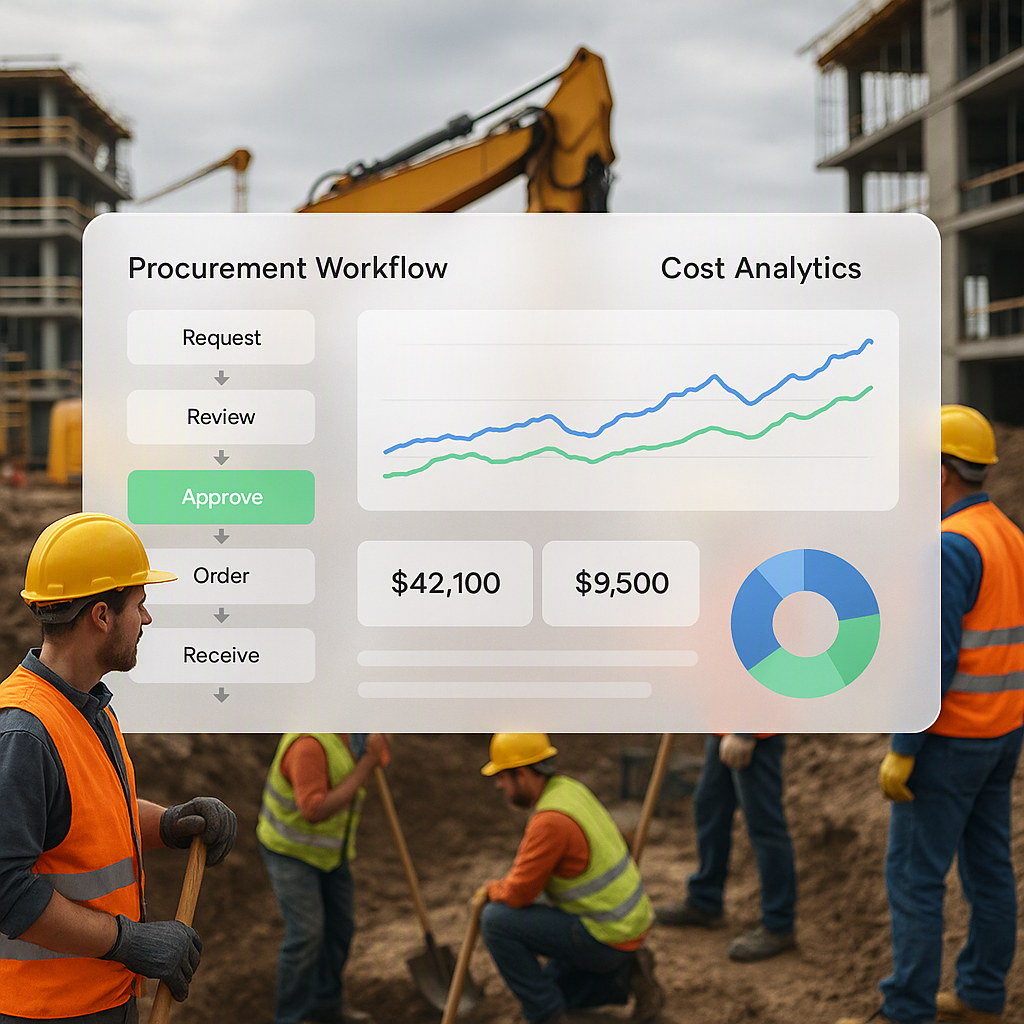
This is where electrical estimating software comes in. A good tool doesn’t just help you calculate your BOQ; it integrates estimation with real-time project tracking. For example, software like ProjectsNext provides a structured BOQ estimation process that connects directly to procurement and execution workflows. Here’s how this approach can transform your projects:
Key Benefits of Software-Based Estimation
- Avoid Underpricing: With built-in rate analysis, you can cross-check unit rates against both historical data and current market trends. This eliminates guesswork and minimizes the risk of underquoting materials or labor.
- Track Costs in Real-Time: Material requisitions (MRs) are directly tied to the BOQ. If your team requisitions more materials than planned, you’ll know immediately. This visibility allows you to course-correct before overruns occur.
- Streamline Approvals: Multi-level approval workflows ensure that costs are controlled at every level. For example, a site engineer’s additional material request won’t go directly to procurement—it will require project manager approval first.
Practical Example: Wiring Works for a Commercial Project
Consider a typical wiring job for a 10-story office building. Your BOQ estimates:
- Cable Quantity: 15,000 meters
- Unit Rate: ₹50 per meter
This means ₹7,50,000 is allocated for wiring materials alone. But here’s where it often unravels:
Without Real-Time Tracking
Your site team requisitions 16,000 meters of cable instead of the planned 15,000. The excess material cost (₹50 x 1,000 = ₹50,000) goes unnoticed until the finance team flags it during reconciliation. By then, the material has been purchased and installed. Recovering this cost from the client becomes difficult, affecting your margins.
With Structured Estimation Software
The requisition for 16,000 meters is flagged immediately because it exceeds the BOQ allocation. The project manager investigates and discovers a measurement error on-site. The issue is resolved before any purchase is made, saving ₹50,000. This real-time insight prevents small errors from snowballing into major financial losses.
Why Real-Time Tracking Matters
The key to preventing cost overruns is catching issues early. A connected system like ProjectsNext doesn’t just help you build a more accurate BOQ; it ensures you stick to it. Here’s how:
Features That Drive Cost Control
- BOQ Locking: Once the estimate is finalized, it becomes the baseline. Any requisitions or scope changes are compared against this locked BOQ, ensuring deviations are flagged.
- Measurement-Based Progress Tracking: For subcontractor works, progress is tied to measurable outputs. For instance, if a subcontractor is paid per meter of wiring installed, their claims can be verified against actual site measurements. This prevents overbilling.
- Integrated Billing: Billing modules ensure you invoice for everything, whether it’s through RA bills, stage-wise billing, or monthly invoices. Missed line items are no longer an issue.
Common Mistakes in Electrical Estimating
Even with the best tools, mistakes happen. Here are the most common pitfalls to watch for:
- Relying on Outdated Rate Schedules: Market rates for materials and labor fluctuate. Always update your rate analysis before finalizing estimates.
- Skipping Scope Reviews: Ensure the scope of work matches the BOQ. If the client adds extra requirements mid-project, update the estimate immediately.
- Underestimating Wastage: Material wastage (e.g., cable offcuts) can significantly impact costs. Factor this into your estimates.
- Ignoring Labor Productivity: Electrical labor rates and productivity vary by region and project type. Use realistic assumptions to avoid surprises.
- Disorganized Procurement: Align procurement with the BOQ. Implement structured workflows (e.g., MR → RFQ → PO) to prevent unnecessary spending.
FAQ: Electrical Estimating and Cost Control
Q1: What’s the biggest cause of cost overruns in electrical projects?
A: Poor estimation and lack of real-time cost tracking. Underestimating material quantities, ignoring wastage, and failing to track expenses in real time are the most common culprits.
Q2: How do I ensure my BOQ is accurate?
A: Use structured estimating software that incorporates rate analysis, historical data, and real-time collaboration. Additionally, involve your site team during scope reviews—they often catch discrepancies that office teams miss.
Q3: Can software really prevent overruns?
A: Software doesn’t replace good management, but it provides the tools to track and control costs effectively. Real-time alerts, automated workflows, and integrated dashboards give you the visibility needed to address issues before they escalate.
Q4: What’s the role of multi-level approvals in cost control?
A: Approvals act as checkpoints to control spending. For instance, if a requisition exceeds the BOQ, it won’t proceed without managerial approval. This process ensures that unnecessary costs are avoided.
Q5: How should I handle scope changes?
A: Always update your BOQ and communicate cost implications to the client before proceeding with additional work. Integrated software connects scope changes to procurement and billing, making it easier to track and recover costs.
Comparison Table: Manual Estimation vs. Software-Based Estimation
| Feature | Manual Estimation | Software-Based Estimation |
|---|---|---|
| Rate Analysis | Prone to errors, outdated | Real-time market comparisons |
| Material Tracking | Disconnected, delayed | Real-time requisition tracking |
| Scope Changes | Manual updates | Automated BOQ adjustments |
| Approval Workflows | Informal or absent | Multi-level, structured |
| Billing Accuracy | Missed line items likely | Integrated and precise |
Conclusion: Structured Estimation is Non-Negotiable
If you’re an electrical contractor, you can’t afford to wing it on estimation. The stakes are too high. Structured estimating tools like ProjectsNext don’t just help you build accurate BOQs—they connect estimation to execution, procurement, and billing. The result? Fewer overruns, better margins.
If you're ready to take control of your project costs, ProjectsNext can help →.
Learn more at JobNext.ai - Construction ERP