
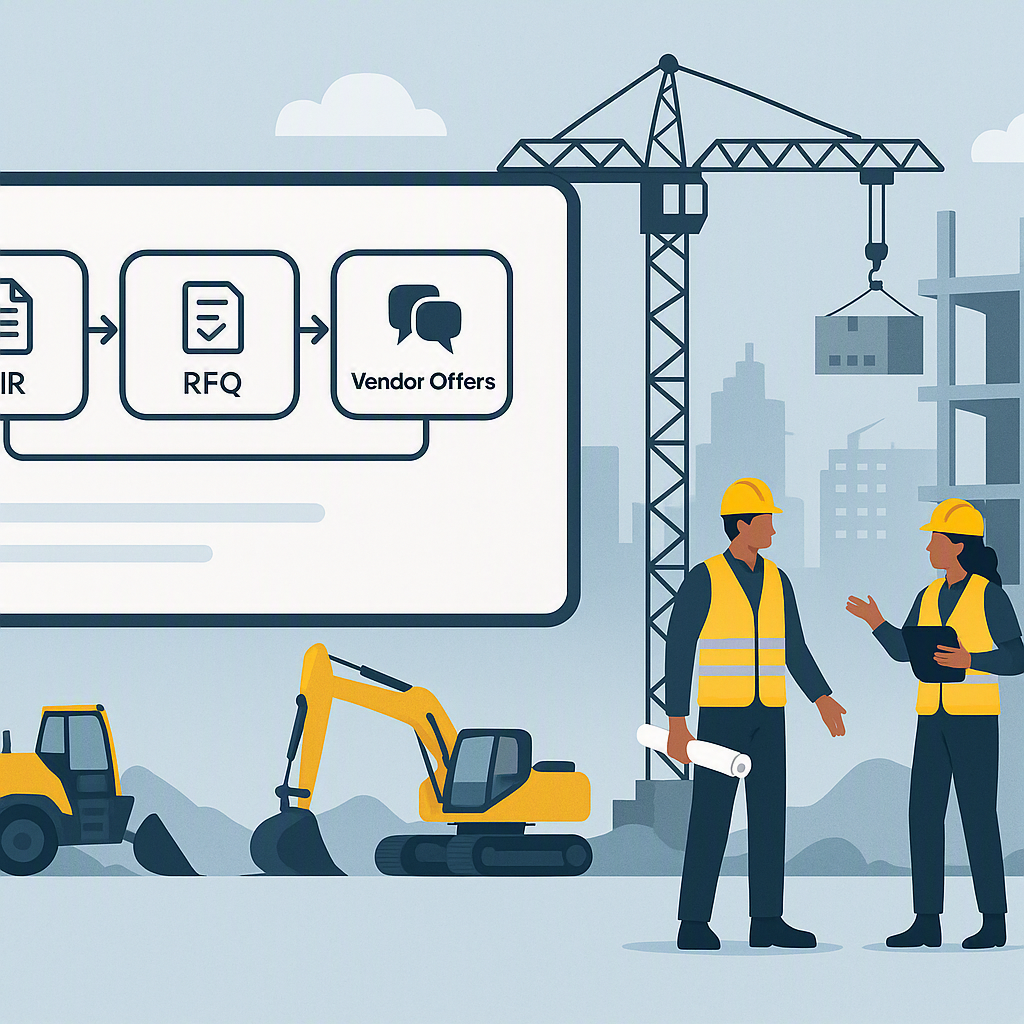
Procurement in Construction: Why It’s a Nightmare
If you’ve worked on construction projects in India or the GCC, you’ve seen it: procurement chaos. Materials delayed because someone forgot to send an RFQ. Multiple vendors delivering the same item to the same site. A project running over budget because no one tracked rates properly. Sound familiar?
This isn’t just annoying—it’s expensive. Procurement issues drive up costs, delay timelines, and create massive headaches for site teams. I've seen contractors lose lakhs in penalties or scrap materials just because their procurement process was a mess.
So, how do you fix it? The answer lies in structured procurement workflows. Let’s break this down into practical steps and explain how to actually make it work.
Step 1: Start with a Clear Material Requisition (MR)
Here’s the thing: if your material requisitions are vague, it’s game over before you even start. Site engineers need to clearly specify quantities, specifications, and delivery dates. If you’re getting MRs scribbled on paper or WhatsApp messages, stop. It’s a disaster waiting to happen.
Why Material Requisition Is Crucial
The material requisition (MR) is the foundation of your procurement process. It’s essentially a request for the materials you need, and it sets the tone for everything that follows. A poorly defined MR leads to incorrect orders, mismatched specifications, and delayed timelines. For example, if you fail to specify the grade of steel required, you might end up with material that doesn’t meet structural requirements, forcing you to reorder and waste valuable time.
Actionable Steps to Improve Material Requisition
- Standardize Fields: Ensure every MR includes essential details like BOQ item codes, required quantities, unit of measurement, and delivery deadlines.
- Use a Centralized System: Implement software to manage MRs. Tools like ProjectsNext let site teams submit detailed requisitions that can be tracked centrally.
- Train Site Teams: Conduct workshops or training sessions to teach site engineers how to create clear, detailed MRs. Avoid vague terms like "ASAP" or "standard size."
Common Mistake: Assuming Site Teams Know Vendor Prices
Many site teams assume they know the best rates based on past experience. They don’t. Material costs fluctuate due to market conditions, seasonal demand, and supplier pricing changes. Relying on outdated knowledge can result in overpaying—or worse, project delays due to budget mismanagement. Always verify rates through a structured RFQ process.
Step 2: Automate RFQs to Vendors
Now that you have structured MRs, the next step is generating and sending RFQs. This is where most contractors I’ve worked with still rely on manual emails or calls. It’s slow, inconsistent, and impossible to track. One missed RFQ, and you’re scrambling to find materials at the last minute—usually at a premium price.
Why Automation Matters
Manual RFQs are riddled with inefficiencies, including missed deadlines, human errors, and miscommunication. Automation ensures speed, accuracy, and traceability. It also standardizes the RFQ process, making it easier for vendors to respond.
Actionable Steps to Automate RFQs
- Leverage Procurement Software: Platforms like ProjectsNext can send RFQs to pre-defined vendor lists based on the material type and location.
- Use Templates: Create standardized RFQ templates that include fields for material specifications, quantities, delivery schedules, and payment terms.
- Set Deadlines: Ensure RFQs include clear submission deadlines to help vendors respond promptly.
- Track Responses: Use software to monitor vendor responses and follow up automatically if needed.
Benefits of Automation
- Time Savings: Automated RFQs reduce the time spent on manual communication and ensure faster responses.
- Error Reduction: Standardized formats minimize misunderstandings and errors.
- Centralized Data: All RFQ data is stored in one place, enabling better decision-making.
Step 3: Compare Vendor Offers Objectively
Here’s where things often go wrong: picking vendors. Procurement heads either pick the cheapest option without checking specs or just go with their "trusted" supplier. Both approaches are risky.
Why Balanced Decision-Making is Essential
The cheapest option isn’t always the best. A lower price might mean compromises in quality, delayed delivery, or hidden costs. On the other hand, blindly trusting a longstanding vendor without comparing offers can result in missed opportunities for cost savings or better service.
Actionable Steps to Compare Vendor Offers
- Set Evaluation Criteria: Define parameters for comparison, such as price, delivery timelines, quality certifications, and vendor reliability.
- Use Scoring Systems: Assign weights to each criterion (e.g., 40% for price, 30% for quality, 20% for delivery, 10% for vendor history) and calculate scores for each offer.
- Centralize Offers: Use a platform to view all vendor submissions side by side, making it easier to identify the best deal.
- Document Decisions: Keep a record of why each vendor was selected. This ensures accountability and provides a reference if disputes arise.
What About Vendor Negotiations?
Automation doesn’t mean you lose the ability to negotiate. In fact, having all offers in one place strengthens your position. Knowing the market rates and delivery timelines gives you leverage to negotiate better pricing or terms.
Step 4: Issue POs with Approval Workflows
So, you’ve picked a vendor. Now what? If you’re still issuing POs manually, you’re inviting mistakes. Incorrect quantities, wrong delivery addresses, and inconsistent terms are common issues I’ve seen.
Why Approval Workflows Are Key
Approval workflows ensure accountability and reduce errors. With a structured process, every PO is reviewed by multiple stakeholders before it’s issued. This prevents overspending, avoids duplicate orders, and ensures compliance with company policies.
Actionable Steps to Streamline PO Issuance
- Implement Multi-Level Approvals: Ensure POs go through at least two levels of review—site engineer and procurement head.
- Standardize PO Templates: Include all necessary details, such as payment terms, delivery schedules, and penalties for delays.
- Link POs to MRs and RFQs: This ensures consistency across the procurement process.
- Track Delivery and Payment: Use software to monitor delivery milestones and link payments to progress.
Pro Tip: Include Payment Milestones
Link payments to delivery milestones in your POs. For example, release 30% on material dispatch, 40% on delivery, and 30% after QC checks. This gives vendors an incentive to deliver on time and meet quality standards.
Why Structured Workflows Matter
At this point, you’re probably thinking, "This sounds great, but do I really need to overhaul my current process?" Yes, you do.
Consider this: in 2021, a study by KPMG found that 69% of construction projects faced procurement delays. And delays translate directly into cost overruns. Structured workflows prevent this by:
- Ensuring material availability on time.
- Reducing over-ordering or duplicate orders.
- Improving vendor relationships through clear communication.
- Providing real-time tracking and accountability.
The result? Lower costs, fewer delays, and happy clients.
FAQ
1. What’s the biggest challenge in construction procurement?
Lack of standardization. When every site uses a different process, it’s impossible to track materials, costs, or vendor performance effectively.
2. How do I convince my team to adopt a structured workflow?
Show them the benefits. Highlight how a streamlined process saves time, reduces errors, and makes everyone’s life easier. Provide training to ensure they feel confident using new tools.
3. What if my vendors don’t want to use new tools?
Start small. Introduce the system gradually and offer training. Most vendors will adopt it once they see how it simplifies their work too.
4. Can I use this system for subcontractor procurement?
Absolutely. The same principles apply: clear scopes, structured workflows, and real-time tracking.
5. How do you address resistance to change in the procurement process?
Communicate the benefits to all stakeholders, provide training, and showcase quick wins to build trust. Involve them in the design and rollout of the new system to ensure buy-in.
Comparison Table: Manual vs. Automated Procurement Process
| Feature | Manual Process | Automated Process |
|---|---|---|
| Speed | Slow, prone to delays | Fast, with automated workflows |
| Accuracy | High risk of human error | Standardized, error-free |
| Tracking | Difficult, scattered records | Centralized and traceable |
| Vendor Communication | Inconsistent, time-consuming | Streamlined, automated |
| Cost Efficiency | Higher cost due to inefficiencies | Optimized through real-time data |
If you’re tired of firefighting procurement issues, it’s time to act. ProjectsNext offers tools to streamline your MR → RFQ → PO workflows. Ready to take control of your procurement? Get started today →
Learn more at JobNext.ai - Construction ERP