Why We Thought Margins Were Safe
For years, we thought tracking project profitability was simple. You set a budget, monitor costs, and compare the two. If you stayed under budget, you won. Right? Not exactly.
Here’s the problem: construction projects are messy. Labor costs fluctuate, materials go missing, and subcontractors submit unexpected bills. By the time you realize your margins are gone, it’s too late.
What Changed? Real-Time Dashboards
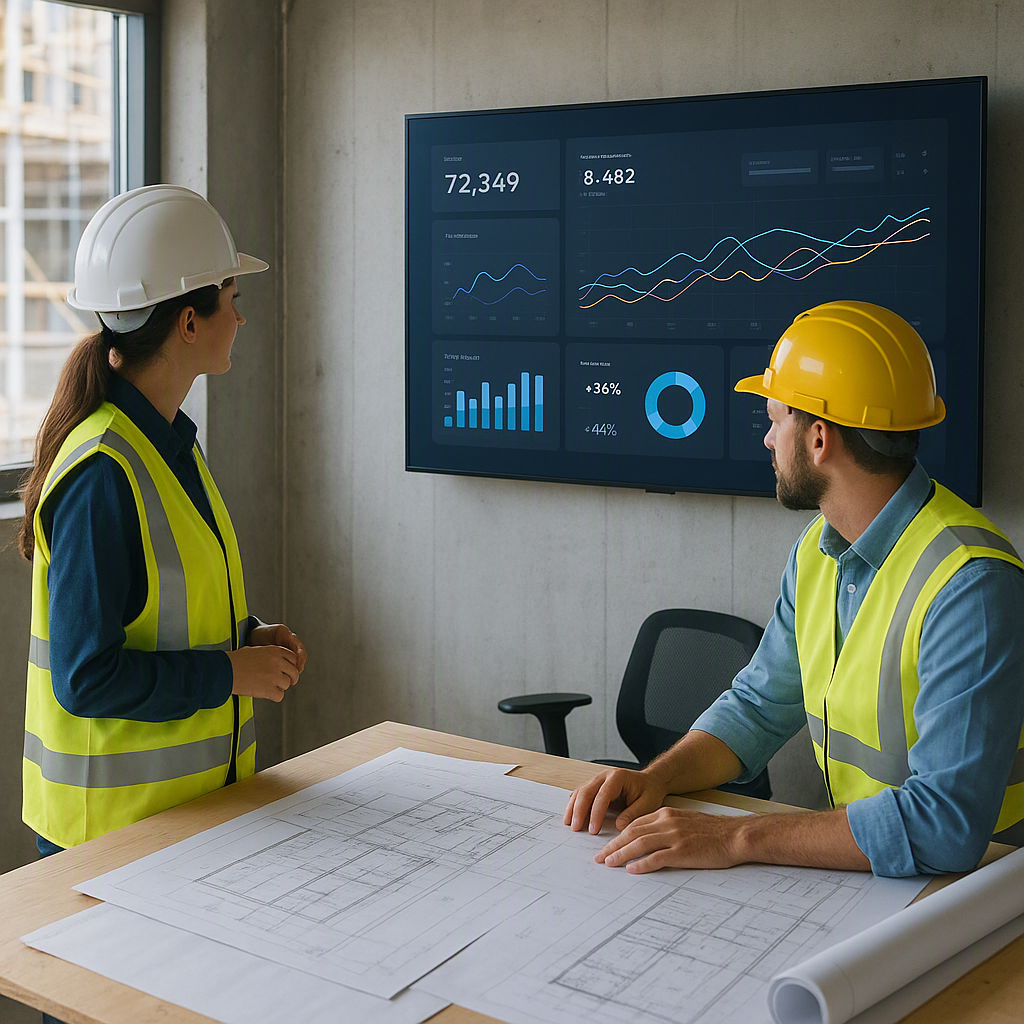
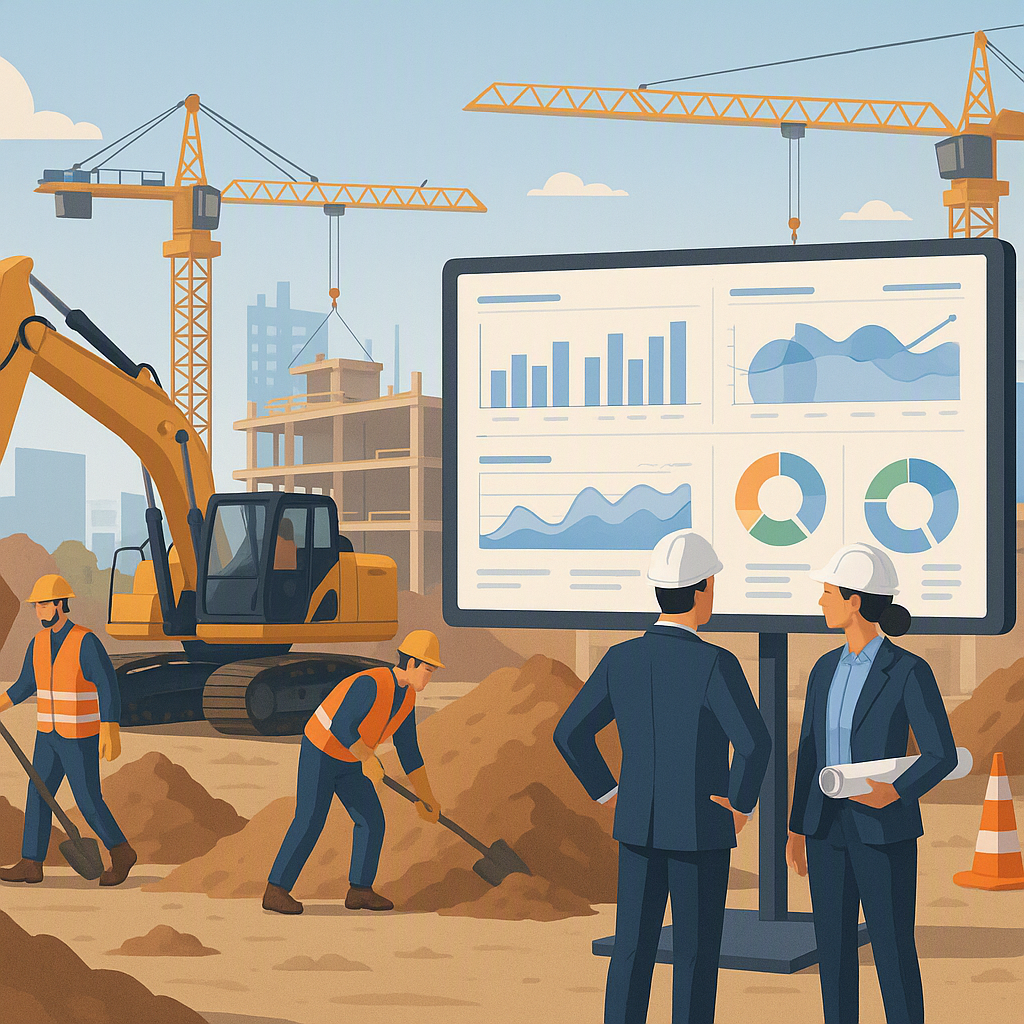
Enter real-time dashboards. These aren’t just flashy visuals. They’re tools that connect every moving part of your project—BOQs, material requisitions, billing, and HR. And they show you, live, where your money is going.
Illustrative example — Imagine you’re managing a high-rise project. Your dashboard flags that steel consumption is exceeding estimates in Tower A. Turns out, the team is cutting pieces incorrectly, leading to waste. With real-time tracking, you catch this early. You adjust the team’s process and stop the bleeding.
Why Didn’t We Adopt This Sooner?
Honestly, we didn’t think we needed it. We relied on spreadsheets, ERP modules, and gut feel. After all, we’d done fine for years. Plus, integrating real-time systems felt daunting. Would it disrupt workflows? Could our team even use it?
Turns out, the disruption was minimal. The gains? Huge. By integrating real-time dashboards into our ERP, we could:
- Track resource utilization live: No more guessing if equipment is being underused.
- Spot billing delays: Dashboards highlighted pending RA bills, so we chased faster.
- Monitor BOQ deviations: Real-time cost comparisons let us catch overspending early.
The Cost of Ignoring Real-Time Insights
Let’s not sugarcoat it: failing to track costs in real time is expensive. Poor cost management often leads to significant margin erosion (Source). Can you afford that?
And it’s not just about money. It’s about trust. Clients don’t care why you’re over budget—they just see missed deadlines and rising costs. Your reputation takes a hit.
Why Real-Time Dashboards Work
The biggest strength of real-time dashboards? They unify data. Instead of juggling separate tools for procurement, HR, and billing, everything feeds into one place. For example:
- Procurement: The MR → RFQ → Vendor → PO workflow updates instantly. You know exactly what’s ordered, received, and consumed.
- Subcontractors: Progress-based payments are tracked against completed measurements. No more overpayments.
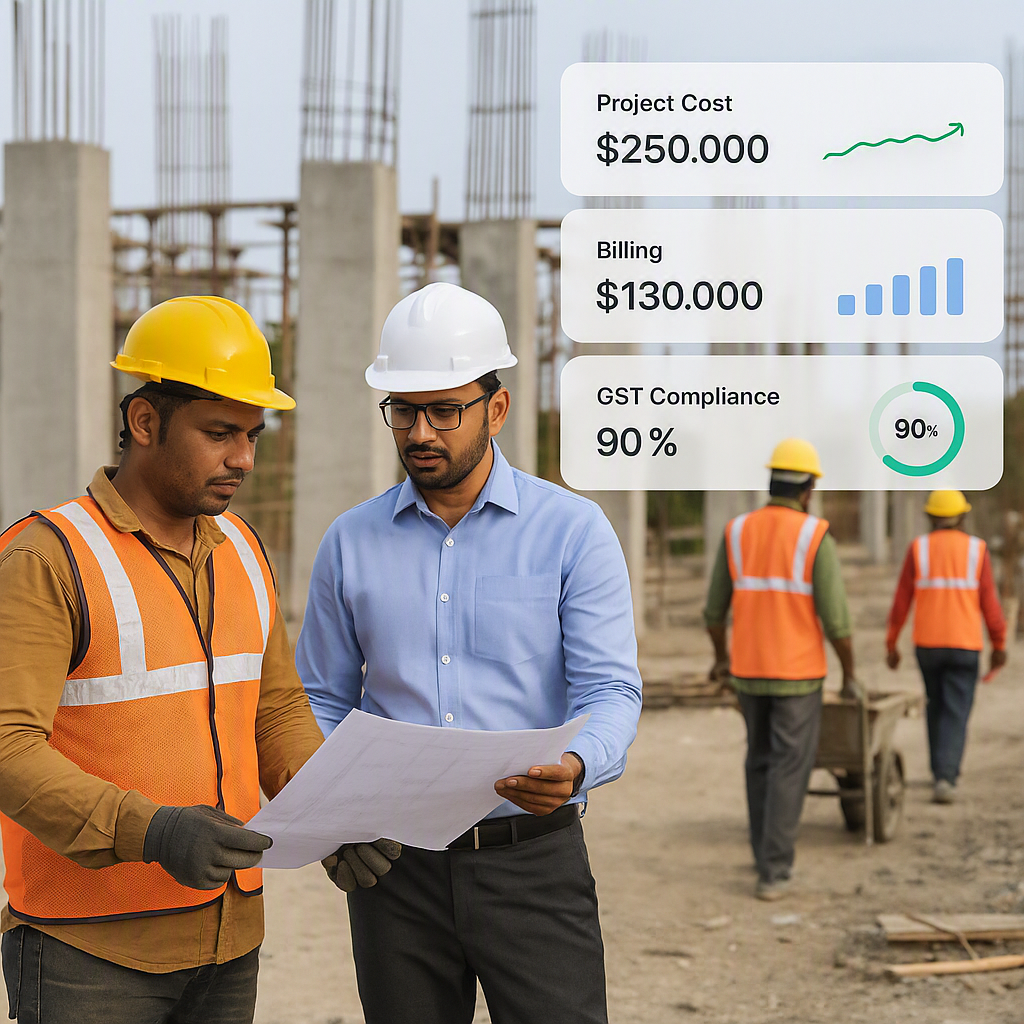
- Finance: GST compliance and TDS deductions are managed automatically.
These dashboards don’t just tell you what you’ve spent—they help you project what’s coming. If labor costs are trending above estimates, you can renegotiate subcontractor rates or reduce non-critical hires.
A Practical Example: Subcontractor Payments
Let’s go deeper. One area that often bleeds money is subcontractor payments. Without live tracking, overpayments are common. Here’s how real-time dashboards help:
- Measurement-Based Payments: As subcontractors complete work, site engineers update measurements. Dashboards compare these against BOQs to ensure accuracy before payments.
- Alerts for Discrepancies: If a subcontractor requests payment for work that doesn’t match measured progress, dashboards flag the mismatch.
- Approval Workflows: Payments don’t go through without a manager’s sign-off. Everyone stays accountable.
This can be the difference between a profitable project and a loss. JobNext has a great post on avoiding subcontractor cost overruns. It’s worth a read.
Common Pushbacks — And Why They’re Wrong
-
“Our projects are too small for dashboards.” Even small projects have leakages. Dashboards pay for themselves quickly.
-
“We already use ERP modules.” ERPs often lack real-time insights. They’re great for data storage, but dashboards make that data actionable.
-
“Our team won’t adopt this.” Modern dashboards are user-friendly. If your team can use WhatsApp, they can use this.
What’s Next?
We’re still figuring out how to optimize these dashboards further. For example, integrating predictive analytics. Can we forecast cost overruns before they happen? Machine learning is already making strides here, and it’s exciting to think where this could go.
But for now, we’ve stopped the bleeding. Margins are healthier, clients are happier, and we sleep a little better at night. Real-time dashboards made it happen.
If margin erosion is a constant headache, ProjectsNext can help. Explore how →
Learn more at JobNext.ai - Construction ERP