The Challenges of Multi-Site Construction
Running one construction site is hard enough. Now multiply that by three, five, or even ten. Schedules slip, equipment sits idle, and costs spiral. You’re constantly chasing updates—who’s on site, how much material is left, which subcontractors are behind. And if you’re relying on spreadsheets and WhatsApp to manage it all, you’re already facing inefficiencies.
The reality is, without real-time visibility, managing multiple sites becomes a guessing game. Problems go unnoticed until they escalate. Budgets can bleed slowly but steadily. So, how do you keep everything under control?
Start with Real-Time Data—Not Post-Mortems
Most contractors only find out they’ve lost money when the damage is already done. Why? Because they’re relying on outdated data: weekly reports, manual reconciliations, or site visits after the fact. By the time you react, it’s too late.
Here’s what works instead: structured, real-time tracking. For example, when managing multiple sites, you need to know:
- How much material has been consumed vs. planned BOQ quantities.
- Whether subcontractor payments align with measurable progress.
- If equipment is being underutilized or overused.
Platforms that integrate BOQ, procurement, and subcontractor workflows into a single system can help. Instead of hunting for updates across tools, automated dashboards can show exactly where you stand for each site, reducing guesswork.
The Procurement Chain: Where Chaos Starts
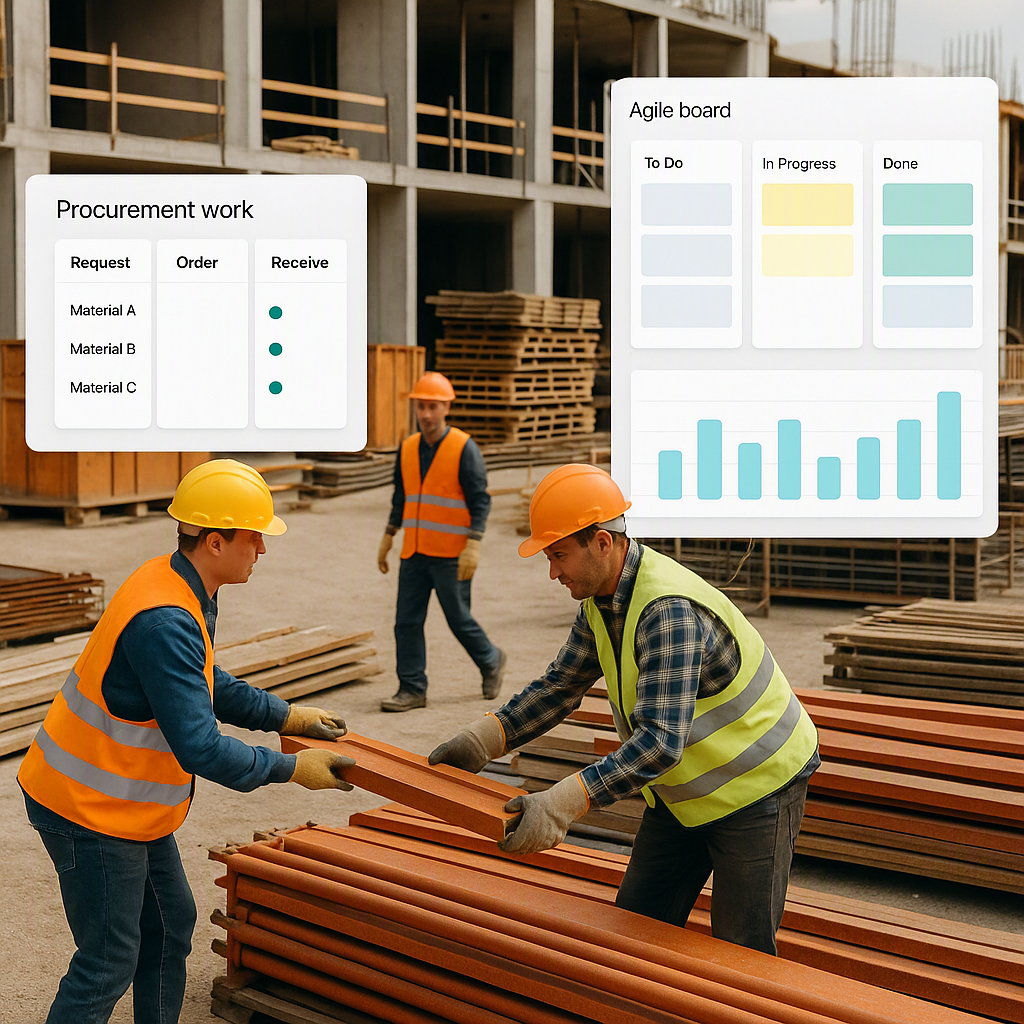
Procurement is where multi-site projects often unravel. Materials arrive late, or worse, at the wrong site. Margins erode because POs don’t follow BOQ estimates.
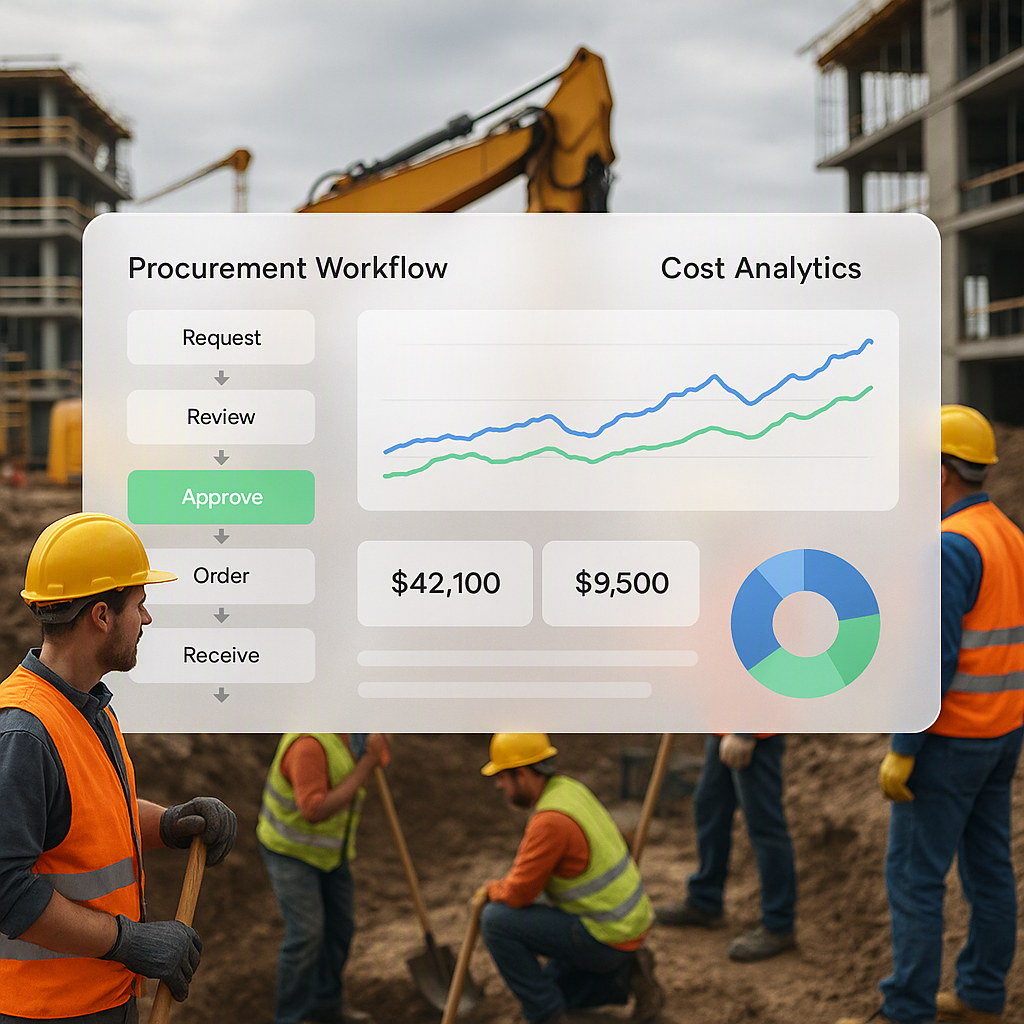
A good procurement workflow should look like this:
- Material Requisition (MR): Each site raises accurate requests based on BOQ needs.
- RFQs (Request for Quotations): Vendors are invited to bid with clear scope definitions.
- Vendor Selection: Offers are compared side-by-side, ensuring you pick the best value.
- Purchase Orders (PO): Finalized orders are tracked against delivery schedules and BOQ consumption.
For contractors managing multiple sites, the key is centralizing this process—without turning it into bottleneck bureaucracy. Structured platforms can ensure that every MR, RFQ, and PO flows through an approval chain and matches project-specific budgets.
Subcontractor Oversight: Pay for Progress, Not Promises
Subcontractors are critical, but they’re also a major risk. Pay too early, and you’re funding delays. Pay too late, and they may walk off the job. The solution? Measurement-based progress tracking.
Illustrative example — On a project, a subcontractor claimed significant completion of a task. However, when site engineers cross-checked the BOQ and measurements, the actual progress was far less. Without a system to track these details, it’s difficult to ensure payments align with real progress.
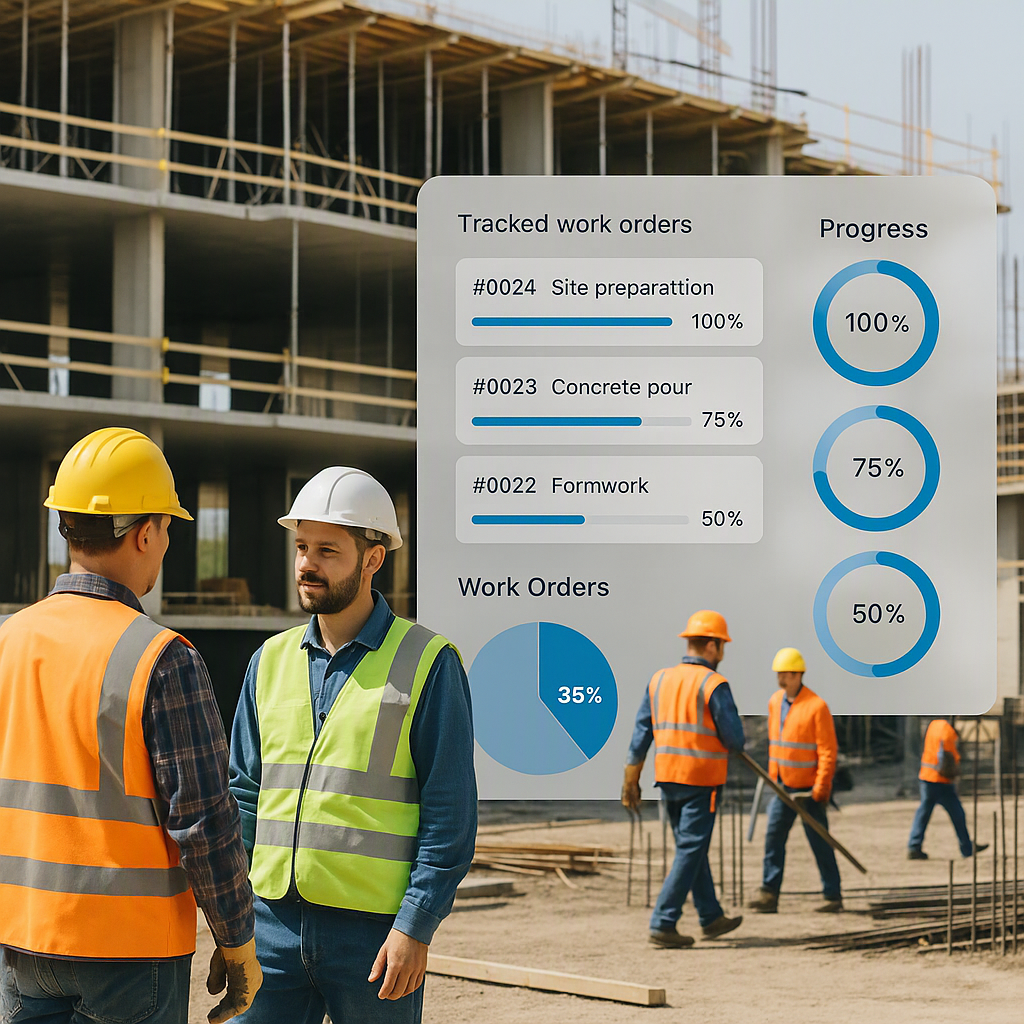
Tools that integrate subcontractor workflows—like Work Orders (WO), Measurements, and linked payments—make it easier to align payouts with actual progress.
Real-Time Dashboards: Your Eyes in the Field
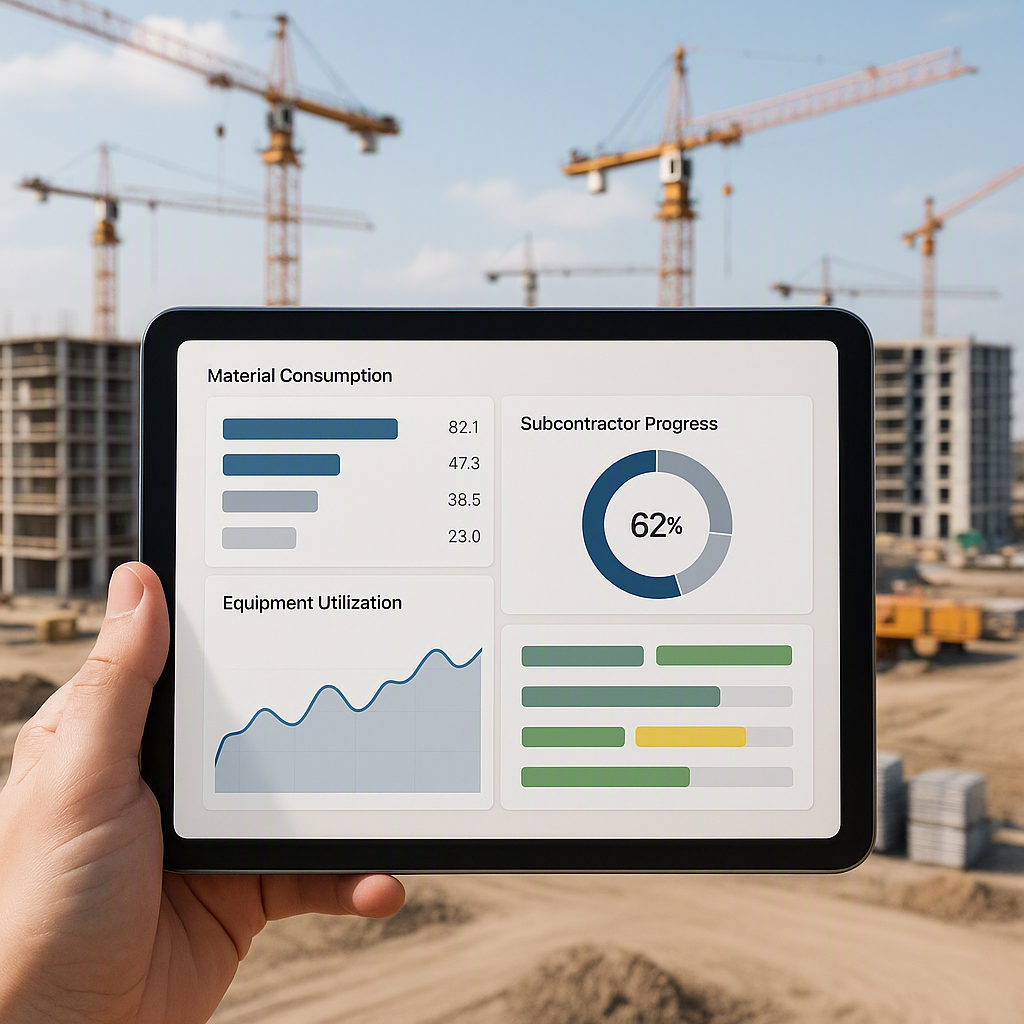
Let’s be honest: you can’t be everywhere at once. But with real-time dashboards, you don’t have to be. These tools pull live data from all your sites and visualize it in a way you can actually use.
Illustrative example — A dashboard might show:
- Material Consumption: BOQ vs. actuals for each site.
- Subcontractor Progress: Milestones met vs. payments released.
- Equipment Utilization: Idle hours vs. productive hours.
Instead of waiting for site managers to send updates, you can spot issues as they emerge. Equipment sitting idle? Reallocate it to another site. Material overconsumption? Flag it before your margins disappear.
Common Mistakes (and How to Avoid Them)
- Relying on Manual Updates: Spreadsheets and WhatsApp messages won’t cut it for multi-site projects. Automate.
- Ignoring BOQ-Based Tracking: If your procurement and progress tracking aren’t tied to the BOQ, you’re inviting cost overruns.
- Missing Approval Chains: Without structured workflows, you’ll either slow down decisions or approve costs blindly.
FAQ
Q: How do I handle material shortages across multiple sites? A: Use a centralized procurement system to track material requests and deliveries in real-time. This minimizes overordering or shortfalls.
Q: Can subcontractor payments really be tied to BOQ progress? A: Yes. Platforms that integrate Work Orders, Measurements, and Payments make this seamless.
Q: What’s the best way to prevent equipment underutilization? A: Real-time tracking of idle vs. productive hours helps you reallocate resources across sites efficiently.
Conclusion
Managing multiple construction sites doesn’t have to be chaotic. With structured workflows and real-time oversight, you can stay ahead of issues before they snowball. Tools that centralize procurement, subcontractor management, and equipment tracking can help you streamline operations and improve efficiency.
Learn more at JobNext.ai - Construction ERP