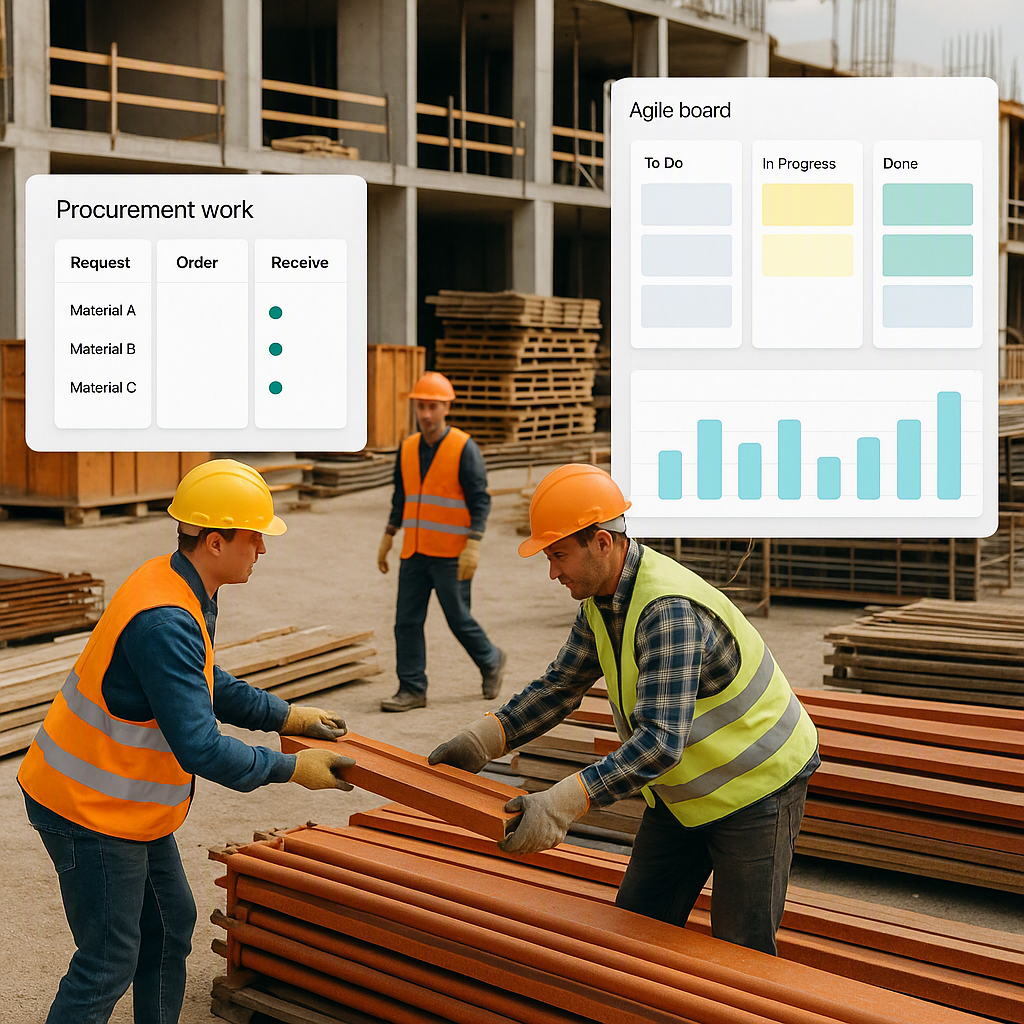
I Used to Think Agile Wasn't for Construction
Agile project management? Great for software development, sure. But construction? I used to dismiss the idea outright. Construction projects are fixed: a building has a blueprint, materials have to meet industry standards, and the schedule is tightly defined. Agile felt too messy for this world. How could iterative planning and flexibility work when you're managing subcontractors, procurement, and compliance on tight margins?
The Thing That Changed It
Then I came across a blog post about Google’s Solar Investment. It wasn’t even about Agile directly—it focused on procurement efficiency. But it clicked for me. The structured workflows Google used to manage vendors, risks, and costs were remarkably similar to Agile principles: breaking work into manageable chunks, tracking progress in real time, and adapting as challenges emerged. This made me rethink Agile in the context of construction, especially for procurement.
What’s more, I learned that Agile projects are statistically 28% more successful than Waterfall projects, according to PMI (Project Management Institute). That number stuck with me because it underscored the idea that Agile’s flexibility isn’t just theoretical; it delivers measurable results across industries.
Why I Held On to My Old Belief
My resistance wasn’t random. Construction projects face unique constraints:
- Physical materials: Unlike software, where changes can be made digitally, construction relies on tangible components like steel beams and concrete. You can’t "refactor" a wall once it’s already poured and set.
- Long lead times: Materials often need to be ordered months in advance, which makes real-time flexibility seem impossible.
- Regulatory compliance: Every decision has to align with building codes, safety standards, and environmental regulations. Deviating from the plan could result in violations or costly delays.
- Low tech adoption: Many construction teams still use spreadsheets or paper-based systems, making Agile’s reliance on digital tools feel out of reach.
In fact, the 15th State of Agile report found that 66% of Agile organizations still rely on spreadsheets alongside Agile tools. While this reliance on legacy systems might seem counterintuitive, it proves that Agile can coexist with traditional tools, which is encouraging for industries with slower tech adoption.
Plus, traditional construction workflows are based on Waterfall methods:
- Plan everything upfront (blueprints, budgets, schedules).
- Execute step-by-step according to the plan.
- Deliver the final project as planned.
This approach feels safe because it minimizes surprises. But here’s the flaw: construction projects aren’t as rigid as they seem. Designs evolve, materials get delayed, and site conditions can derail even the best-laid plans. Pretending everything can be fixed upfront ignores the chaos every contractor faces week-to-week. Agile’s flexibility might actually be better suited to this environment than I’d realized.
To illustrate, think about weather delays. If a storm halts exterior work, Waterfall might leave the team idle, waiting for the original plan to resume. Agile, on the other hand, would encourage shifting resources to interior tasks that can be completed regardless of the weather, keeping the project moving without disrupting the overall timeline.
What I Do Differently Now
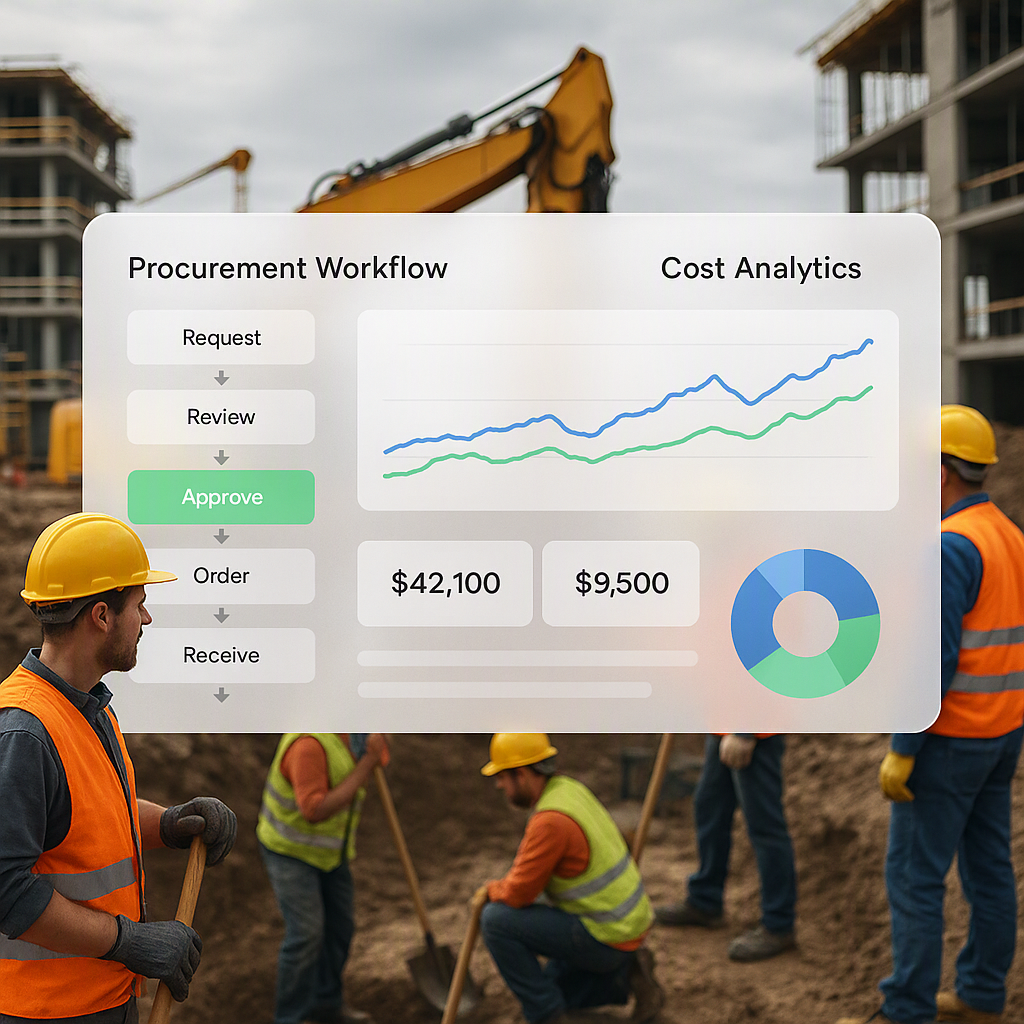
I started experimenting with Agile principles in procurement workflows—particularly the Material Requisition (MR) → Request for Quote (RFQ) → Purchase Order (PO) chain. Instead of treating procurement as a static checklist, I broke it down into smaller, iterative steps. Here’s how that looks in practice:
1. Prioritize Critical Materials Early
Not all materials have the same impact on a project’s progress. Some items have longer lead times or are more critical to the construction schedule. Prioritizing these materials early ensures that delays in procurement don’t cascade into larger issues. For example:
- Steel and concrete: These are often bottlenecks due to high demand or long lead times. Without them, foundational work stalls.
- HVAC systems: Custom builds can have unpredictable timelines, especially if specific components are back-ordered.
Actionable step: Break down your procurement list into "critical path" items and "non-critical" items. Focus on initiating RFQs for critical materials as early as possible, even if some design details for less essential components are still being finalized. This maintains momentum on the most important tasks.
2. Track Vendor Performance Dynamically
Instead of waiting until the end of a project to evaluate vendor performance, Agile encourages ongoing monitoring and adjustment. Use real-time dashboards to track key metrics:
- On-time delivery rates: Are vendors meeting promised schedules? If not, how frequently are they late?
- Quality compliance: Are delivered materials meeting industry standards or requiring rework?
Actionable step: Implement vendor scorecards that update in real time. For instance, a steel supplier with repeated delivery issues should be flagged and alternatives explored. By addressing problems early, you prevent a small vendor issue from snowballing into a major delay.
3. Adapt Quickly to Delays
Delays are inevitable in construction. What matters is how you respond. Agile allows for dynamic adjustments without derailing the entire schedule:
- Switch vendors: If a supplier consistently underperforms, reassign POs to an alternate vendor. Building a vetted pool of backup vendors can make this process smoother.
- Re-sequence work: When materials are delayed, focus on tasks that don’t depend on them. For example, if exterior cladding materials are late, redirect teams to interior framing or electrical rough-ins.
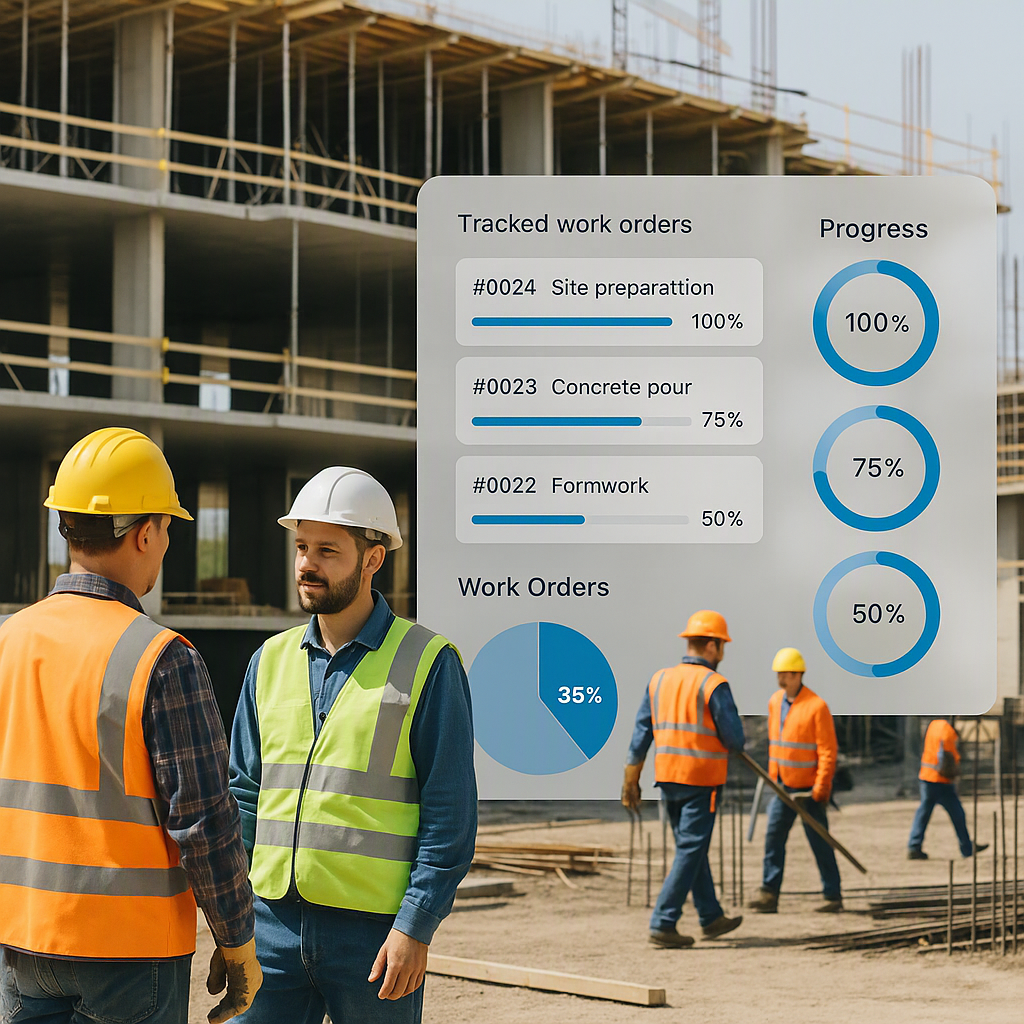
Actionable step: Create contingency plans for critical-path items. Identify which tasks can be shuffled and which vendors could step in if problems arise. Tools like ProjectsNext make this easier by providing visibility into workflows and bottlenecks.
What Being Wrong Cost Me—and What I’m Still Figuring Out
I’ll admit: sticking to rigid procurement workflows cost me time and money on past projects.
- Late materials pushed schedules back, leading to overtime costs.
- Vendor issues snowballed because we didn’t address them proactively.
- Finger-pointing became the norm, as teams blamed delays on each other.
Agile’s transparency could’ve helped avoid these problems. By making progress visible and enabling faster decision-making, it reduces the blame game and keeps the focus on solutions.
That said, I’m still unsure how far Agile can go in construction. Can it replace traditional project planning entirely? Probably not. There are too many fixed parameters. Instead, I see Agile as a complement—a way to bring flexibility to specific workflows like procurement, subcontractor management, and resource allocation.
Interestingly, adoption rates for Agile project management are growing steadily. In 2020, only 23% of companies used Agile practices, such as Scrum, according to Wellingtone. By 2026, that number is projected to reach 24.6%, indicating a slow but steady shift toward Agile workflows.
Comparison Table: Agile vs. Waterfall in Construction
| Aspect | Waterfall | Agile |
|---|---|---|
| Planning | Detailed upfront plans; rigid schedules | High-level upfront plans; iterative adjustments |
| Flexibility | Minimal; changes disrupt entire workflows | High; workflows adapt to new information dynamically |
| Risk Management | Reactive; risks addressed after they occur | Proactive; risks identified and mitigated in real-time |
| Vendor Management | Static; long-term contracts fixed early | Dynamic; performance-based reassignment possible |
| Tools | Spreadsheets, Gantt charts | Dashboards, Agile-specific platforms (e.g., ProjectsNext) |
Final Thoughts
The Agile project management software market is projected to grow from $5.42 billion in 2025 to $6.08 billion in 2026, reflecting increased adoption across industries, including construction. If you're dealing with procurement chaos or subcontractor delays, Agile principles might be worth considering. Tools like ProjectsNext can help structure workflows without losing flexibility. It’s not about throwing out Waterfall entirely—it’s about finding the right balance for your projects. By combining the predictability of traditional methods with the adaptability of Agile, you may find that construction projects run more smoothly than ever.
Learn more at JobNext.ai - Construction ERP