I Used to Think Manual Procurement Was Just a Necessary Evil
For years, I believed inefficiencies in procurement were inevitable in construction. Every project I worked on had its share of delays and errors. Material requisitions got lost in email threads. Vendor negotiations dragged on. Purchase orders took forever to get approved. And, of course, costs went overboard when urgent items had to be sourced at premium rates.
I used to tell myself, "Well, that's just the nature of the beast. Construction is chaotic, and procurement will always be messy." It wasn't a comforting thought, but it seemed like reality.
The Moment I Realized I Was Wrong
Then, I came across a project where the contractor was using an AI-driven procurement system. This was around mid-2022. I remember walking into a meeting and seeing a dashboard on their screen that showed real-time updates on material procurement—what was requested, which vendors had responded, what was approved, and how it affected the overall project budget.
It wasn't just a fancy UI. The system had flagged a potential cost overrun because a vendor's quoted price was higher than the average market rate (which the AI system had calculated by analyzing historical data and live market trends). Within minutes, the team generated a counter-offer and sent it back to the vendor. They saved a significant sum, avoided delays, and got the materials on time.
This project reminded me of recent statistics that illustrate how far construction management has come. As of January 2024, research from Numalis reveals that 47% of managers still process data manually, a staggering figure when compared to the efficiency AI-driven systems can offer (Numalis, 2024).
I was blown away. This wasn't just a nice-to-have feature. It was a game-changer for controlling costs and reducing delays.
Why My Old Belief Lasted So Long
Looking back, I think my resistance to change came from a mix of skepticism and habit. After all, the construction industry isn't exactly known for rapid adoption of new technology. Plus, I had seen software tools before—most of them were clunky, required endless manual data entry, and often created more problems than they solved.
I also underestimated how much AI had progressed. I assumed it was just a buzzword for automation, not realizing its potential for predictive analytics and decision-making. I dismissed the idea that AI could actually understand the complexities of construction procurement, from fluctuating material costs to vendor reliability.
But things have changed. AI systems today are capable of analyzing massive amounts of data in real time, spotting risks, and recommending actions that can save both time and money. For example, Reid Senescu spoke at a "Future Factory" podcast episode in 2024 about how AI automates workflows and integrates predictive analytics to ensure construction projects stay on budget ("Future Factory," 2024).
What I Do Differently Now
Today, I approach procurement with a completely different mindset. I've seen how AI can simplify and streamline the entire process, and I actively advocate for its adoption in the projects I'm involved with. Here’s a breakdown of actionable steps I now follow:
1. Structured Workflows
Manual processes are the root of most procurement inefficiencies. I insist on using platforms that enforce a clear workflow:
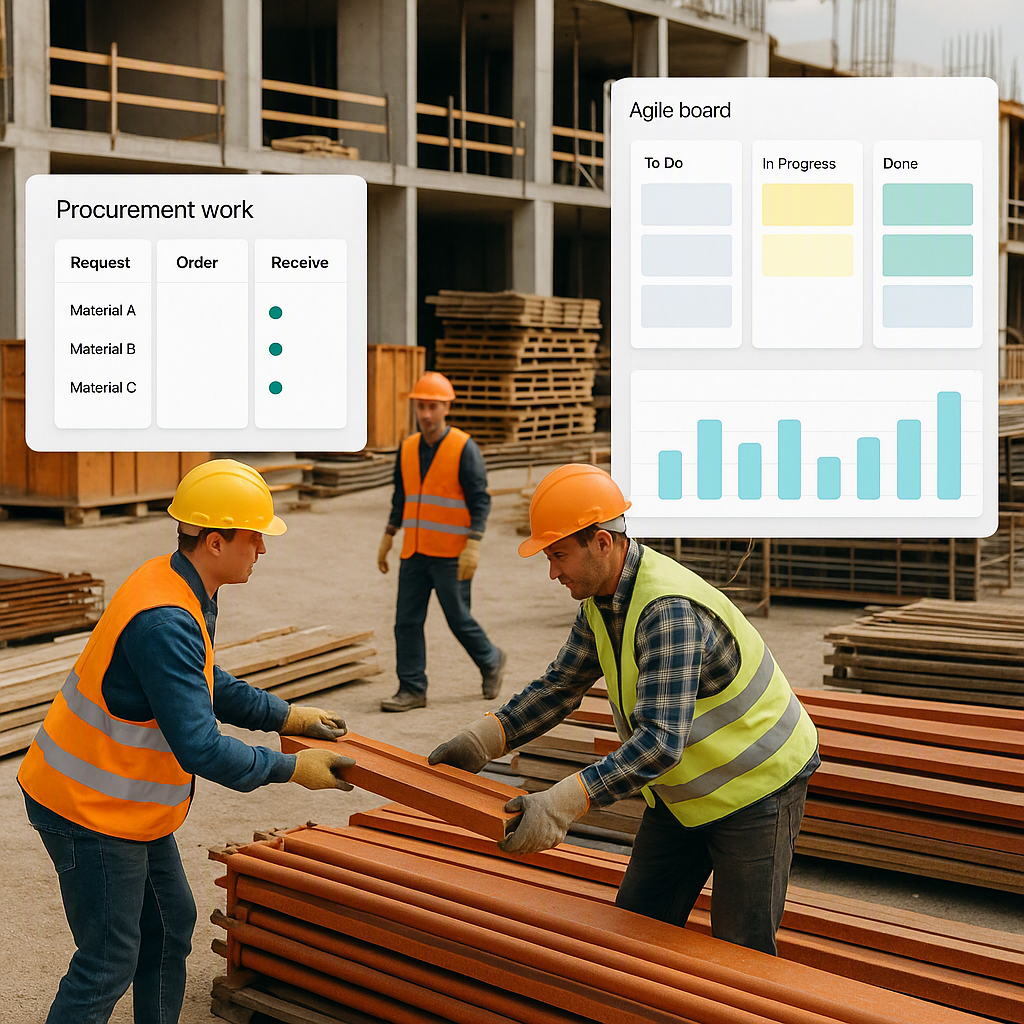
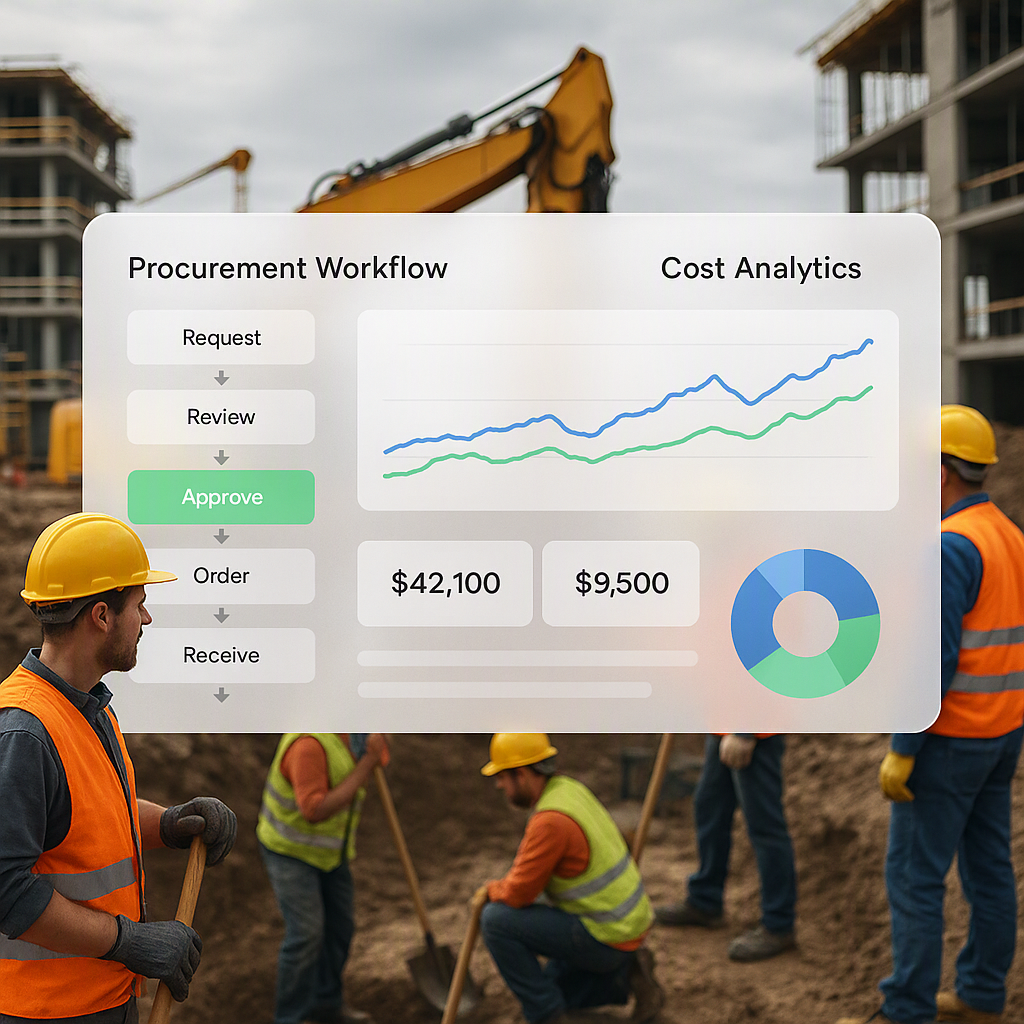
- Material Requisition (MR): The team submits requests for materials in a standardized format, ensuring no critical details are missed.
- Request for Quotation (RFQ): The system automatically sends out RFQs to pre-approved vendors.
- Vendor Offers: Once offers come in, they are organized and compared within the software.
- Purchase Order (PO): The system generates POs based on the selected vendor offer, ensuring all approvals are logged.
By eliminating ad-hoc communication via email or messaging apps, this approach reduces errors and delays.
2. Vendor Analytics
AI tools can track vendor performance over time. Instead of relying solely on gut instinct, I now use systems that measure:
- Delivery Reliability: How often vendors meet deadlines.
- Cost Trends: Whether their pricing is consistent or prone to sudden spikes.
- Quality Metrics: How often materials from a vendor pass quality checks.
This data lets us build stronger relationships with reliable vendors while proactively flagging risky ones.
3. Market-Driven Pricing
One of the most valuable features of AI-driven procurement systems is integration with live market data. Here’s how it works:
- The system compares quoted prices against historical rates and current market trends.
- It flags overpriced quotes and suggests alternatives.
- Teams can use this data to negotiate better deals.
For instance, I’ve seen cases where this feature helped avoid cost overruns, as described in this article.
4. Approval Automation
Delays in procurement often stem from waiting for approvals. With AI tools, it’s possible to:
- Route approvals automatically based on pre-defined rules (e.g., budget thresholds).
- Send notifications to managers when urgent approvals are needed.
- Track approval timelines to identify bottlenecks.
What I'm Still Not Sure About
Despite its advantages, AI-driven procurement isn’t perfect. Here are a few challenges:
1. Data Dependency
AI tools require clean, structured data to function effectively. For small contractors still transitioning from paper-based systems, this can be a major hurdle.
2. Human Judgment
While AI can flag risks and provide recommendations, it can’t replace human intuition entirely. For instance, a vendor might offer a higher price but have a proven track record for delivering quality materials on tight schedules—a nuance AI might overlook.
3. Cost Barrier
High-quality AI-driven ERP solutions are often expensive. Small-to-mid-size contractors may hesitate to invest, though the ROI from reduced costs and delays often outweighs the upfront expense.
Comparison Table: Manual vs. AI-Driven Procurement
| Aspect | Manual Procurement | AI-Driven Procurement |
|---|---|---|
| Speed | Slow; often delayed by approvals | Fast; automated workflows |
| Error Rate | High; prone to human mistakes | Low; minimizes errors with automation |
| Vendor Selection | Based on familiarity or gut instinct | Data-driven, performance-based |
| Cost Control | Reactive; overruns common | Proactive; flags overpriced quotes |
| Scalability | Limited; struggles with complexity | High; handles large datasets |
Why This Matters
If you're still relying on manual procurement processes, you're leaving money on the table. I've seen firsthand how AI tools can transform this critical aspect of construction management. It's not about replacing people; it's about giving your team the tools they need to make faster, smarter decisions.
For example, this post on ProjectsNext.ai shows how structured workflows can reduce errors and improve margins by streamlining the entire procurement process. It's a simple yet powerful approach that aligns perfectly with what I've observed.
If you're ready to move past the chaos of manual procurement, ProjectsNext offers AI-driven solutions that can help. It's time to embrace the future of construction project management.
Learn more at JobNext.ai - Construction ERP