Margins Are Under Siege — Here’s Why
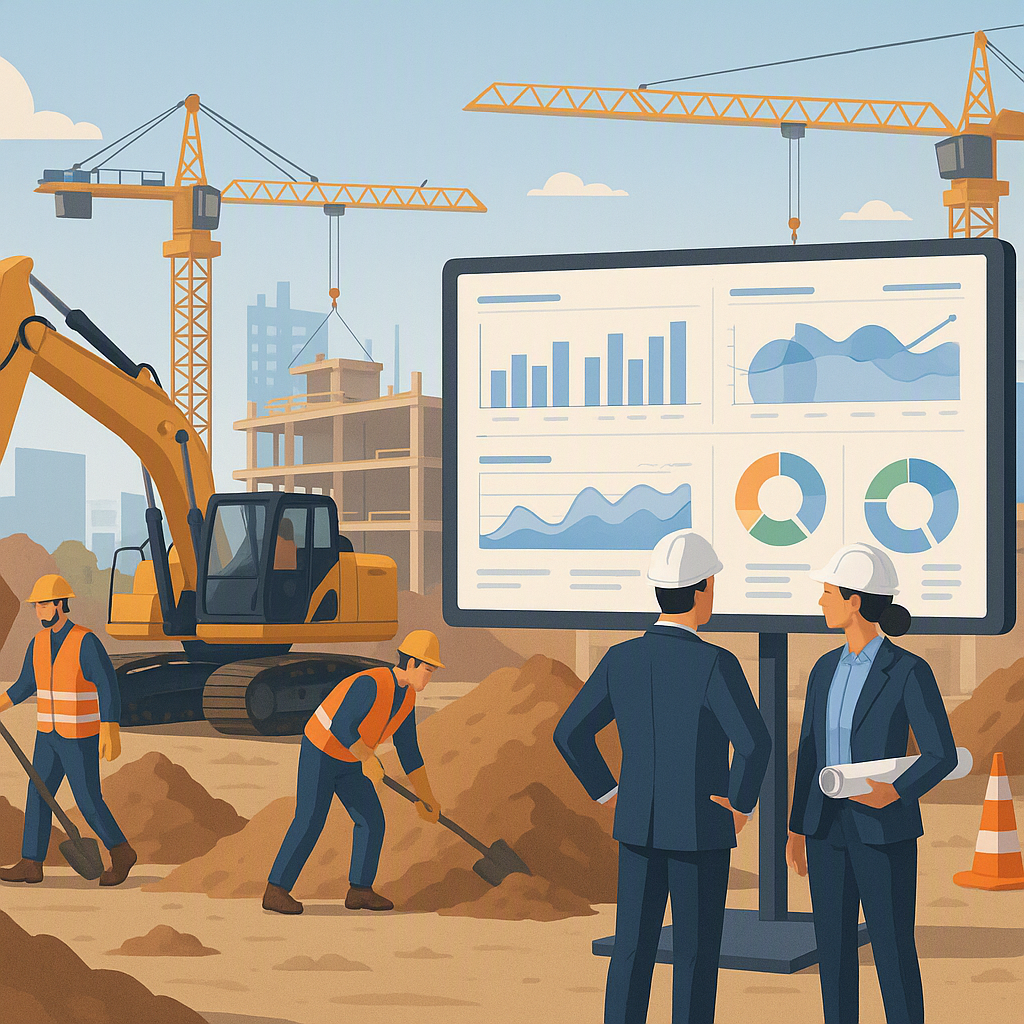
Construction margins are razor-thin. Especially in regions like India and the GCC, where cutthroat competition, volatile material costs, and chronic labor shortages make profitability a constant uphill battle. One miscalculation, one late delivery, or one subcontractor overbilling — and your margin is history.
Why does this happen so often? Because most contractors lack the tools to track costs in real-time and rely on outdated spreadsheets or fragmented software. This leaves them scrambling to patch financial holes instead of proactively steering their projects.
Take a typical scenario: You’re halfway through a ₹50 crore project. Your Bill of Quantities (BOQ) says you’re on track, but your site team keeps requesting more materials. By the time you realize the issue, you’ve already burned through half your contingency budget. Worse, the client’s billing cycle locks your cash flow for another 60 days. This isn’t just frustrating — it’s operationally dangerous.
So how do you stop the bleeding? By adopting real-time project cost tracking. It’s not a luxury; it’s a necessity. Let’s break it down step by step.
What Real-Time Cost Tracking Actually Means
First things first: Real-time doesn’t mean instant. It means timely — as in, data is processed and presented as soon as it becomes available. The goal is actionable insights, not raw numbers.
In construction, real-time tracking involves monitoring:
- Material costs: Are you sticking to BOQ rates? If not, why?
- Labor costs: Are site teams working within estimated hours? Are subcontractors billing accurately?
- Equipment utilization: Are your machines being efficiently used, or are they sitting idle while incurring costs?
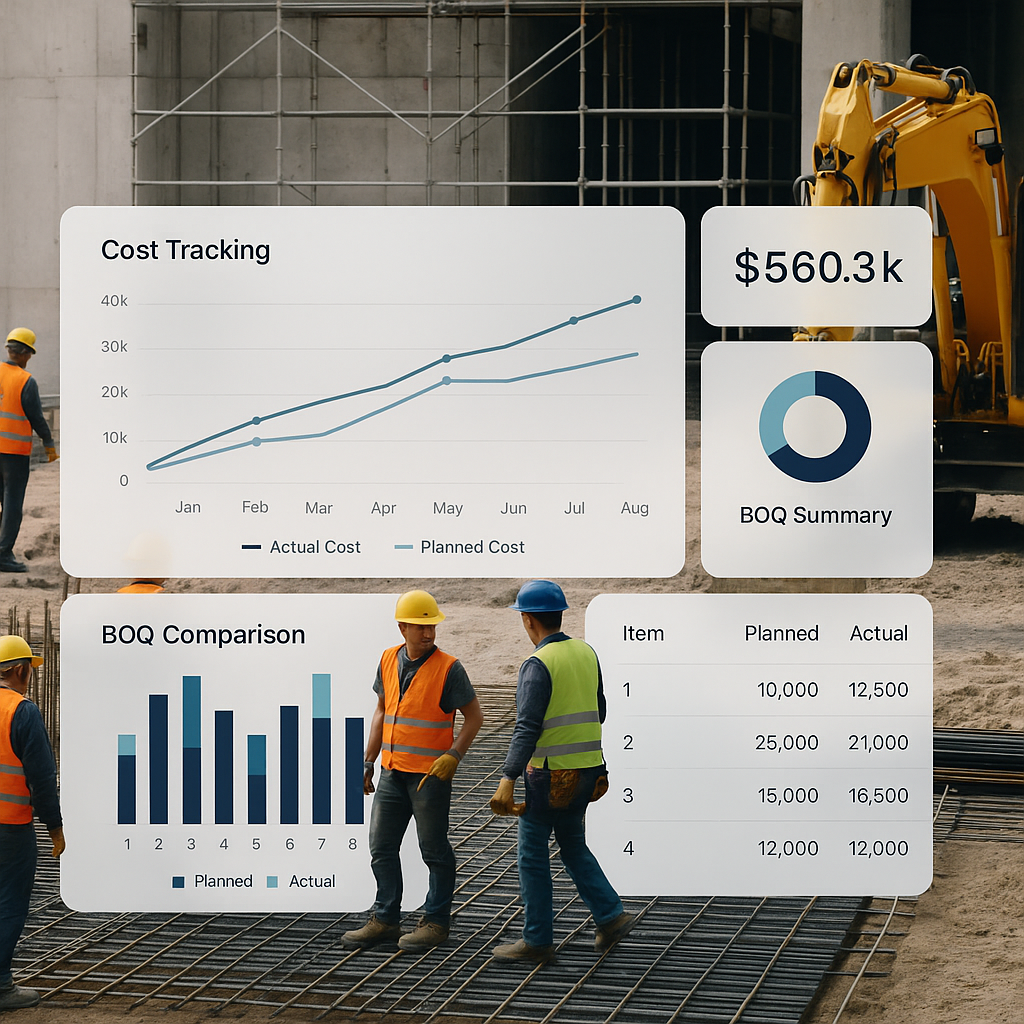
Manual tracking methods, like Excel spreadsheets, simply don’t cut it anymore. They’re prone to human error, can’t integrate complex workflows, and lack the responsiveness modern construction demands. Instead, contractors need software that integrates BOQs, work orders, Material Requests (MRs), RFQs, invoices, and site measurements into a unified system. This gives you a live view of where your money is going — and where it’s leaking.
BOQ vs Actuals: The Silent Margin Killer
Your BOQ is your financial roadmap. If you’re not comparing actual costs against BOQ estimates in real-time, you’re essentially flying blind.
Let’s break down a common trap: Your BOQ allocates ₹500 per square meter for flooring, but your procurement team locks in a vendor at ₹520 per square meter. That ₹20 difference sounds negligible — until it’s multiplied across 10,000 square meters. Suddenly, you’re looking at ₹2 lakh in extra costs. Factor in transport fees and wastage, and the discrepancy grows to ₹3 lakh.
Without real-time tracking, you’ll only notice this problem when the project is already bleeding cash. Tools like ProjectsNext automate this process by linking BOQs to actual costs. As invoices are uploaded, you get instant visibility into discrepancies. This allows you to flag issues early, renegotiate vendor rates, or adjust sourcing strategies before the damage compounds.
Actionable Steps:
- Automate BOQ Tracking: Use software that automatically pulls vendor rates and compares them to BOQ estimates.
- Set Alerts for Discrepancies: Configure notifications for when actual costs exceed BOQ limits.
- Track Wastage: Monitor material usage carefully to avoid hidden costs from over-ordering or poor site management.
For more insights into procurement workflows and their impact on margins, check out this detailed guide.
Subcontractor Overbilling: Another Avoidable Leak
Subcontractor costs are often underestimated as a margin risk. Many contractors rely on verbal agreements or loosely defined work orders, leaving room for overbilling or scope creep. Without measurement-based progress tracking, you’re vulnerable to paying for work that hasn’t been completed.
For instance, your subcontractor bills you for 100 cubic meters of RCC, but site measurements reveal only 80 cubic meters were poured. That’s a 20% overcharge — and it’s not uncommon.
How to Fix This:
- Tie Work Orders to Measurements: Use project management software that links progress milestones directly to subcontractor billing.
- Enforce Accountability: Require subcontractors to submit digital measurement sheets with every invoice.
- Conduct Spot Audits: Randomly inspect subcontractor work to ensure billing accuracy.
By implementing these systems, you reduce ambiguity and protect your margins from unnecessary leaks.
Cash Flow vs Profitability: Both Matter
Even if you manage to keep costs within BOQ limits, cash flow can still sink your operation. Why? Because most clients pay on milestones or RA bills, often with delays of 30-60 days. In the meantime, you still have to pay labor, vendors, and other recurring costs.
Real-time tracking isn’t just about monitoring expenses; it’s also about forecasting cash flow gaps and preparing for them.
Solutions:
- Integrate Billing and Cost Tracking: Tools like ProjectsNext combine real-time cost tracking with billing workflows. This gives you a unified view of both expenses and receivables.
- Plan Financing Early: If you know you’ll face a cash flow gap, arrange bridge loans or negotiate payment terms with vendors in advance.
- Monitor Payment Milestones: Use a system that flags upcoming receivables and aligns them with project expenses.
What to Watch For
Real-time cost tracking isn’t a magic bullet. Its effectiveness depends on the quality of data and how you use it. Here are common pitfalls:
- Incomplete Data: If site teams fail to upload MRNs, invoices, or measurement sheets promptly, your "real-time" insights are meaningless.
- Lack of Training: Even the best software won’t help if your team doesn’t know how to use it effectively. Invest in thorough training.
- Overcomplicated Systems: Avoid tools that try to do too much. Opt for software tailored specifically to construction workflows.
FAQ
1. Can small contractors afford real-time tracking? Absolutely. SaaS-based tools like ProjectsNext offer subscription models that are budget-friendly for smaller firms. You don’t need to break the bank to streamline your operations.
2. How often should project costs be updated? Daily updates are ideal, especially for large or fast-moving projects. At a minimum, update costs after major milestones or large procurements.
3. What’s the most common mistake in cost tracking? Ignoring indirect costs like equipment idle time, transport fees, and penalties. These "hidden" costs can quickly erode your margins.
4. How do we ensure site teams submit data on time? Use mobile-friendly tools or WhatsApp integration to make data submission easier for site teams. Simplifying the process increases compliance.
5. Can real-time tracking prevent disputes with clients? Yes. By maintaining accurate records of costs, work progress, and timelines, you’re better equipped to resolve disputes and justify claims.
Margins are under constant threat in construction, but real-time cost tracking can give you the tools to fight back. If you’re ready to stop margin erosion and build smarter, get started with ProjectsNext today →
Learn more at JobNext.ai - Construction ERP