The Problem: Construction Material Costs Are Eating Margins
Every contractor knows this pain. You win a project, finalize your Bill of Quantities (BOQ), and then watch helplessly as material prices creep up. Cement, steel, aggregates—everything fluctuates. And if you’re managing multiple projects, the chaos multiplies.
Why does this happen? The answer is simple: most contractors rely on spot purchases instead of locking in supplier rates upfront. Spot buys might seem convenient, but they leave you vulnerable to market swings. Worse, they make your project costing unpredictable.
The Solution: Using Rate Contracts to Lock In Costs
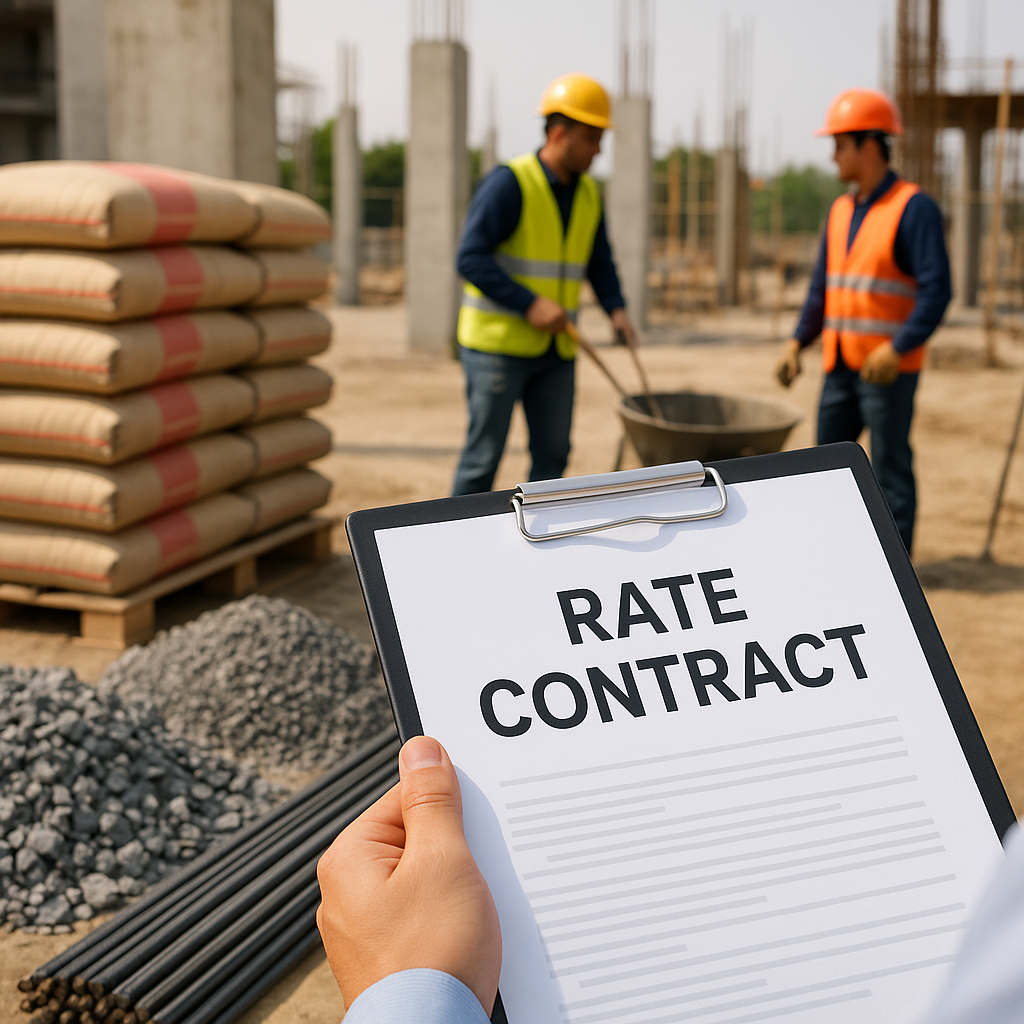
A rate contract is essentially a pre-agreed pricing arrangement with your suppliers for specific materials over a set period. Instead of negotiating prices for every single purchase, you define rates in advance. This gives you cost certainty and protects your margins.
Let’s break it down:
How Rate Contracts Work
-
Identify High-Volume Materials: Start with materials that make up the bulk of your procurement—cement, steel, aggregates, MEP supplies, etc. These are typically high-value items that significantly affect your budget.
-
Negotiate Long-Term Rates: Approach your suppliers to negotiate prices for a fixed period (e.g., 6 months or 12 months). When negotiating, consider the following:
- Market Trends: Analyze historical price data and forecasts for your materials.
- Volume Discounts: Suppliers are more likely to offer lower rates if you commit to larger quantities.
- Delivery Terms: Clarify transportation costs—are they included or extra?
- Payment Terms: Negotiate flexible credit periods that align with your cash flow needs.
-
Create Approval Workflows: Before finalizing any rate contract, ensure it goes through a structured approval process involving your procurement and finance teams. This minimizes disputes later and ensures compliance with your company’s policies.
-
Monitor Usage Against Contracts: Track every purchase against the agreed rates. Use your procurement system to generate real-time reports and flag deviations immediately.
Benefits of Rate Contracts
Rate contracts are not just about convenience—they’re a strategic tool to stabilize your project costs and improve efficiency. Here’s how:
-
Cost Control: You avoid sudden price hikes that can eat into your margins.
-
Budget Accuracy: Your BOQ stays aligned with real costs, improving the reliability of your project financials.
-
Efficiency: You save time by eliminating the need to renegotiate prices for every purchase.
-
Supplier Relationships: Suppliers appreciate predictable demand, which can lead to better service and reliability.
Common Mistakes to Avoid
While rate contracts can be a game-changer, they come with risks. Here’s what to watch out for:
-
Overestimating Material Quantities: If you lock in rates for quantities you don’t end up using, suppliers may impose penalties or refuse to renew contracts.
-
Ignoring Market Trends: Don’t negotiate rates blindly. Study price trends and factor in seasonal fluctuations or geopolitical influences.
-
Skipping Quality Checks: Cheap rates don’t mean much if the materials fail quality standards. Make sure your contracts include clear specifications for the materials.
-
Poor Documentation: A poorly drafted contract can lead to disputes over pricing, delivery terms, or penalties. Always involve your legal team to ensure clarity.
Expanding the Practical Example: Rate Contracts in Action
Let’s say your EPC company is managing three concurrent projects. Cement is a major cost driver, and the market is volatile. Instead of buying ad hoc, you negotiate a 6-month rate contract with your preferred supplier. You agree on ₹350 per bag, delivery included, with a credit period of 45 days.
Here’s how this works in practice:
-
Standardized Pricing: Procurement ensures that all purchase orders (POs) raised across the three sites use the negotiated ₹350 per bag rate.
-
Centralized Monitoring: Finance tracks all payments and ensures compliance with the credit terms.
-
Efficiency Gains: Site engineers no longer waste time negotiating prices or finding alternative suppliers—they simply raise Material Requisitions (MRs) and rely on the centralized procurement team.
By eliminating spot price risks, this structured approach stabilizes your costs and ensures predictable margins.
Decision Framework: Is a Rate Contract Right for You?
| Criteria | Rate Contracts | Spot Purchases |
|---|---|---|
| Cost Stability | High—fixed rates protect against market volatility | Low—prices fluctuate based on market dynamics |
| Efficiency | High—standardized processes save time | Low—each purchase requires negotiation |
| Supplier Relationships | Strong—predictable demand builds trust | Weak—ad hoc purchases create uncertainty |
| Flexibility | Medium—commitment required for larger quantities | High—purchase only what you need |
| Best For | Multi-project operations with high material demand | Small-scale or one-off projects |
How ProjectsNext Streamlines Rate Contracts
Managing rate contracts manually can be tedious, especially when you’re handling multiple sites or suppliers. That’s where a unified ERP like ProjectsNext comes in.
Features of ProjectsNext:
-
Rate Contract Setup: Easily input supplier rates into the system, tied to specific materials.
-
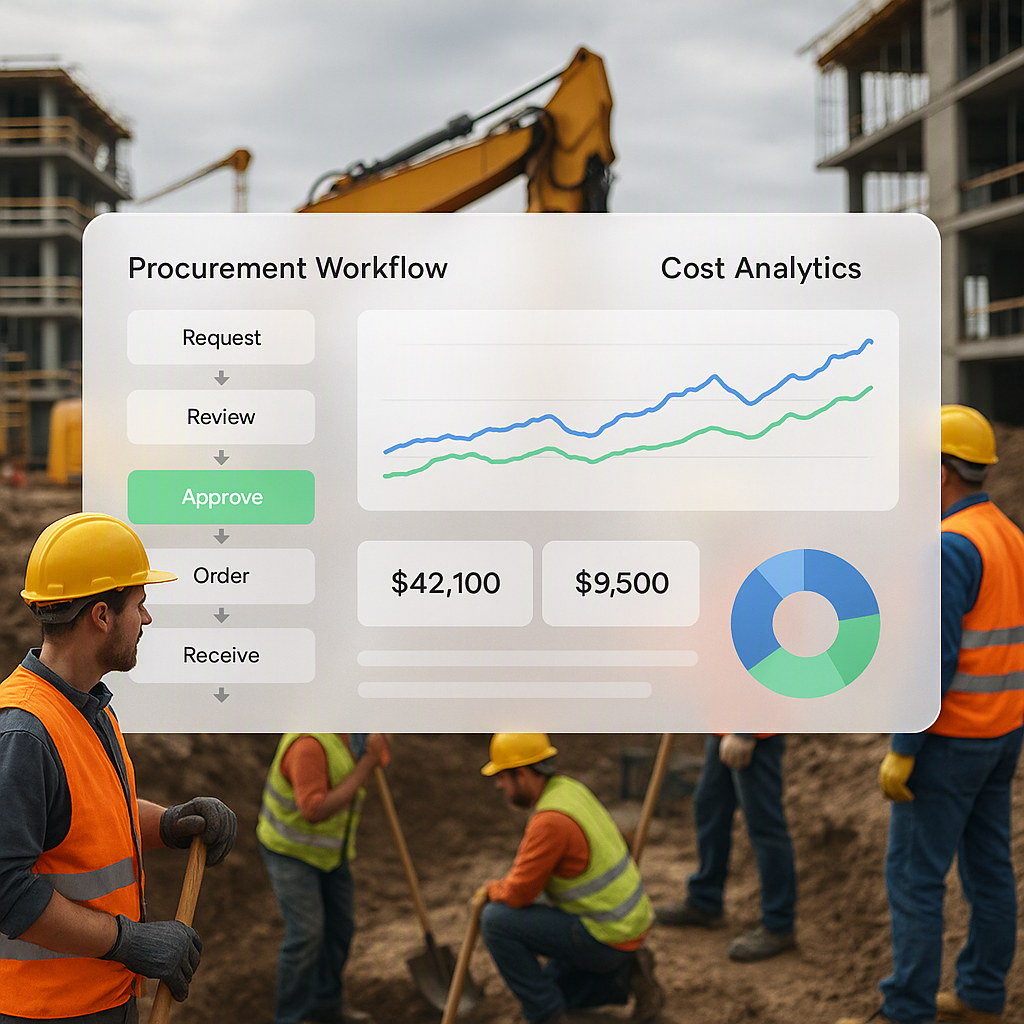
MR → RFQ → PO Workflow: The structured procurement module ensures all purchases align with pre-agreed rates. If a site engineer attempts to buy outside the contract, the system flags it.
-
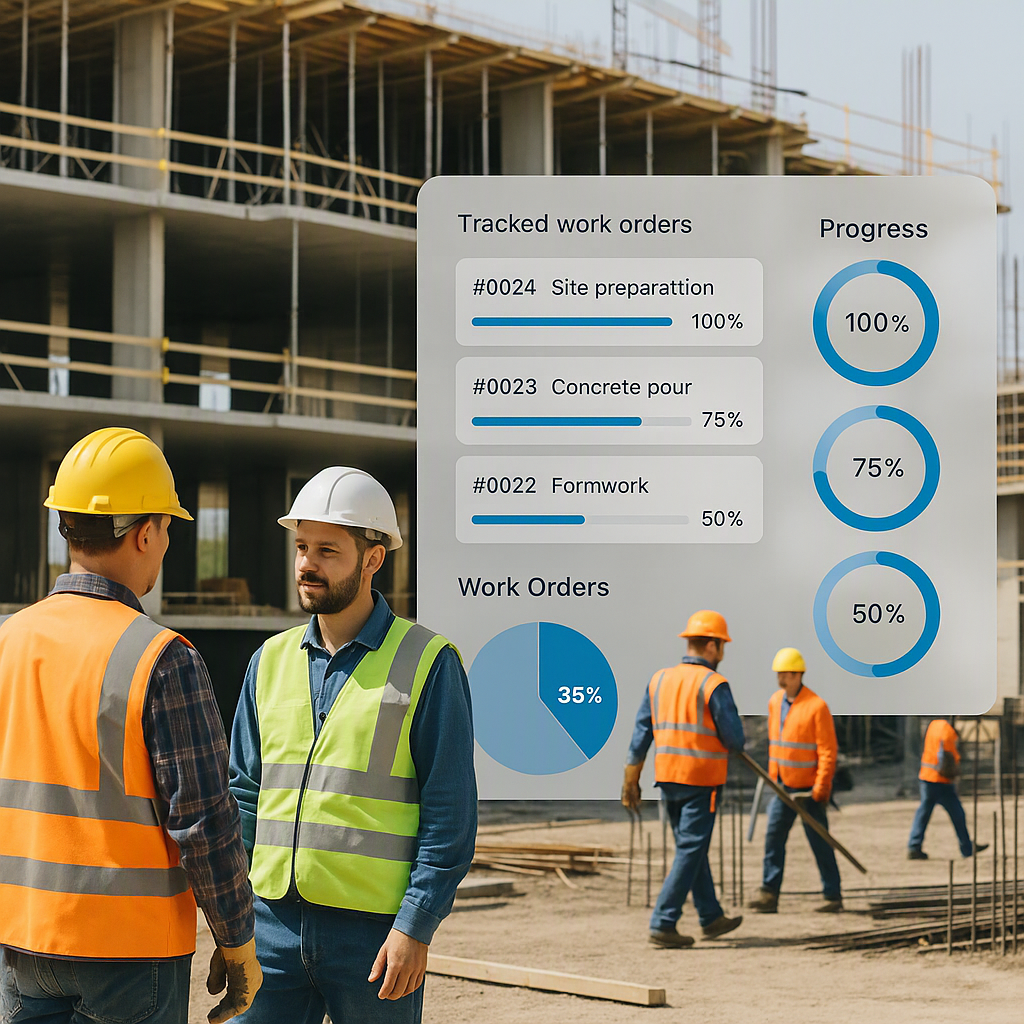
Real-Time Dashboards: Finance teams can monitor rate contract utilization in real-time and flag deviations instantly.
-
Integrated Reporting: Generate detailed reports on contract usage, supplier performance, and cost trends—all from one platform.
According to JobNext.ai, real-time cost tracking is critical for margin control. Rate contracts, when paired with the right tools, make managing costs far more predictable.
FAQ: Common Questions About Rate Contracts
1. How do I calculate quantities for rate contracts?
Start with your BOQ estimates, then factor in wastage rates and a buffer stock. Avoid overcommitting to quantities you can’t realistically use.
2. What if prices drop after I lock in rates?
Negotiate a price adjustment clause. Many suppliers are open to this, particularly for long-term contracts.
3. Can rate contracts work for small contractors?
Yes. Even smaller firms can benefit by locking in rates for high-volume materials like cement and steel. Start small and scale as needed.
4. How do I enforce rate contracts across multiple sites?
Use a centralized procurement system with approval workflows and real-time monitoring to ensure compliance.
5. Are rate contracts legally binding?
Yes, but only if properly documented. Include clear terms for pricing, delivery timelines, and penalties for non-compliance.
Final Thoughts
Rate contracts aren’t just a procurement tool—they’re a margin protection strategy. Implement them carefully, track usage religiously, and watch your costs stabilize.
If you’re struggling with inconsistent material costs, ProjectsNext can help. Its structured procurement workflows make managing rate contracts simple, even for multi-site operations. Get started free →
Learn more at JobNext.ai - Construction ERP