
Subcontractor Cost Overruns: The Profit Killer No One Talks About
Every contractor has been there. You sign a subcontract, the project kicks off, and somewhere along the way, costs start spiraling. Maybe it’s additional work that wasn’t scoped properly. Maybe it’s vague progress tracking. Or maybe it's just poor documentation. The result? Your profits vanish.
Let’s get real—subcontractor cost overruns aren’t just a nuisance; they’re a direct threat to your business. But here’s the good news: they’re preventable. Below, we’ll walk you through five practical ways to avoid them. Plus, we’ll look at how structured workflows, like those supported by tools such as ProjectsNext, can keep you ahead of the problem.
1. Nail the Scope of Work (SOW) Upfront
A half-baked SOW is a recipe for disaster. If your subcontractor doesn’t have a crystal-clear understanding of what’s expected—down to the last cubic meter of concrete or linear foot of pipe—you’re inviting disputes and cost creep.
Here’s a simple rule: If it’s not written, it doesn’t exist. Break down the BOQs (Bill of Quantities) and WBS (Work Breakdown Structure) into granular, measurable items. Avoid vague phrases like “complete installation” or “as per site requirement.”
Actionable Steps:
- Create Detailed BOQs: Break down the work into smallest measurable units. For example, instead of "Install HVAC system," specify "Install ducting for 1,000 sq. ft. area, including insulation."
- Use Visuals: Include diagrams, drawings, and photos as part of the SOW to eliminate ambiguity.
- Review with Subcontractors: Before finalizing, walk your subcontractor through the SOW and confirm mutual understanding. This can help identify any gaps or potential misunderstandings early on.
Pro Tip: Many contractors swear by structured templates for SOWs. Tools like ProjectsNext make it easier by letting you create detailed BOQs and track them across estimation, procurement, and execution stages. When everyone’s working off the same, standardized document, there’s less room for misinterpretation.
2. Use Structured Procurement Workflows
Ever approved a purchase order (PO) without knowing whether the material requisition (MR) was even necessary? Happens all the time—and it’s a direct path to cost overruns.
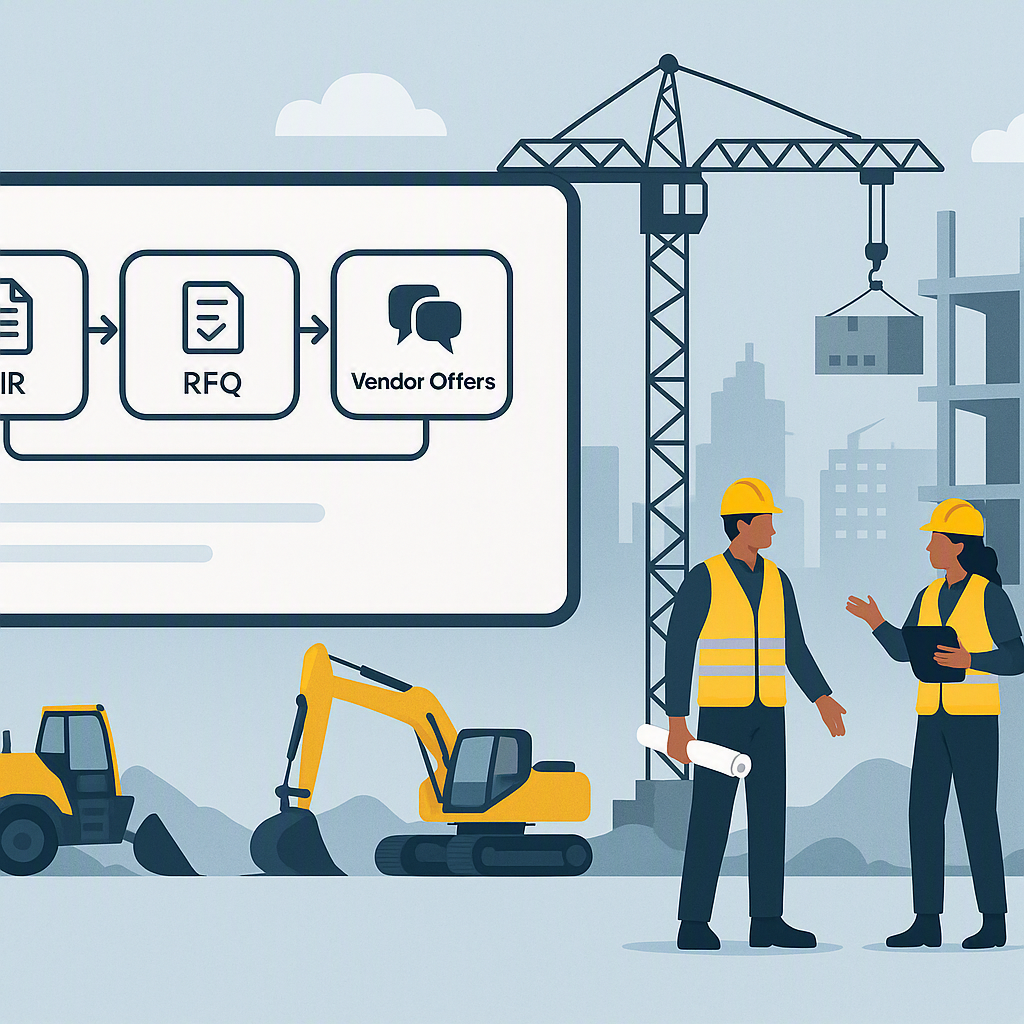
A structured procurement workflow (like MR → RFQ → Vendor Offers → PO) ensures you’re only buying what’s genuinely needed. And when this workflow is integrated with subcontractor work orders (WR → RFP → WO), it becomes even more powerful.
Actionable Steps:
- Align Procurement with SOW: Before approving a request for material or services, cross-check it with the SOW and BOQs. Ensure the request aligns with the agreed-upon scope.
- Standardize Your Workflow: Always follow a consistent process for procurement. For example:
- Material Requisition (MR): Subcontractor requests material.
- Request for Quotation (RFQ): Procurement team sources quotes from vendors.
- Purchase Order (PO): Final approval based on the lowest or best-value bid.
- Audit Requests: Periodically review a sample of procurement requests to identify and correct patterns of waste or over-ordering.
Why It Matters: A platform like ProjectsNext simplifies this by consolidating procurement and subcontractor workflows. Everything from MRs to WOs is tracked in one place, making it harder for costs to slip through the cracks.
3. Track Subcontractor Progress in Real-Time
One of the biggest mistakes contractors make is waiting until the end of the month to evaluate progress. By then, it’s too late.
The answer? Real-time progress tracking. For example, if your subcontractor is laying tiles, you should know by the end of Day 5 how many square meters are done—not just what they “plan” to finish by Day 30.
Methods to Implement Real-Time Tracking:
- Daily Progress Reports: Require subcontractors to submit daily updates with clear metrics (e.g., square meters completed, cubic meters poured).
- Site Photos and Measurements: Use technology to capture photos and integrate them with geotagged data for verification.
- Digital Tools: Platforms like ProjectsNext allow you to link site measurements directly with payment workflows, ensuring that payments are based on actual completed work rather than rough estimates.
Practical Tip: Use measurement-based tracking. Many contractors rely on tools that integrate site measurements directly with payment workflows. This ensures payments align with progress, not promises.
4. Enforce Multi-Level Payment Approvals
Subcontractor payments are tricky. Too little, and you risk delays. Too much, and you’re funding someone else’s cash flow problems—while eating into your own.
Multi-Level Payment Workflow:
- Site Engineer Approval: Verify that the work has been physically completed.
- Project Manager Review: Match the progress against the SOW and BOQs.
- Finance Team Validation: Ensure payments align with contractual terms, including milestone payments and retention clauses.
This multi-tier system ensures that no payment is released without proper checks, preventing overpayments and ensuring accountability across the team.
5. Plan for Contingencies (But Don’t Overuse Them)
No matter how well you plan, unforeseen issues will arise. A delayed material shipment, a design change, or even bad weather can derail subcontractor schedules. That’s why a contingency budget is essential.
Best Practices for Contingency Planning:
- Estimate Realistically: During preconstruction, assess potential risks and assign a percentage (typically 5–10%) of the total project cost as a contingency.
- Track Contingency Use: Use project management tools to categorize and monitor where contingency funds are applied. This allows you to identify patterns and improve future planning.
- Set Clear Limits: Avoid using contingency funds for minor issues that could have been avoided with better planning. Reserve them for genuine emergencies.
Action Step: Tools like ProjectsNext allow you to link contingencies directly to specific BOQ items, giving you better visibility into where your buffer is being consumed.
Common Mistakes to Avoid
- Skipping Detailed Contracts: A handshake agreement is not a contract. Always include specific terms around scope, payment, and timelines.
- Ignoring Vendor Performance History: Always vet subcontractors based on past performance, not just cost.
- Overpaying on Advances: Limit advances to the bare minimum required to mobilize resources. Tie the rest to actual progress.
- Relying on Manual Tracking: Spreadsheets are fine for small projects, but they don’t scale. Invest in an integrated platform.
FAQ
Q: What should I include in a subcontractor SOW? A: Break it down into BOQs, milestones, and measurable deliverables. Include drawings, timelines, and acceptance criteria to eliminate ambiguity.
Q: How do I choose the right subcontractor? A: Prioritize quality and reliability over cost. Review past projects, check references, and ensure compliance with regulations and licenses.
Q: Can software really prevent cost overruns? A: While no tool is a magic wand, platforms like ProjectsNext provide the structure and visibility you need to catch issues early and enforce accountability.
Q: How often should I track subcontractor progress? A: Ideally, daily. Frequent tracking allows you to identify and resolve issues before they escalate.
Q: What’s a fair contingency budget? A: It depends on the project size and complexity. Typically, 5–10% of the total project cost is a good starting point.
Decision Framework: When to Invest in Project Management Software
| Criteria | Manual Processes Suitable? | Software Recommended? |
|---|---|---|
| Project Value > $500,000 | No | Yes |
| Multiple Subcontractors Involved | No | Yes |
| Frequent Scope Changes | No | Yes |
| Real-Time Progress Required | No | Yes |
| High Risk of Overruns | No | Yes |
If subcontractor cost overruns are eating into your margins, it’s time to act. ProjectsNext offers integrated tools for procurement, progress tracking, and payment workflows—designed for Indian and GCC contractors. See how it works →
Learn more at JobNext.ai - Construction ERP