
Subcontractor Costs: The Silent Margin Killer
Subcontractor costs can kill your project margins faster than you realize. One mistake here, one unchecked invoice there, and suddenly your budget is toast. If you’ve ever looked back at a project and wondered, “Where did all the money go?”, you’re not alone. For many contractors, managing subcontractors feels like herding cats — chaotic, frustrating, and expensive.
But it doesn’t have to be. With the right processes, you can take control. Let’s break down five practical ways to prevent subcontractor cost overruns. No fluff, just stuff that actually works.
1. Start with Clear Scopes (and Stick to Them)
Scope creep is one of the most common and deadly culprits behind subcontractor cost overruns. It occurs when project boundaries shift or expand due to vague instructions, incomplete BOQs (Bill of Quantities), or unclear deliverables. Subcontractors often fill in the gaps with their own interpretation, which can lead to unexpected work—and costs.
Actionable Steps:
- Create Detailed BOQs and WBS: Break down your project into BOQ (Bill of Quantities) or Work Breakdown Structures (WBS). These hierarchies help you manage every stage of the project more effectively.
- For example, instead of saying, "Install HVAC systems," specify: "Install 3-ton rooftop HVAC units with ducting, wiring, and testing."
- Define Deliverables Clearly: Share specific scopes with subcontractors upfront, outlining what’s included and excluded. Use tables or bullet points to avoid ambiguity.
- Use Written Contracts: Draft formal agreements that include payment terms, timelines, and responsibilities. Never rely on verbal agreements.
Comparison:
| Scenario | Outcome |
|---|---|
| Vague scope | Subcontractors overestimate or misinterpret tasks |
| Detailed scope | Subcontractors deliver as specified, preventing extra costs |
By focusing on clarity upfront, you can eliminate costly arguments and misunderstandings about what is—and isn’t—included.
2. Track Progress with Measurement-Based Workflows
Here’s a hard truth: if you’re not measuring, you’re guessing. And guessing leads to overruns. Many contractors make the mistake of paying subcontractors based on vague progress updates, like "50% done," without verifying what has actually been completed. This is a recipe for disaster.
Actionable Steps:
- Implement Measurement-Based Payments: Use quantifiable metrics to track progress and tie payments to completed work. For example, if your subcontractor is building 100 meters of retaining wall, measure and document the exact length completed before releasing payment.
- Use Structured Workflows: Tools like ProjectsNext can help implement workflows, such as:
- Work Requests (WR): Define tasks clearly.
- Requests for Proposals (RFP): Gather competitive bids.
- Work Orders (WO): Finalize scope, price, and deliverables.
- Measurements: Record actual progress against the scope.
- Conduct Site Inspections: Regularly visit sites to verify work aligns with reported progress. Don’t rely solely on subcontractor updates.
Example Workflow:
| Step | Action | Purpose |
|---|---|---|
| Work Request (WR) | Define specific tasks | Clear communication of expectations |
| Request for Proposals | Get quotes from subcontractors | Ensure competitive pricing |
| Work Order (WO) | Lock down scope and agreed price | Prevent misunderstandings |
| Measurement | Verify completed work | Avoid overpayments |
This approach ensures contractors pay for actual work completed—not vague promises or inflated reports.
3. Standardize Procurement and Approval Chains
Unstructured procurement is chaos. One site engineer orders material, another hires labor, and nobody knows who approved what. This lack of oversight is how small overruns snowball into big ones.
Actionable Steps:
- Centralize Procurement: Standardize the workflow across your organization:
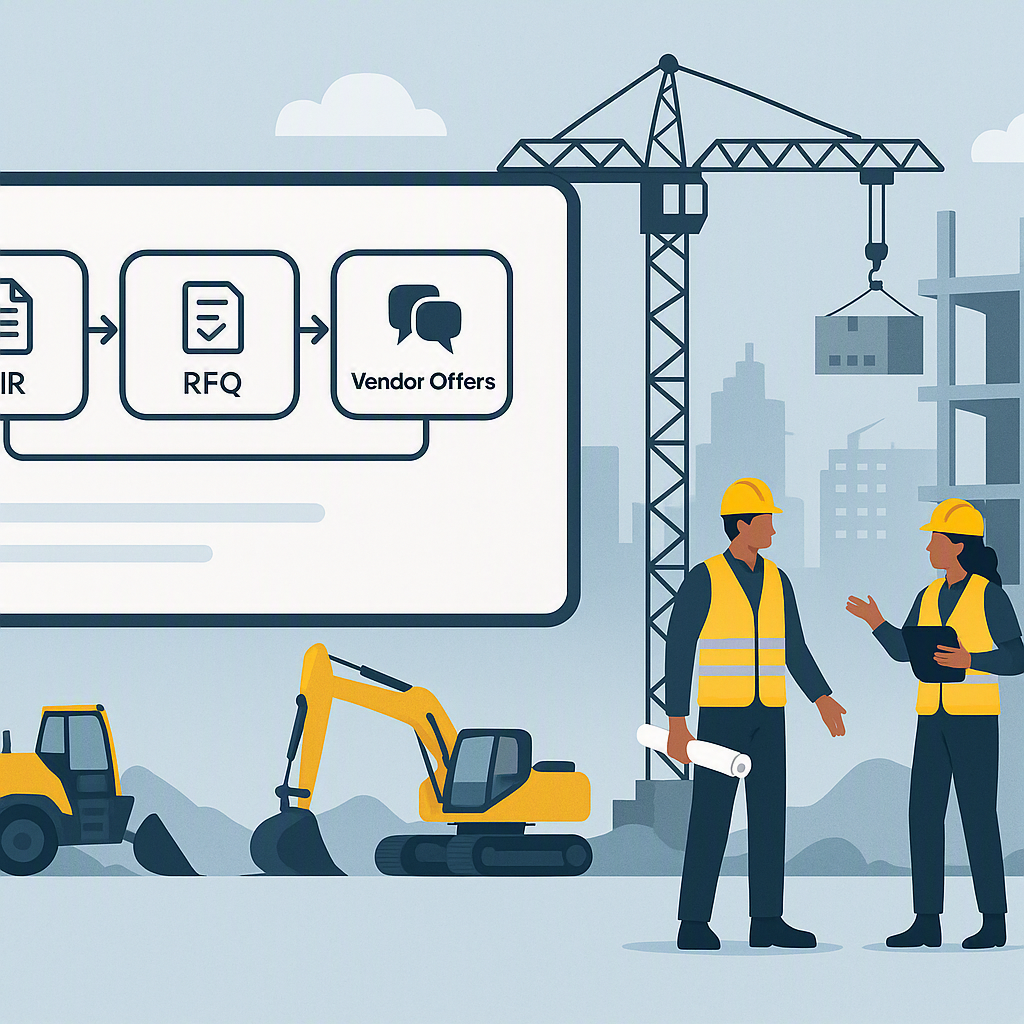
- Material Requisition (MR) → Request for Quotation (RFQ) → Vendor Offers → Purchase Order (PO).
- Ensure every step requires approval from designated personnel.
- Multi-Level Approvals for Payments: Use systems that enforce approvals at multiple levels for subcontractor payments, reducing the risk of unauthorized spending.
- Digitize Processes: Manual systems are prone to delays and errors. Use software to digitize procurement, ensuring transparency and real-time tracking.
Comparison of Procurement Systems:
| System Type | Pros | Cons |
|---|---|---|
| Manual (Spreadsheets) | Simple setup | Prone to errors, slow, hard to scale |
| Digital (Software) | Real-time tracking, scalable, automated | Requires upfront investment in tools |
A structured procurement chain prevents confusion and ensures you know exactly why money is being spent.
4. Regularly Reconcile Invoices with Actuals
One of the biggest margin killers is mismatched invoices. Subcontractors submit invoices based on their perception of completed work, which may not match reality. If invoices aren’t reconciled against actual progress, you’re paying for work that hasn’t been done—or worse, for mistakes.
Actionable Steps:
- Match Invoices to Work Orders: Before approving payments, ensure every invoice aligns with the original work order and documented progress.
- Document Adjustments: Track delays, rework, or changes to scope and reflect these adjustments in your payment approvals.
- Perform Regular Audits: Conduct periodic reviews of subcontractor invoices and supporting documentation to catch errors early.
Decision Framework:
| Invoice Issue | Action |
|---|---|
| Mismatch with work order | Request clarification and supporting evidence |
| Scope changes not documented | Reject invoice and update work order |
| Invoice exceeds agreed pricing | Enforce contract terms |
By reconciling invoices regularly, you can avoid disputes and reduce unnecessary spending.
5. Don’t Rely on Memory — Use Real-Time Reporting
Managing subcontractor costs using spreadsheets, WhatsApp messages, or phone calls is a recipe for failure. Without real-time visibility, you’re always reacting instead of proactively managing costs.
Actionable Steps:
- Use Reporting Tools: Platforms like ProjectsNext offer 150+ pre-built reports and real-time dashboards that provide a clear view of subcontractor costs.
- Monitor Cost Overruns Daily: Set alerts for overspending to catch problems early.
- Centralize Communication: Use software to integrate site-level updates, procurement records, and payment approvals into a single dashboard.
Benefits of Real-Time Reporting:
| Feature | Advantage |
|---|---|
| Real-time dashboards | Immediate visibility into costs |
| Automated alerts | Early detection of overruns |
| Centralized data | Reduces manual errors and communication gaps |
Real-time reporting lets you stay ahead of issues instead of scrambling to fix them after the fact.
FAQ
1. How do I manage subcontractors working at multiple sites? Use a system that supports multi-site operations, like ProjectsNext, which integrates attendance, payroll, and project tracking across locations.
2. What’s the easiest way to avoid scope creep? Be specific in your BOQs and work orders. Share detailed scopes and hold subcontractors accountable to them.
3. How can I get subcontractors to stick to timelines? Tie payments to milestones and completed work. A measurement-based workflow ensures accountability.
4. Can I track subcontractor costs without software? Yes, but it’s inefficient. Spreadsheets and manual processes don’t scale well and are prone to errors. Software simplifies this.
5. What’s a good way to estimate subcontractor costs upfront? Use historical data from previous projects. If you don’t have it, start tracking now so you’ll have benchmarks for future projects.
Conclusion
Subcontractor cost overruns don’t have to be inevitable. By implementing clear scopes, measurement-based workflows, structured procurement systems, and real-time reporting, you can stay in control.
If you’re struggling to keep your subcontractor costs in check, ProjectsNext can help. Get started free →
Learn more at JobNext.ai - Construction ERP