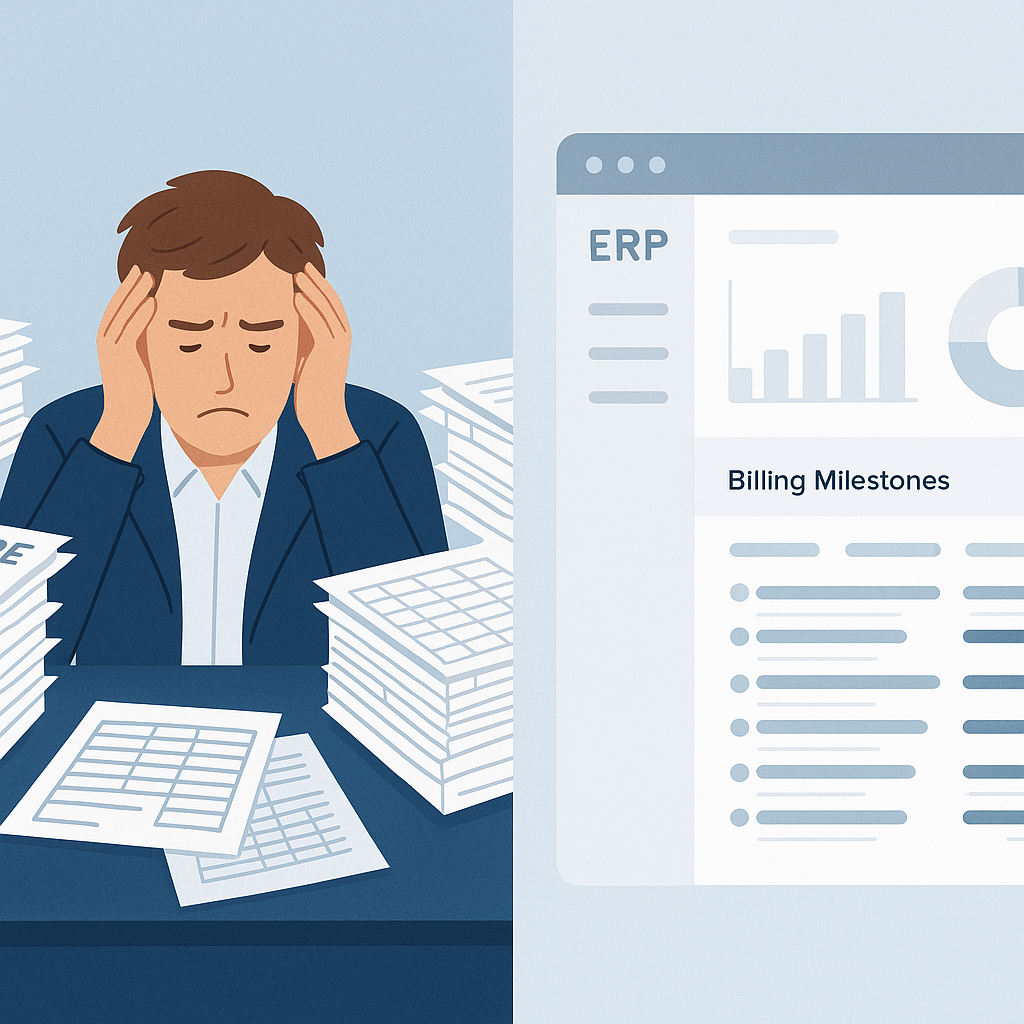
Stop the Spreadsheet Spiral
Let’s face it: most small contractors start with spreadsheets. It’s cheap, familiar, and gets the job done—until it doesn’t. You’ve got one file for material procurement, another for labor allocation, and something else entirely for tracking payments. Sound familiar?
This patchwork system works when you’ve got one or two small projects. But when you’re managing five sites, dealing with GST compliance, and trying to monitor subcontractor costs? It breaks down. Fast.
Here’s the kicker: the longer you rely on disconnected tools, the more money you’re losing. We’ve seen contractors bleed 10-15% of their margins because their systems couldn’t keep up. That’s avoidable.
Where It Hurts
1. Procurement Chaos: Imagine this: your site engineer places an urgent material request (MR). It gets WhatsApped to the purchase team. They send out RFQs, but forget to loop in finance for budget approval. A week later, the vendor delivers the wrong quantity. Sound dramatic? It’s not. We’ve heard this story too many times.
2. Billing Gaps: Missed line items in RA bills? That’s revenue you’ll never recover. Without a structured billing method (or six), things slip through the cracks—especially when you’re billing stage-wise or monthly across multiple BOQs.
3. Subcontractor Overruns: Here’s another common one. You hire a subcontractor on a work order (WO) basis. But without measurement-based tracking, they bill you for 80% of the work when only 60% is done. You’re overpaying. Period.
Why Unified ERPs Fix This
A unified construction ERP isn’t just for companies with massive budgets. It’s for contractors who want to stop firefighting and start running projects profitably. Let’s unpack this with one practical example: structured procurement workflows.
With a tool like JobNext, procurement follows a tight workflow: MR → RFQ → Vendor Offers → PO. Every step is logged. Every approval is tracked. No WhatsApp messages. No “Who approved this?” questions later. Plus, the system is directly linked to your budget. If the MR exceeds the project’s allocated cost, it flags it right away.
Need to compare vendor quotes? It’s built in. Want to enforce approval hierarchies? Done. And the cherry on top? GST compliance is automatic. No manual calculations, no missed filings. This isn’t just about saving time—it’s about stopping leaks.
You Might Be Thinking...
“But I’m a small contractor. Can I afford this?” The real question is, can you afford not to? Here’s a hard truth: if you’re running multiple projects without real-time cost tracking, you’re probably losing money every month. A unified ERP pays for itself by plugging holes you didn’t even know existed.
“What if my team isn’t tech-savvy?” Fair concern. But modern ERPs (like JobNext) are built for real-world contractors, not IT experts. Workflows are intuitive, and support teams can train your staff in a few days—not weeks.
Final Word
Small contractors can’t compete with bigger players on scale. But you can absolutely compete on efficiency. A unified ERP levels the playing field. It turns chaos into control, leaks into profits, and confusion into clarity.
Still think spreadsheets are enough?
Cited Sources:
- Construction Project Profit Margins — Average margins for small contractors.
- ERP Implementation ROI — How ERPs save costs over time.
- GST Compliance in Construction — Why GST compliance is critical for contractors.
Ready to see JobNext in action?
Multi-tenant SaaS ERP for construction, facilities management, and contracting — covering preconstruction, project execution, procurement, HR & payroll, equipment, finance, and 150+ analytics reports.
Get Started Free →