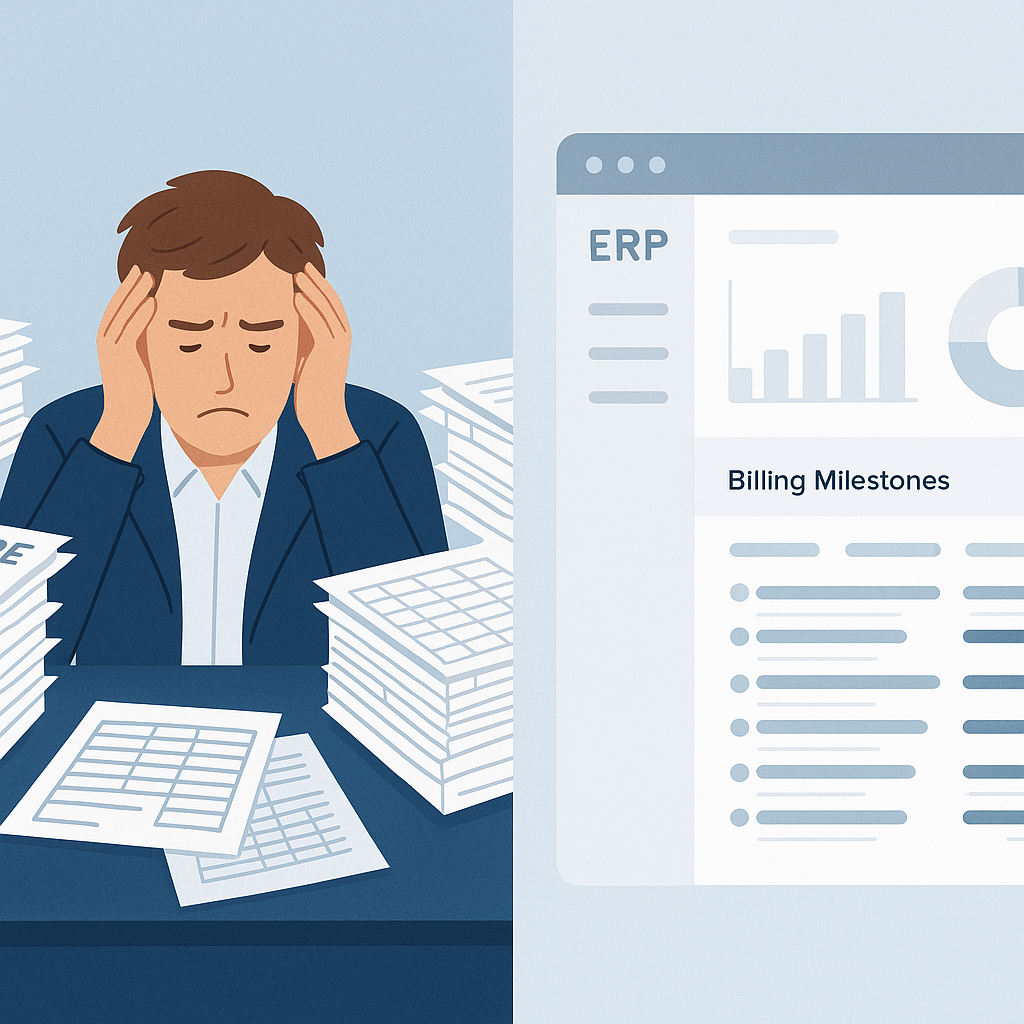
The Hidden Profit Killer: Subcontractor Overruns
Small contractors often focus on winning projects, but what happens after the ink dries on the contract? Subcontractor costs spiral out of control, erasing margins faster than you can say 'change order.'
The Problem: Subcontractor Overruns in Action
Here’s a scenario I’ve seen too many times. You hire a subcontractor, sign a work order, and assume everything will go smoothly. But then the scope changes, material costs rise, or the subcontractor invoices for work that wasn’t completed. You’re left scrambling to reconcile progress measurements with payments—often too late to avoid budget overruns.
Real-World Example: The ₹10 Lakh Dispute
A small contractor in Pune shared how a single subcontractor dispute cost them ₹10 lakh. The issue? Payments were made based on rough estimates, not validated progress. When the contractor conducted a site audit, they discovered incomplete work that had already been paid for. Not only did they lose money, but the project timeline also stretched by two months, leading to further losses in overhead and reputation.
If this sounds familiar, you’re not alone. Subcontractor overruns are among the top reasons small contractors lose profitability. According to a McKinsey report on construction productivity, inefficient processes cost the industry over $1 trillion annually.
Why Disconnected Tools Don’t Cut It
Many contractors rely on a mix of spreadsheets, standalone accounting software, and paper-based systems to manage subcontractors. Here’s the problem: these systems don’t talk to each other. You might track work requisitions in one tool, measurements in another, and payments in yet another. The result? Gaps in your data.
Example: The Spreadsheet Trap
A contractor managing a mid-sized residential project used spreadsheets to track progress. While the initial plan looked detailed, the spreadsheet was updated inconsistently by the site supervisors. By the time discrepancies were caught, the subcontractor had already been overpaid by ₹5 lakh. Resolving the issue took weeks and strained the contractor-subcontractor relationship.
Why This Happens
- Lack of Integration: Data sits in silos, making it hard to verify claims.
- Human Error: Manual entries lead to inaccuracies.
- No Real-Time Updates: By the time issues are identified, it’s often too late to act.
Take progress tracking. If you can’t validate subcontractor invoices against actual work progress, you’re essentially writing blank checks. And when disputes arise, you end up wasting time chasing documentation instead of focusing on execution.
The Fix: Measurement-Based Progress Tracking
Unified ERPs like JobNext solve this problem with structured workflows. For subcontractor management, JobNext offers tools that enforce accountability at every stage. Here’s how it works:
- Work Requisitions (WR): Create detailed requisitions that outline the scope and budget.
- Request for Proposals (RFP): Collect competitive bids and award contracts based on pre-defined criteria.
- Work Orders (WO): Issue work orders directly from the platform, ensuring they align with the approved budget.
- Progress Measurement Sheets: Track progress against predefined milestones using measurement sheets. Payments are tied to these verified measurements, preventing overbilling.
Actionable Steps to Implement Measurement-Based Tracking
- Set Clear Milestones: Break the project into measurable deliverables.
- Use Digital Tools: Ditch spreadsheets and opt for integrated platforms like JobNext.
- Enforce Regular Audits: Conduct site inspections before approving payments.
- Standardize Documentation: Ensure all subcontractors use the same format for reporting progress.
What’s the result? No more guessing whether a subcontractor completed the work—they don’t get paid until their progress matches the agreed-upon scope.
Real-World Impact: ₹50 Lakh Saved
Let’s talk numbers. One of our clients, a mid-sized MEP contractor in Chennai, saved ₹50 lakh annually by switching to JobNext. Before using the platform, they struggled with manual progress tracking and frequent disputes over subcontractor payments. After implementing JobNext’s subcontractor management module, the entire process became automated:
- Payment approvals now require verified progress measurements.
- Work requisitions and orders are tied directly to the project budget.
- Disputes dropped by 80%, saving hundreds of hours in admin time.
This isn’t just theory—it’s practical, measurable impact.
Case Study: MEP Contractor Success
- Before JobNext: ₹20 lakh annual loss due to disputes and delays.
- After JobNext: Savings of ₹50 lakh annually from automated workflows.
- Key Changes: Progress-based payment approvals, reduced admin overhead, and improved subcontractor accountability.
Why Small Contractors Can’t Ignore This
You might be thinking, “My projects are too small to need an ERP.” But here’s the hard truth: even a single subcontractor dispute can wipe out your margins. Small contractors are especially vulnerable because they don’t have the cash reserves to absorb these losses.
Unified ERPs aren’t just for large companies. Platforms like JobNext are designed for contractors with 50-2,000 employees running multiple concurrent projects. They simplify complex workflows, enforce budget discipline, and provide real-time visibility into project profitability.
Comparison Table: Spreadsheets vs. JobNext
| Feature | Spreadsheets | JobNext |
|---|---|---|
| Progress Tracking | Manual, prone to errors | Automated, milestone-based |
| Integration with Accounting | None | Seamless |
| Payment Approvals | Based on estimates | Tied to verified progress |
| Dispute Resolution | Time-consuming | Reduced by 80% |
| Compliance | Manual calculations | Automated GST/TDS workflows |
What About Compliance?
Another overlooked issue is compliance. Subcontractor payments often involve statutory deductions like GST and TDS. JobNext automates these calculations, ensuring you stay compliant without extra manual work.
Compliance in Action
A contractor in Delhi faced penalties of ₹2 lakh due to incorrect GST filings. After switching to JobNext, all GST and TDS deductions were automated, eliminating errors and ensuring timely filing.
FAQs
Q: What if I already use accounting software?
A: Standalone accounting tools don’t handle project-level workflows like subcontractor progress tracking. JobNext integrates with systems like Tally for statutory reporting but adds layers of project-specific functionality.
Q: How long does it take to implement?
A: Implementation timelines vary, but most small contractors can get up and running in under 90 days. The platform is cloud-based, so there’s no heavy IT setup.
Q: Can it handle multiple sites?
A: Absolutely. JobNext is built for multi-site operations, allowing you to track progress and costs across all locations.
Q: Is it expensive for small contractors?
A: JobNext offers tiered pricing based on company size and project volume. Small contractors often find it pays for itself within months due to the cost savings from reduced disputes and better budget control.
Q: How does it improve transparency?
A: All workflows in JobNext are documented and auditable. From work orders to payment approvals, every step is logged, making it easy to track who approved what and when.
Ready to Stop Bleeding Margins?
If subcontractor overruns are eating into your profits, JobNext can help. Get started free →