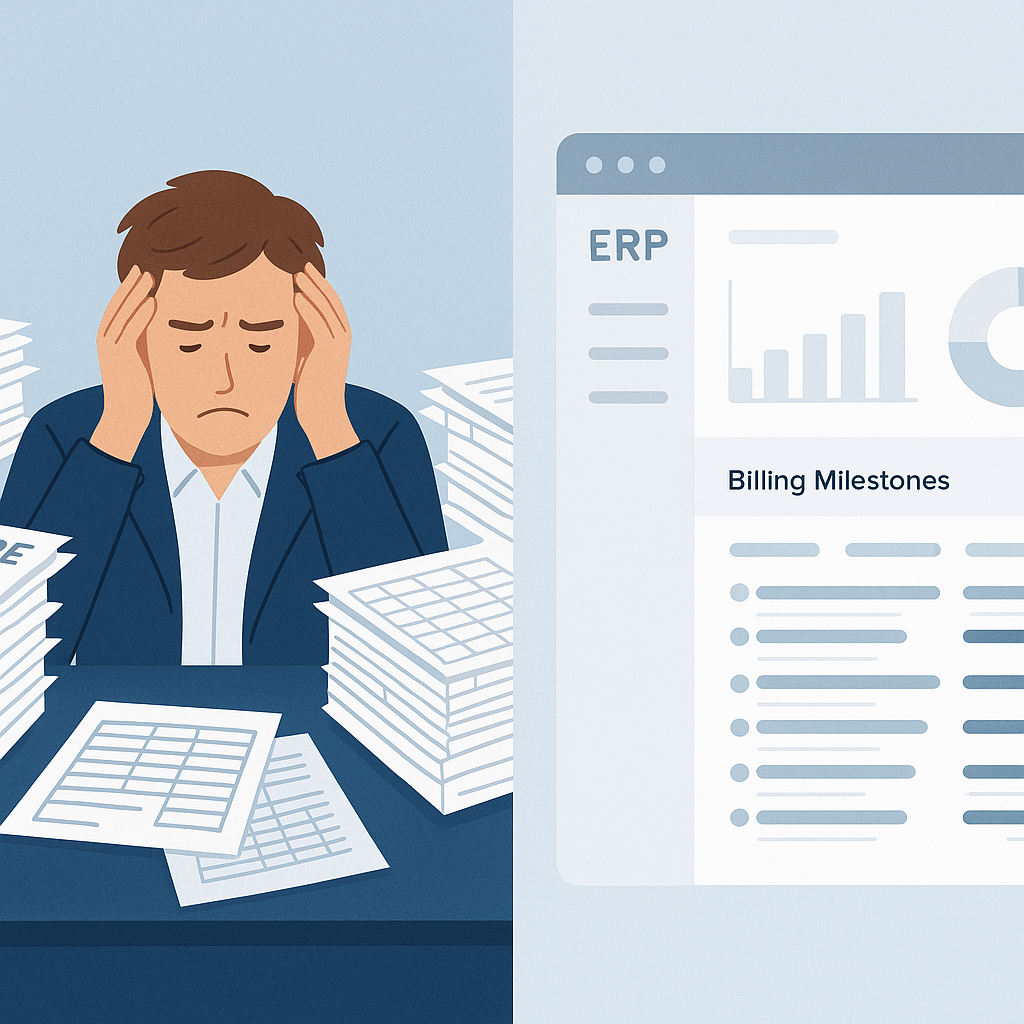
When it comes to picking ERP software, small contractors usually get the short end of the stick. Too many platforms are built for massive companies with endless budgets and IT teams. But what about contractors with 50-2000 employees juggling multiple projects? They often end up paying for features they’ll never use or stitching together disconnected tools.
Let me be blunt: most construction ERPs fail the small-to-mid-size contractor. Here’s why — and how to avoid the headache.
The Real Problem: Disconnected Systems
If you’re like most contractors, you’re running 4-5 different tools for tendering, procurement, HR, billing, and finance. Sound familiar? This disconnected mess creates chaos: spreadsheets go out of sync, POs get lost, and site teams don’t know what’s been approved. Worst of all, your profitability tracking is always lagging. Too late to stop margin erosion by the time you see it.
We’ve seen it happen time and again. One contractor I worked with in Oman lost AED 500,000 on a single project because they underestimated material costs during tendering — and didn’t catch the overrun until two months after project completion. Ouch.
What to Look For in a Construction ERP
You’re probably searching for the best ERP software for construction. That’s great, but don’t fall for the buzzwords. Here’s what actually matters:
-
Unified Platform: Your ERP should replace multiple tools. Look for features like tender tracking, procurement workflows, and billing all in one place. If you’re still exporting CSVs to import into Tally, it’s not really an ERP.
-
Real-Time Cost Tracking: Can you see your project profitability at any moment? This is non-negotiable. Systems like JobNext give you BOQ-level insights into costs, so you can fix issues before they blow up.
-
Local Compliance: If you’re operating in India or GCC, GST and TDS compliance isn’t optional. Neither is Tally integration. Many global ERPs fail here — they’re built for American or European regulations, not ours.
-
Multi-Tenant SaaS: Forget on-premise. You need a cloud system that gets updates without downtime or extra cost. Plus, it’s a lifesaver when you’ve got teams spread across sites, camps, and offices.
-
Approval Workflows: Can you control spending before it happens? A good ERP enforces MR → RFQ → Vendor Offers → PO workflows with approval chains. No more “I thought someone else approved that.”
Why JobNext Solves These Better
Let’s talk specifics. JobNext is built for contractors in India and GCC, not global giants. One feature I love? Its structured procurement workflow. Here’s how it works:
- Material Request (MR): Site teams raise MRs with a clear BOQ link.
- RFQ: Procurement sends out RFQs to vendors directly from the system.
- Vendor Offers → PO: Compare offers side-by-side and convert the best one into a PO with a single click.
This isn’t just theory. A mid-size MEP contractor in Dubai cut their procurement cycle time by 30% after switching to JobNext. They also caught a vendor overcharging them on steel prices — something they’d missed before because the MR and PO were on different systems.
You might be thinking, “Doesn’t every ERP do this?” Actually, no. Many don’t handle the full workflow end-to-end. They stop at issuing POs, leaving you to track vendor offers offline. That’s where the chaos creeps back in.
The Bottom Line
Don’t settle for an ERP that’s wrong-sized or incomplete. If you’re a contractor in India or GCC, focus on tools designed for your realities: GST compliance, multi-site HR, and real-time project tracking. And don’t underestimate the value of a unified platform. It’s not just about convenience. It’s about stopping the margin leaks that kill your profitability.
JobNext isn’t perfect (no ERP is), but it’s built for contractors like you. And that makes all the difference.
Ready to see JobNext in action?
Multi-tenant SaaS ERP for construction, facilities management, and contracting — covering preconstruction, project execution, procurement, HR & payroll, equipment, finance, and 150+ analytics reports.
Get Started Free →