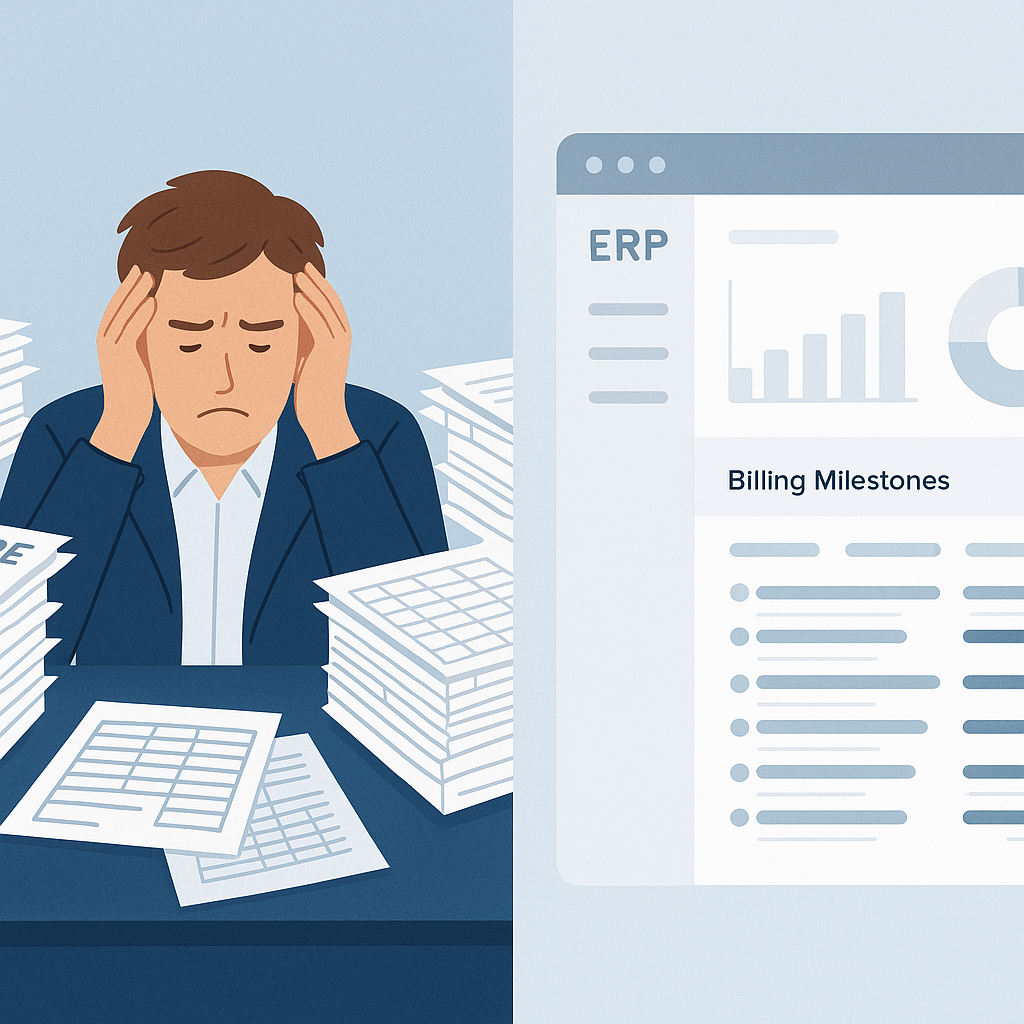
Small Contractors Bleed Margins — Here's the Fix
Let me ask you something. How often do you know your project profit margins in real-time? Not at the end of the quarter. Not after your accountant spends a week reconciling numbers. Right now.
If your answer is "rarely" or "never," you're not alone. Most small contractors run blind when it comes to tracking costs. Materials get over-ordered. Labor hours balloon. Subcontractors submit inflated bills. By the time you realize you've lost money, it's too late.
We've seen contractors lose ₹50 lakh — sometimes more — on a single project because they didn’t have a clear picture of their costs. The problem? Too many disconnected tools and manual processes. Excel for estimates. WhatsApp for approvals. Tally for accounting. None of it talks to each other.
A unified construction ERP can change that. Let me show you how real-time cost tracking works — and why it matters.
Why Real-Time Cost Tracking Isn't Optional
First, let’s define the stakes. In a typical ₹10 crore project, even a 5% cost overrun means ₹50 lakh down the drain. For a contractor running on thin margins, that’s devastating.
Here’s what usually goes wrong:
- Material Waste: Site teams over-order cement or steel because they don’t know what’s already in stock. For example, a construction company in Bengaluru recently realized they had double-ordered steel for a project, costing them ₹15 lakh in surplus inventory.
- Labor Overruns: Workers clock overtime because the project manager underestimated the time needed for specific tasks. A road contractor in Maharashtra reported that labor overruns on one project wiped out ₹8 lakh in potential profits.
- Subcontractor Overbilling: Without proper measurements, subcontractors might bill for work they haven’t completed. In one case, a small electrical contractor found they had paid 20% extra for incomplete wiring jobs across two sites.
If you’re not tracking these costs in real-time, they’ll snowball. You’ll only catch them months later when the damage is done.
Actionable Steps
- Audit Your Current Processes: Identify where delays and miscommunication occur. Are material requests being vetted before approval? Are labor hours tracked daily?
- Set a Cost Overrun Threshold: Decide what percentage of cost overruns is acceptable and build alerts around that.
- Track Trends: Use historical data to pinpoint recurring issues, such as specific materials or subcontractors that consistently exceed budgets.
How Unified ERPs Fix This
Let’s talk specifics. JobNext, for example, offers real-time project profitability tracking that’s built into the system. Here’s what that looks like:
Key Features of JobNext ERP
- Material Budgets vs. Actuals: The BOQ (Bill of Quantities) is tied to your procurement process. When you raise a Material Request (MR), the system checks it against your budget. If the site team tries to order 20% more cement than planned, it flags it immediately.
- Approved Labor Hours: Labor costs are tracked daily. Site supervisors log attendance, and the system compares it to the estimated man-hours for the task. If a task is 30% over budgeted hours, you know about it today, not next month.
- Subcontractor Measurements: Instead of relying on manual approvals, you link payments to completed work measurements. If a subcontractor claims 1,000 sq. ft. of plastering, the system verifies whether it matches the recorded progress.
Real-World Results
Contractors using JobNext have reported savings of ₹10-15 lakh per project just by catching these issues early. For example:
- HVAC Contractor in UAE: Saved ₹12 lakh by tying material requests to BOQs and eliminating over-ordering.
- Residential Builder in Pune: Reduced labor overruns by ₹8 lakh in six months by implementing daily tracking and comparisons against budgeted hours.
- Infrastructure Contractor in Haryana: Prevented a ₹20 lakh subcontractor overbilling issue by linking payments to verified progress.
Actionable Steps
- Start Small: Use an ERP for one project first to understand the system before rolling it out across all sites.
- Train Your Team: Ensure site supervisors and procurement staff understand how to input accurate data.
- Automate Alerts: Set up notifications for material overruns, labor hours, and subcontractor discrepancies.
The Obvious Objection: “We’re Too Small for This”
You might be thinking, "This sounds great, but our company only does ₹50 crore in annual revenue. We can’t afford a fancy ERP."
Here’s the thing: you can’t afford not to. Most small contractors run multiple projects simultaneously. Even if you’re managing just five ₹10 crore projects a year, a 5% margin loss across them adds up to ₹2.5 crore.
Would you rather spend ₹5-10 lakh annually on a unified ERP or keep losing ₹2.5 crore?
SaaS Model Advantage
Modern SaaS ERPs like JobNext don’t require a massive upfront investment. You pay a subscription fee, and everything runs in the cloud. No hardware. No servers. Just results. For instance, a ₹10 crore project typically costs ₹50,000 to ₹1,00,000 annually for ERP software — a fraction of the savings it delivers.
Actionable Steps
- Calculate ROI: Estimate the potential savings from catching a 5-10% overrun in your typical project.
- Trial Subscription: Many ERPs offer free trials or discounted initial months. Use this to test the system.
- Seek Vendor Guidance: Ask your ERP provider for implementation support tailored to smaller teams.
Real-Life Example: ₹12 Lakh Saved in GCC
One of our clients, an HVAC contractor in the UAE, struggled with material overruns. Their site teams often ordered 20-30% more ducting materials than needed because they didn’t track what was already delivered.
After implementing JobNext, they tied every Material Request to the project BOQ. The result? They caught unnecessary orders worth ₹12 lakh over three projects in six months. That’s real money back in their pocket.
Comparison Table: ERP vs Manual Processes
| Feature | Manual Processes | ERP Systems like JobNext |
|---|---|---|
| Material Tracking | Reactive, prone to over-ordering | Real-time alerts on over-orders |
| Labor Cost Monitoring | Weekly/monthly reconciliation | Daily tracking and comparisons |
| Subcontractor Billing | Manual approvals | Automated verification |
| Cost Overrun Alerts | Non-existent | Instant notifications |
| ROI Timeline | Hard to measure | 6-12 months |
What Happens Without Real-Time Tracking?
Let’s be blunt. If you’re not using real-time cost tracking, you’re leaving money on the table:
- Missed Profit Opportunities: You might underbid projects because you don’t know your true costs.
- Cash Flow Crises: Surprise overruns can cripple your ability to pay vendors and staff on time.
- Eroded Margins: Even if you complete the project on time, your profits shrink — or disappear entirely.
And the worst part? These issues are avoidable.
Actionable Steps
- Conduct Post-Mortems: Analyze completed projects for cost overruns and missed savings opportunities.
- Implement Regular Reviews: Schedule weekly cost-tracking meetings with project managers.
- Invest in Preventative Tools: Allocate budget for systems that catch issues early.
FAQs
Q: What if my team isn’t tech-savvy?
A: Modern ERPs like JobNext are designed for ease of use. Your team doesn’t need to be IT experts — if they can use WhatsApp, they can handle this.
Q: How long does it take to see ROI on an ERP?
A: Most contractors see ROI within 6-12 months. Catching even one major cost overrun can offset the subscription cost for the year.
Q: Can this integrate with my existing accounting software?
A: Yes, JobNext integrates with Tally for GST and statutory compliance. No need to replace what’s already working.
Q: How do I convince my team to adopt this?
A: Start with one project and demonstrate the savings. Once your team sees the benefits, adoption becomes easier.
Q: What happens if we don’t implement an ERP?
A: You risk ongoing profit erosion, cash flow issues, and bidding errors that could sink your business.
Ready to Stop Losing Money?
If you’re tired of margin erosion and manual chaos, it’s time to make a change. JobNext gives you real-time visibility into your costs so you can take control of your profits.