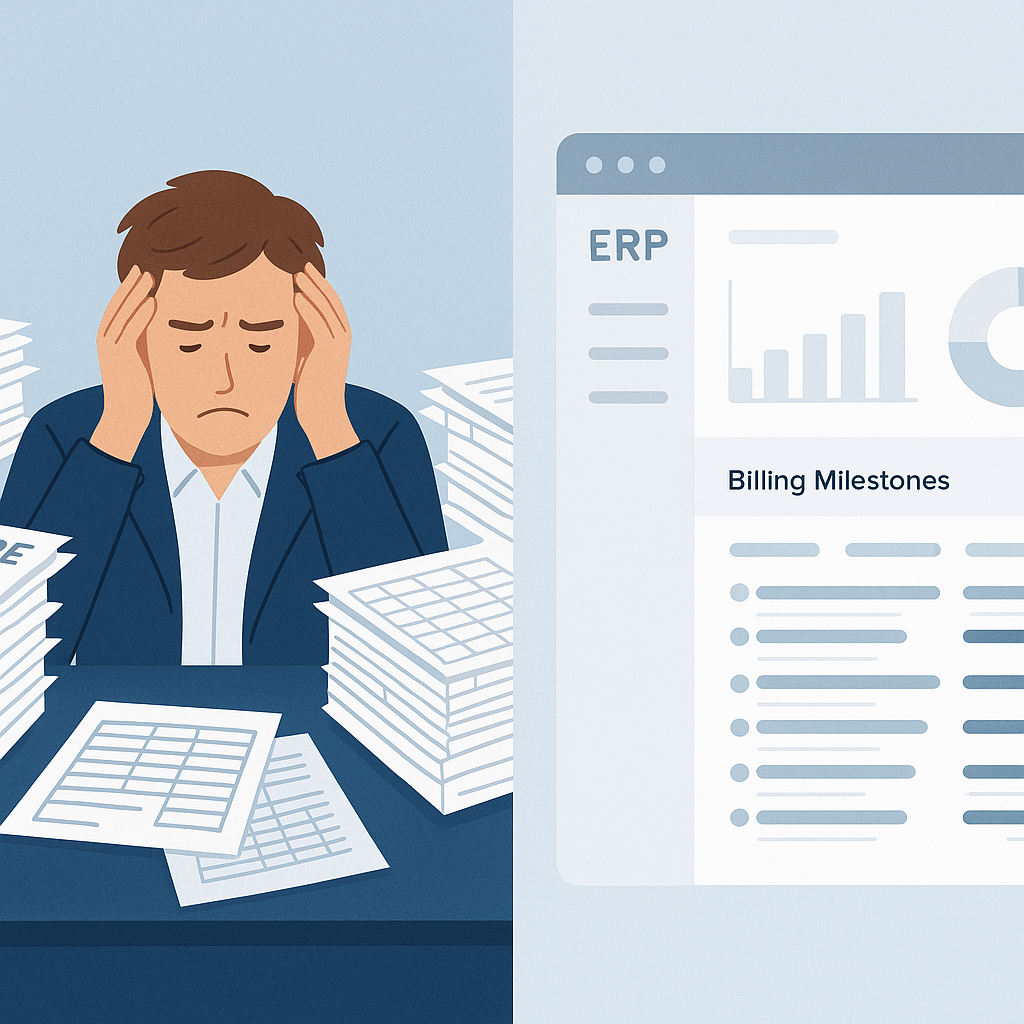
Subcontractor Costs Are Bleeding Small Contractors Dry
Let’s face it: managing subcontractors is messy. One missed measurement or skipped approval, and suddenly, you’re staring at ₹5 lakh in unexpected costs. Multiply that by 10 projects, and you're looking at a ₹50 lakh problem no one saw coming.
If you’re a small contractor juggling multiple projects in the GCC or India, this isn’t just a headache — it’s a profitability killer.
The Problem: Lack of Visibility and Control
Here’s how it usually plays out:
- Measurements Aren’t Timely: Progress measurements are delayed or inaccurate because site engineers are relying on WhatsApp, emails, or paper logs. For example, a site engineer might report that 80% of brickwork is completed, but without proper verification, this number often turns out to be inflated.
- Payments Aren’t Linked to Progress: Subcontractors get paid based on fixed schedules, not actual work done. This means you’re often overpaying for incomplete or subpar work. For instance, a contractor might release ₹2 lakh for plastering before realizing only 50% of the job was completed.
- No Clear Audit Trail: When disputes arise (and they always do), you’re stuck digging through disorganized files trying to prove what was delivered and when. Picture this: a subcontractor claims they delivered 1,000 bags of cement, but the records are scattered across emails and handwritten notes — now you’re left scrambling.
Most contractors rely on disconnected tools — Excel sheets, email threads, and standalone apps — to manage these workflows. It doesn’t work. These tools create silos that lead to miscommunication and costly errors.
The Fix: Unified ERP for Subcontractor Management
JobNext’s subcontractor management module is built for this exact problem. Here’s how it works:
1. Measurement-Based Tracking
Rather than relying on static payment schedules, JobNext ties subcontractor payments directly to measured work progress. For example:
- If 60% of plastering is complete, only 60% of the payment gets released.
- Site engineers enter progress data into the system, which is automatically verified and linked to payments.
This ensures you’re never overpaying for unfinished work. Contractors using JobNext report an average reduction in overpayments by 25% within the first quarter.
2. Approval Workflows
Every measurement goes through a multi-level approval chain:
- Site engineers input data.
- Project managers validate it.
- Finance teams receive real-time updates.
This eliminates the endless back-and-forth emails and phone calls that often lead to delays.
3. Real-Time Reporting
JobNext’s dashboard provides detailed visibility across all projects:
- View completed work, pending tasks, and associated payments.
- Drill down into specific work orders to identify bottlenecks.
For instance, a contractor managing five projects at once can immediately see that Project A is delayed due to subcontractor disputes while Project B is over-budget because of inflated material costs.
4. Payment Controls
Payments are auto-checked against approved measurements and work orders. If the math doesn’t add up, the system flags it before any money leaves your account. This feature alone can save contractors millions annually by eliminating errors and fraud.
Does It Actually Work?
Case Study: Mid-Sized EPC Contractor in Oman
One of our clients, a mid-sized EPC contractor in Oman, saved ₹24 lakh in just six months by switching to JobNext. Here’s how:
- Before JobNext: Payments were processed manually, leading to disputes, overpayments, and constant reconciliation.
- After JobNext: Implementing measurement-based tracking reduced overpayments by 40% and payment delays by 35%.
Case Study: Small Contractor in India
A small contractor managing residential projects in Pune struggled with subcontractor disputes costing upwards of ₹10 lakh annually. By integrating JobNext, they:
- Automated approvals, cutting dispute resolution time by 50%.
- Linked payments to progress, saving ₹7 lakh in the first year.
Why Unified Matters
You might ask, “Can’t we just solve this with a standalone subcontractor management tool?” Short answer: no.
1. Disconnected Tools Create Gaps
If your subcontractor system doesn’t talk to your finance system, you’re back to manually reconciling payments. That’s where errors creep in.
For example, a standalone subcontractor app might show that 70% of a project is complete, but your finance team still disburses full payment because the systems aren’t integrated.
2. Unified ERPs Integrate Everything
JobNext ties subcontractor management to your project BOQs (Bill of Quantities), budgets, and even GST-compliant billing. This means:
- Payments align with your overall project budget.
- You can manage TDS deductions on subcontractor payments automatically (critical for contractors in India).
3. Compliance Gets Simpler
For contractors in India, compliance issues like TDS deductions are mandatory. A unified ERP automates this, ensuring you avoid penalties and audits.
What’s the ROI?
Let’s do the math:
- If you’re running 10 projects and save ₹5 lakh per project by eliminating subcontractor overruns, that’s ₹50 lakh annually.
- For most small contractors, this could mean the difference between breaking even and turning a profit.
But the ROI isn’t just financial. Unified ERPs like JobNext free up your team’s time:
- Site engineers focus on inspections, not chasing approvals.
- Finance teams work on budgets, not reconciling payments.
FAQ
1. How long does it take to implement JobNext?
Implementation typically takes 2-4 weeks, depending on the scale of your operations. JobNext’s team provides full onboarding and training for site engineers, project managers, and finance teams.
2. What if my subcontractors resist using the system?
JobNext is designed to be user-friendly, even for subcontractors. The platform includes mobile-friendly features, allowing subcontractors to easily input progress data. Many contractors find that subcontractors quickly adapt because it simplifies payment tracking.
3. Can JobNext handle GST compliance in India?
Absolutely. JobNext automates GST-compliant billing and TDS deductions, ensuring you meet all regulatory requirements without additional effort.
4. Is JobNext scalable for smaller contractors?
Yes, JobNext is scalable and works equally well for single-project contractors and larger firms managing dozens of projects. Pricing is flexible based on the size of your operations.
5. What happens if there’s a dispute with a subcontractor?
JobNext provides a clear audit trail for all progress measurements and payments, making it easier to resolve disputes quickly. You can access historical data within seconds to present proof.
Comparison Table: Standalone Tools vs Unified ERP
| Feature | Standalone Tools | Unified ERP (JobNext) |
|---|---|---|
| Progress Tracking | Limited, often manual | Automated, tied to payments |
| Payment Reconciliation | Manual, error-prone | Auto-checked, eliminates errors |
| Audit Trail | Scattered across multiple systems | Centralized and accessible |
| GST Compliance (India) | Requires manual effort | Fully automated |
| Multi-Project Visibility | Requires manual aggregation | Real-time dashboard |
Ready to Stop the Bleed?
If subcontractor overruns are eating into your margins, it’s time to act. JobNext’s unified ERP gives you the tools to manage subcontractors, track progress, and control costs — all in one place.