
The ₹50 Lakh / AED 225,000 Problem Contractors Face in India and the GCC
Every year, contractors across India and the GCC (Gulf Cooperation Council) lose significant revenue—not to theft or fraud, but to inefficiencies embedded in their day-to-day operations. Margins shrink because critical processes like procurement, billing, HR, and finance operate in disconnected silos. Without seamless communication between these functions, errors multiply, delays pile up, and costs spiral out of control.
If you’ve ever missed a payment deadline, issued an inaccurate invoice, or struggled to track material orders, you’ve likely felt the impact of this firsthand. For some contractors and allied trades—civil/structural, MEP, HVAC, fire protection, electrical, plumbing, interiors, and EPC—these inefficiencies can lead to losses as steep as ₹50 lakh (or AED 225,000) annually. Let’s break down how this happens and, more importantly, how to stop it.
What Does Margin Erosion Look Like?
Procurement Chaos: A ₹50 Lakh / AED 225,000 Mistake
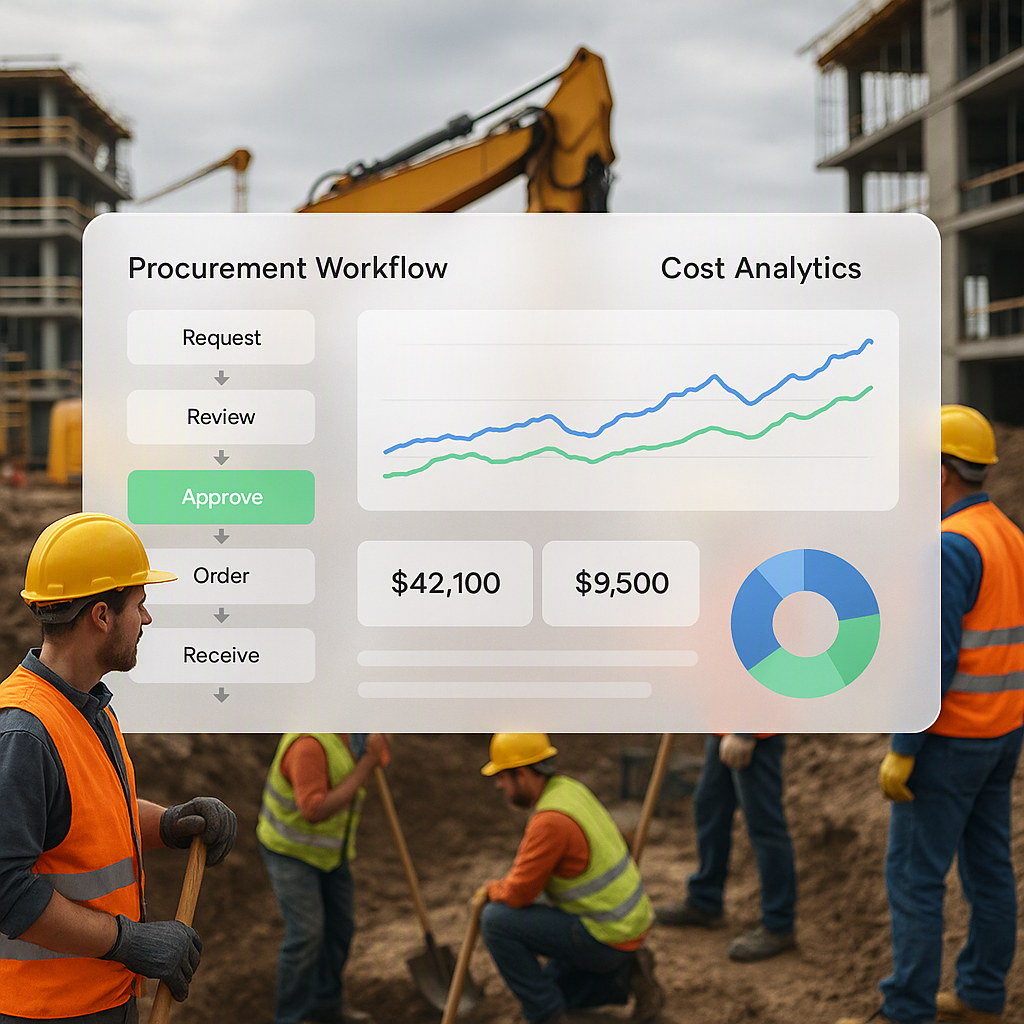
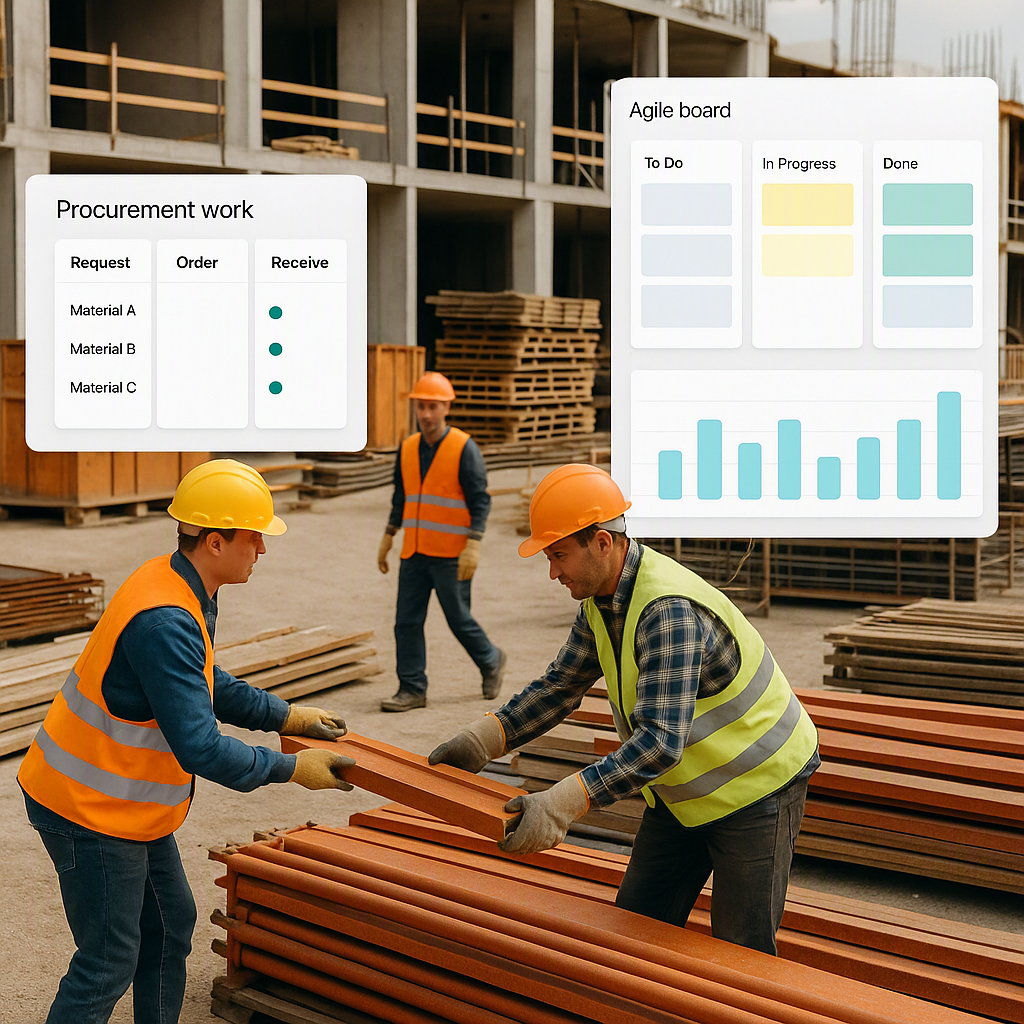
Consider the case of a mid-sized contractor we worked with, who relied on spreadsheets and email for managing material requests (MRs). On paper, it seemed like a simple system. But in practice, it was chaos. MRs were frequently delayed in being converted into RFQs (requests for quotations). Vendor responses, buried in email threads, were often missed. Purchase orders (POs) needed multiple approvals, which were stuck in WhatsApp chats or on someone’s desk.
By the time the materials arrived at the site—whether in Mumbai or Dubai—the project was already behind schedule, forcing the contractor to pay overtime to workers and expedite shipping for remaining materials. Over the course of a year, these inefficiencies added up to ₹50 lakh (AED 225,000) in lost margins.
Subcontractor Payments: Strained Relationships
Another contractor faced challenges in managing subcontractor payments. Without a unified system, reconciling completed work against invoices was a manual and error-prone process. Payments were delayed, subcontractors grew frustrated, and some even refused to work on future projects. The delays caused further project setbacks, which meant more penalties and lost revenue.
These are not isolated incidents. A report by McKinsey found that disconnected systems contribute to as much as 30% of construction costs globally. For small contractors and allied trades in India and the GCC, where margins are razor-thin, this kind of inefficiency is unsustainable.
Why Contractors and Allied Trades Need Unified Systems
Why does this happen? Because every process in construction—procurement, billing, HR, and finance—is interconnected. If one part of the system is inefficient, it creates a ripple effect across the entire project.
Let’s take a closer look at how unified construction ERPs (Enterprise Resource Planning systems) can address these pain points for contractors and trades like MEP, HVAC, and interiors in both India and the GCC.
How Unified Construction ERPs Solve These Problems
A unified construction ERP connects all your processes under one digital roof. Instead of juggling spreadsheets, emails, and standalone tools, you can manage everything on a single platform. Here’s how it works:
- Procurement Simplified: Material requests automatically generate RFQs to pre-approved vendors. Quotes are submitted directly into the system, allowing you to compare options and approve POs in minutes.
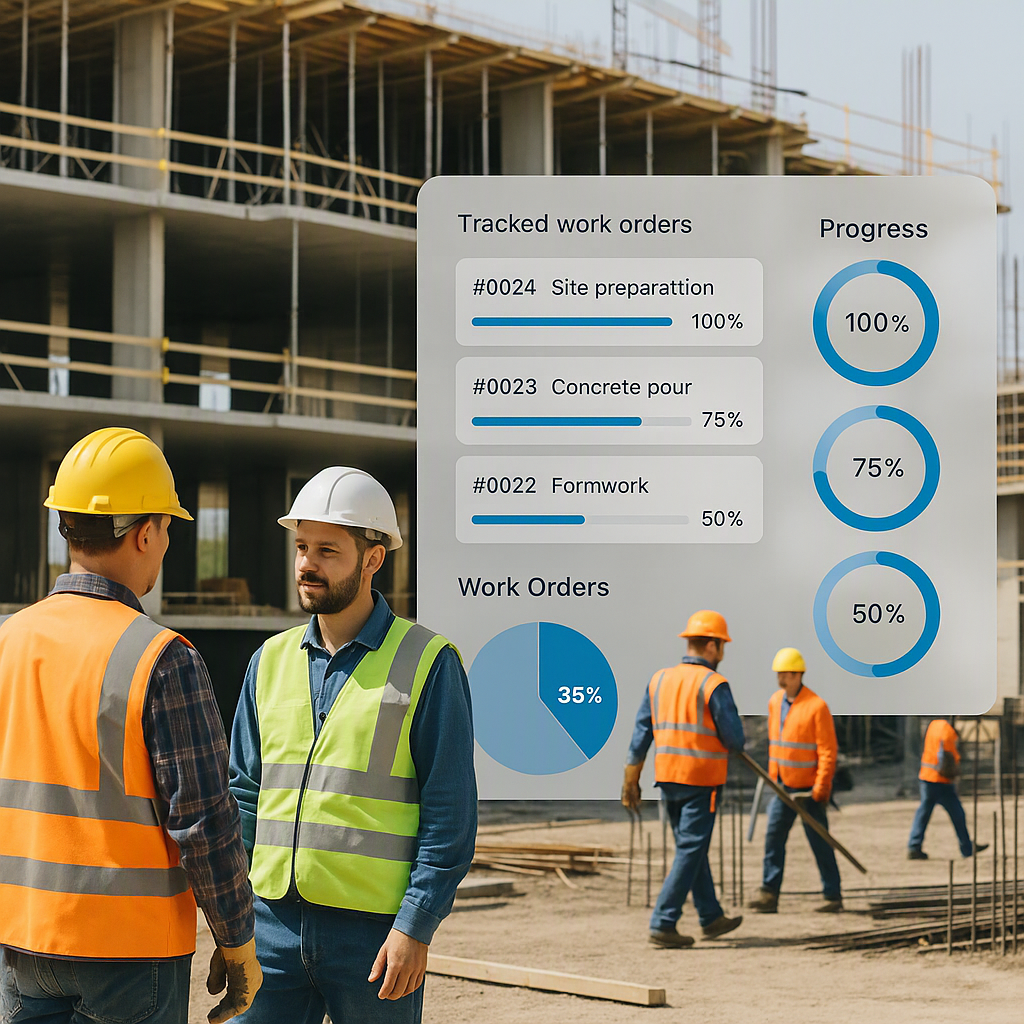
- Integrated Billing and Project Tracking: Running Account (RA) bills are automatically generated based on project progress. Quantities and costs align with the Bill of Quantities (BOQ), reducing disputes and speeding up payments.
- Streamlined Compliance: GST and TDS in India, or VAT in the GCC, are calculated automatically during invoicing, and ready-to-file reports are generated with a single click. Multi-company setups, common in Gulf-based groups, are supported seamlessly.
By eliminating silos, unified systems save time, reduce errors, and protect your margins.
A Real-Life Example: Transforming Procurement
Imagine a project manager needs 200 bags of cement for an ongoing project. Without a unified ERP, they’d likely send a manual request to the procurement team, who would then create an RFQ, wait for vendor responses via email, and manually generate a PO. This could take days—or even weeks—delaying the project and increasing costs.
With a unified ERP, the process is instantaneous. The MR triggers an automated RFQ to pre-approved vendors. Vendors submit quotes directly into the system, and the project manager selects the best option. The PO is generated and approved in minutes. Materials arrive on time, and the project stays on schedule and within budget.
The Numbers Don’t Lie: Industry Data on Inefficiencies
The McKinsey report cited earlier estimates that inefficiencies in the construction sector contribute to ₹30,000 crore in annual losses in India alone. Even if a small fraction of this applies to your business, the potential savings from adopting a unified ERP are significant.
Billing errors are another major source of revenue leakage. According to a KPMG study, billing discrepancies account for up to 20% of lost revenue in small construction firms. Unified ERPs eliminate this issue by integrating billing with project progress tracking, ensuring accurate invoices every time.
GST and VAT Compliance Without the Headache
For contractors in India, GST compliance is non-negotiable. Similarly, in the GCC, adhering to VAT regulations is critical for smooth operations. Managing these manually—especially across disconnected systems—is a recipe for disaster. Forgetting to apply GST/VAT to invoices or miscalculating TDS can lead to penalties, audits, and hours of wasted time.
A Time-Saving Example
One contractor using ProjectsNext, a unified ERP system, reported saving over 40 hours per month on GST filings. Instead of manually reconciling invoices, the system automatically applied GST during invoicing and generated ready-to-file reports. With this streamlined process, the contractor not only avoided penalties but also freed up time to focus on growing the business.
Unified ERPs simplify compliance by automating GST and TDS calculations in India, VAT calculations in the GCC, and integrating with accounting tools like Tally or Gulf-specific accounting platforms. This ensures error-free filings and reduces the risk of costly mistakes.
Overcoming Resistance to ERP Adoption
Common Misconceptions About ERPs
Many contractors and trades hesitate to adopt ERPs because they believe they’re too expensive, too complicated, or unnecessary for their business size. But these misconceptions don’t hold up under scrutiny:
- “We’re too small for ERP.” Even small operations benefit from automation. In fact, smaller teams often feel the impact of inefficiencies more acutely.
- “It’s too expensive.” Modern SaaS ERPs offer affordable, subscription-based pricing tailored to small and medium contractors.
- “Implementation is a nightmare.” Many ERP providers now offer comprehensive training and onboarding support to ensure a smooth transition.
Why the Cost of Doing Nothing Is Higher
Let’s say your company loses ₹20 lakh (AED 90,000) annually due to inefficiencies in procurement, billing, and compliance. A unified ERP costing ₹5 lakh (AED 22,500) per year could cut those losses in half, saving you ₹10 lakh (AED 45,000). Over five years, that’s ₹50 lakh (AED 225,000) in savings—enough to fund new projects or invest in better equipment.
Actionable Steps to Get Started with a Unified ERP
- Audit Your Current Processes: Identify where inefficiencies are costing you the most—procurement, billing, HR, or compliance. This will help you prioritize which features you need in an ERP.
- Start Small: Begin with one department (e.g., procurement or billing) and expand as you see results.
- Choose Scalable Software: Look for ERPs designed specifically for contractors and trades, such as ProjectsNext, which offers flexible pricing and features tailored to your needs.
- Train Your Team: Ensure that everyone understands how to use the system. Many ERP providers offer training sessions to help with adoption.
- Monitor ROI: Track your savings and productivity improvements to measure the impact of the ERP.
The Bottom Line: Why You Need a Unified ERP
If you’re still managing your business with disconnected tools and manual processes, you’re leaving money on the table. Every missed invoice, delayed payment, or procurement error chips away at your bottom line. A unified ERP isn’t just a luxury for large contractors—it’s a necessity for any business that wants to stay competitive.
By centralizing your operations, automating repetitive tasks, and ensuring data accuracy, a unified ERP can help you reclaim lost margins, improve cash flow, and set your business up for sustainable growth.
So, what’s stopping you? If you’re ready to take control of your business and stop losing lakhs or dirhams to inefficiencies, it’s time to invest in a solution that works as hard as you do.
Learn more at JobNext.ai - Construction ERP