₹25 Lakh Lost. Here’s Why It Keeps Happening.
If you’re a small contractor, billing errors are probably eating into your margins. I’ve seen it happen too often — an RA bill is delayed, a stage-wise invoice is incomplete, or a supply BOQ gets overlooked. These aren’t just small oversights. Over the course of a year, they can easily add up to ₹25 lakh or more in lost revenue.
The problem? Disconnected systems. Too many contractors rely on a messy mix of spreadsheets, WhatsApp approvals, and outdated accounting tools. It’s a chaotic setup that makes it easy to miss billable items, forget GST compliance, or misalign with project progress. And when margins are already razor-thin, these mistakes hurt.
The Billing Chaos Most Contractors Don’t Talk About
Let’s break it down. Construction billing is not like selling a product off a shelf. You’re dealing with:
1. Multiple Billing Methods
Construction projects involve RA bills, stage-wise invoices, monthly bills, and one-time contracts. Each method has its quirks, deadlines, and requirements. For example:
- RA Bills (Running Account Bills): These are progressive invoices tied to project completion milestones. Missing a milestone update can delay billing by weeks.
- Stage-Wise Invoices: These depend heavily on project scope and deliverables. If the scope isn’t documented properly, disputes with clients can arise.
- Supply BOQ Invoicing: Contractors often forget to include material deliveries in their invoices, leading to direct losses.
2. Scope Alignment
Your invoice needs to match the BOQ, scope of work, and actual progress. When these don’t sync, disputes arise. A case study from a Mumbai-based contractor revealed that ₹5 lakh was lost due to mismatched BOQ entries in a single project. The client refused to pay for discrepancies, and the contractor couldn’t prove their claim due to poor documentation.
3. Subcontractor Dependencies
Subcontractors play a critical role in construction, but tracking their progress can be challenging. If their work isn’t measured correctly, you risk overpaying them or under-billing your client. Both scenarios hurt your bottom line. For example, a Bengaluru contractor recently overpaid a subcontractor ₹2 lakh because progress percentages weren’t updated in their RA bill. The money was never recovered.
How Unified ERPs Solve This Mess
A unified ERP system doesn’t just make billing easier — it makes it foolproof. Let’s break down the benefits with actionable steps:
1. Structured Workflows for Every Billing Method
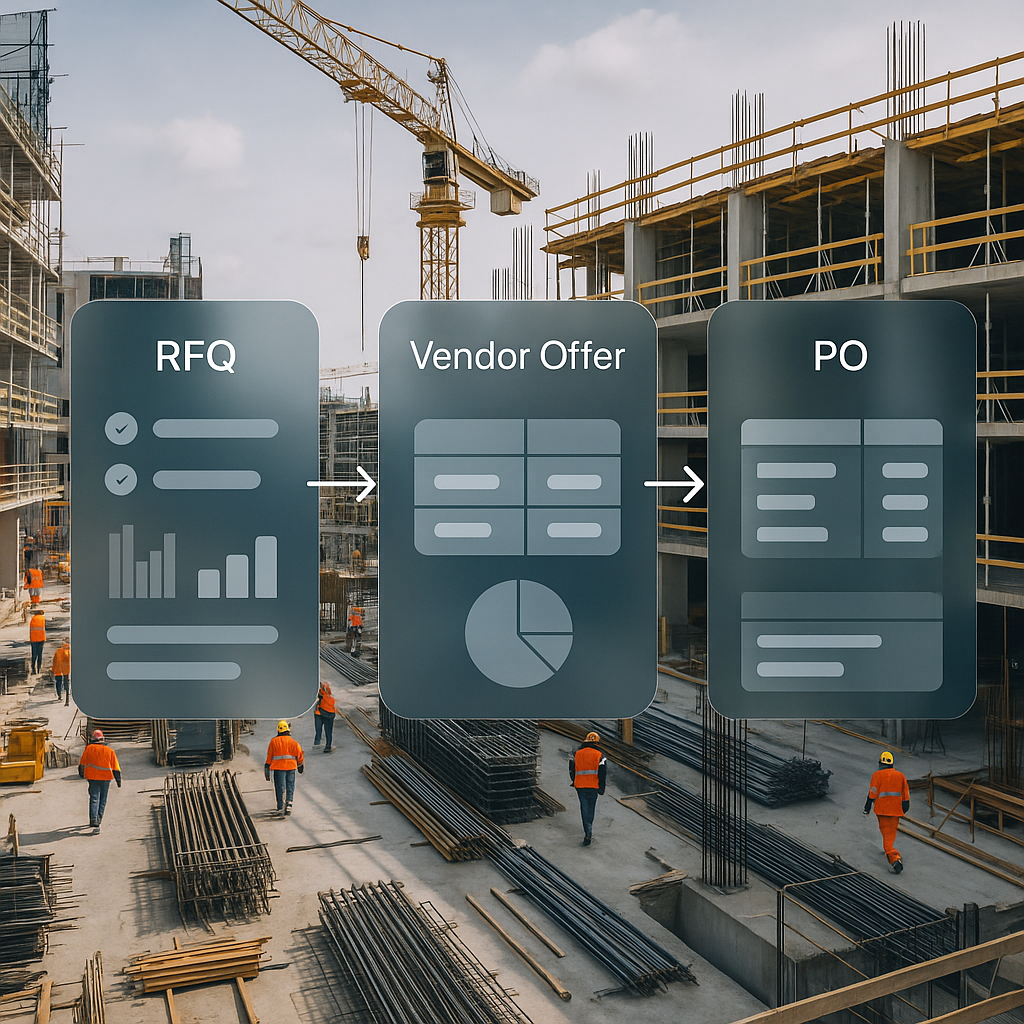
Unified ERPs provide a step-by-step approach to handle RA bills, stage-wise billing, and supply BOQ invoicing. Here’s how it works:
- Automated Templates: Pre-built templates ensure GST calculations, milestone updates, and supply entries are accurate. No more manual errors.
- Deadline Alerts: ERP systems send reminders for upcoming billing deadlines, ensuring you don’t miss submission dates.
2. Real-Time Progress Tracking
You can’t bill accurately without knowing what’s happening on-site. ERPs like ProjectsNext integrate with your BOQ, WBS, and project scope to monitor progress in real-time. For example:
- Progress Percentages: If a subcontractor has completed 70% of their work, the system automatically calculates billable amounts based on the contract.
- Site Photos & Updates: Some ERPs allow you to upload photos directly from the site to validate progress.
3. Approval Chains That Work
Ever had an invoice stuck because someone forgot to approve it? Unified platforms solve this with automated workflows.
- Approval Reminders: Finance heads and project managers get nudged when approvals are due.
- Escalations: If approvals are delayed, the system escalates the task to higher management, ensuring no bottlenecks.
4. GST Compliance Without Headaches
Indian contractors know how tedious GST filings can be. Unified ERPs simplify this by:
- Auto-Calculating GST: The system applies the correct GST rate for each invoice and flags reverse charges.
- Generating Compliant Invoices: ERPs create invoices that meet GST regulations, reducing errors during audits.
Case Study: From ₹25 Lakh Loss to ₹40 Lakh Saved
A contractor in Pune had been losing ₹25–30 lakh annually due to billing errors and missed milestones. After implementing ProjectsNext ERP, they turned their operations around within six months:
- Error-Free Billing: Automated workflows ensured all supply BOQs, RA bills, and GST calculations were accurate.
- Faster Approvals: Approval chains reduced billing delays by 40%.
- Progress Alignment: Real-time tracking helped them recover ₹8 lakh worth of under-billed items.
By the end of the year, they saved ₹40 lakh, proving that a unified ERP isn’t just a nice-to-have — it’s a game-changer.
Still Skeptical? Let’s Address That.
“Why can’t I just hire a better accountant?”
A good accountant helps, but they can’t fix broken workflows or track progress across WhatsApp groups. ERPs reduce the manual workload, letting your accountant focus on strategy instead of firefighting errors.
“Is ERP implementation too complicated?”
Implementation challenges are real, but they’re manageable. Start small — roll out the ERP for billing first, then expand to project tracking and subcontractor management. Many ERP providers offer guided implementation to reduce downtime.
“Will it work for small contractors?”
Yes! Unified ERPs aren’t just for big players. Tools like ProjectsNext are tailor-made for small-to-medium contractors, offering scalable solutions without high upfront costs.
“How do I ensure my team adopts the ERP?”
Adoption depends on training and buy-in. Involve your team early, provide hands-on training, and emphasize the time-saving benefits. Many ERP providers also offer ongoing support to ensure success.
“What’s the ROI on an ERP system?”
Most contractors see an ROI within 6–12 months. Savings come from reduced billing errors, faster approvals, and better tax compliance. For example, ProjectsNext users report a 15–20% improvement in margins within the first year.
Decision Framework: Should You Invest in an ERP?
| Criteria | Traditional Method | Unified ERP System |
|---|---|---|
| Billing Accuracy | High risk of manual errors | Automated workflows minimize errors |
| Progress Tracking | Spreadsheet-based, prone to mistakes | Real-time updates from the site |
| Approval Delays | Frequent bottlenecks | Automated escalations |
| GST Compliance | Manual calculations, risky audits | Auto-calculated, compliant invoices |
| Scalability | Difficult to scale | Easily adapts to larger projects |
| ROI | Limited | 15–20% margin improvement |
The Bottom Line
Billing errors are not just expensive — they’re preventable. A unified ERP system ensures that every invoice is accurate, timely, and compliant. And when you’re chasing thin margins, that’s the kind of reliability you can’t afford to skip.
Ready to Fix Your Billing?
If billing chaos is killing your margins, ProjectsNext can help. Start your free trial today →
Learn more at JobNext.ai - Construction ERP