₹25 Lakh. That’s What You’re Losing Every Year Without a Unified ERP
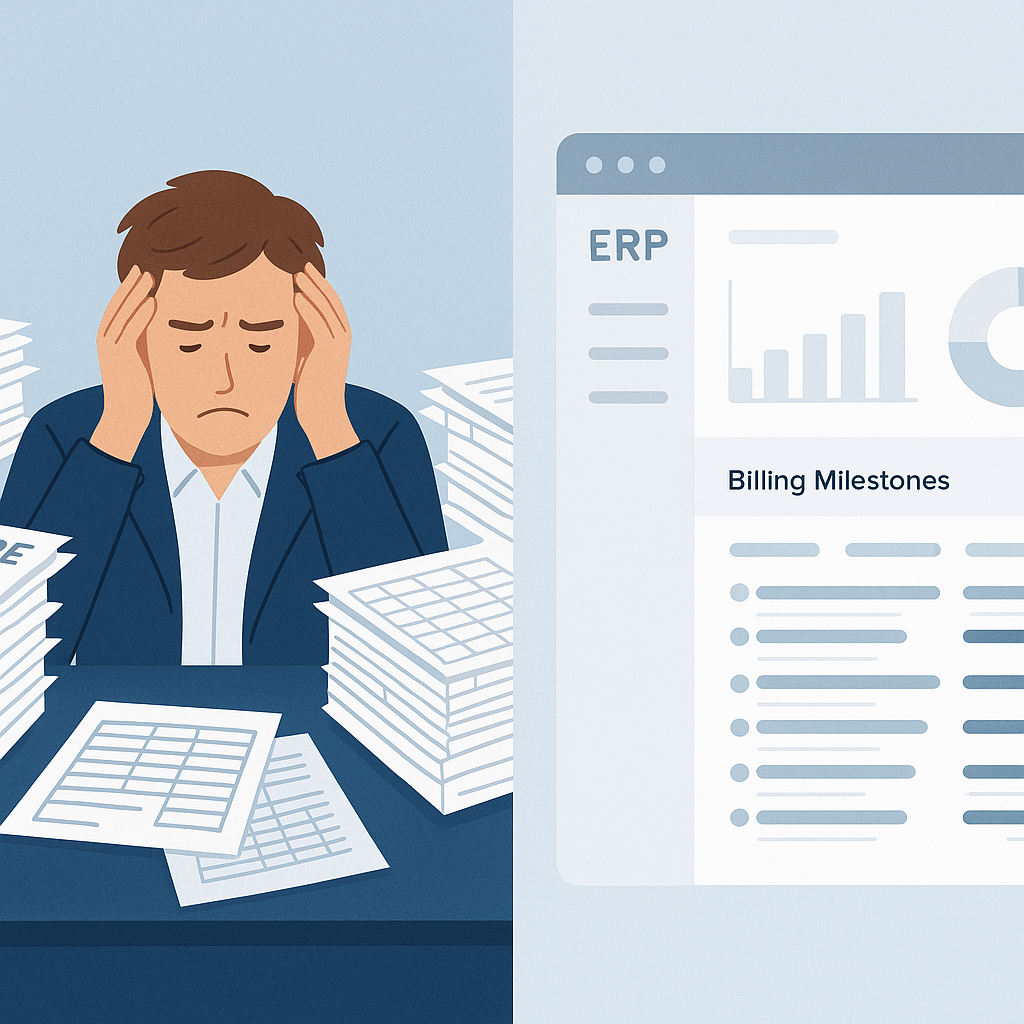
Let’s get straight to it. If you’re a small contractor juggling multiple projects, you’re probably bleeding money. Not because you don’t know your business, but because your tools don’t talk to each other. Spreadsheets, WhatsApp, and standalone software create blind spots—costly ones.
How costly? Up to ₹25 lakh annually. That’s not a number we pulled out of thin air. A 2022 study showed that contractors lose 8-12% of their revenue due to inefficiencies. For a ₹5 crore company, that’s ₹40 lakh. Even if you’re running a leaner operation, the math is brutal.
But where’s the money going? Let’s break it down.
The Silent Killer: Poor Cost Tracking
Cost tracking isn’t sexy, but it’s critical. Too often, small contractors rely on manual processes to track material, labor, and subcontractor costs. Let’s take a real-life example:
A mid-sized HVAC contractor in Bangalore was managing costs using Excel. Their project manager updated spreadsheets weekly, sometimes bi-weekly. By the time cost overruns showed up, it was too late. One project overran its budget by 15%—₹18 lakh gone on a single job.
Why did this happen? Disconnected workflows.
- Procurement data wasn’t updated in real-time. POs were issued at higher rates than estimated.
- Subcontractor bills weren’t tied to measurement sheets. Inflated claims went unnoticed.
- Labor costs ballooned because attendance wasn’t tracked daily.
This isn’t an isolated problem. A 2019 survey by KPMG found that 78% of construction companies admitted to poor project cost visibility. This creates a vicious cycle: you can’t control what you can’t measure.
Actionable Steps to Improve Cost Tracking:
- Automate Daily Updates: Use tools that sync material consumption, labor attendance, and subcontractor bills in real-time.
- Standardize Reporting: Create a single source of truth for all project cost data.
- Adopt Integrated Tools: A unified ERP like JobNext ensures every cost—material, labor, and subcontractor—is tracked from BOQ to billing.
Why Patchwork Tools Don’t Cut It
You might be thinking, "We’ve got software for procurement and another for accounting. Why switch?" Here’s the problem: patchwork tools create data silos.
Let’s say your procurement team uses Tool A and your finance team uses Tool B. If Tool A doesn’t sync with Tool B, approved POs might not reflect in your budgets. That’s a recipe for overspending.
A Real-World Example
An interior contractor in Mumbai used separate tools for procurement and billing. During a 6-month project, they discovered a ₹12 lakh gap between approved budgets and actual spends. The culprit? Delayed PO updates and duplicate vendor payments.
With a unified ERP like JobNext, procurement workflows—MR → RFQ → Vendor Offers → PO—are linked directly to your project budgets. Every rupee spent updates in real-time.
Comparison: Patchwork Tools vs. Unified ERP
| Feature | Patchwork Tools | Unified ERP (e.g., JobNext) |
|---|---|---|
| Data Integration | Manual updates | Real-time sync across modules |
| Procurement-Accounting Link | Missing or delayed | Seamless |
| Error Risk | High (manual intervention) | Low (automated workflows) |
| Cost Tracking | Reactive | Proactive |
GST Compliance: Another Pain Point
Let’s talk compliance. GST/TDS errors can cost you penalties and wasted man-hours. Most small contractors rely on accountants or standalone software for compliance. But when project data isn’t centralized, mistakes happen.
For example, a contractor in Hyderabad missed GST filings on RA bills because the billing system wasn’t integrated with their accounting software. The result? ₹2 lakh in penalties and hours spent reconciling data.
How a Unified ERP Streamlines Compliance:
- Built-In GST/TDS Calculations: Automate GST and TDS workflows to eliminate manual errors.
- Integrated Billing: Generate GST-compliant invoices directly from your ERP.
- Audit Trails: Maintain a clear, centralized record for audits.
JobNext solves this with built-in GST-compliant invoicing and Tally integration. Every RA bill, every vendor payment, every payroll entry—linked and compliant.
What’s the ROI of a Unified ERP?
You might wonder, "Isn’t ERP software expensive?" Sure, there’s an upfront cost. But let’s flip the question: What’s the cost of NOT having one?
Here’s a quick ROI example:
- Cost savings on procurement: Automating MR → RFQ → PO workflows can save 3-5% on material costs. For a ₹3 crore project, that’s ₹9-15 lakh.
- Reduced revenue leakage: Real-time subcontractor tracking ensures you only pay for approved work. Contractors report saving 8-10% on subcontractor payments—₹8 lakh annually for a ₹1 crore subcontracting budget.
- Fewer compliance penalties: Automating GST/TDS filings saves ₹2-3 lakh annually in penalties and man-hours.
ROI Framework:
| Benefit | Savings Estimate (₹) | Example |
|---|---|---|
| Procurement Efficiency | 3-5% of project cost | ₹9-15 lakh for ₹3 crore project |
| Subcontractor Oversight | 8-10% of subcontracting cost | ₹8 lakh for ₹1 crore budget |
| Compliance Automation | ₹2-3 lakh | Reduced penalties and man-hours |
Add it up, and you’re looking at ₹20-25 lakh in annual savings. That’s not an expense—it’s an investment.
FAQs
1. Do we need a unified ERP if we only run 2-3 projects at a time?
Yes. Even small operations face margin erosion from poor cost tracking. Unified ERPs scale with your business, so you’re ready when you grow.
2. What if my team isn’t tech-savvy?
Modern ERPs like JobNext are designed with user-friendly interfaces. Plus, most vendors offer training and support to get your team up to speed quickly.
3. Can we afford it?
If you’re losing ₹25 lakh annually, can you afford NOT to? Most ERPs cost a fraction of the savings they generate. Many providers also offer payment plans.
4. How long does it take to implement?
For small contractors, implementation usually takes 4-6 weeks. That’s a small price to pay for long-term gains.
5. How do I choose the right ERP?
Look for features like real-time cost tracking, GST compliance, and integration with tools you already use (e.g., Tally). Prioritize ease of use and vendor support.
The Bottom Line
If you’re tired of margin erosion, missed approvals, or compliance headaches, it’s time to rethink your tools. A unified ERP isn’t just nice to have—it’s essential.
JobNext is built for contractors like you. Real-time cost tracking, GST compliance, and connected workflows—all in one platform. Get started today →