
The Procurement Dilemma: Chaos in Vendor Selection
Ever faced a tender evaluation meeting where no one could agree on which vendor to pick? One offers the lowest price (L1), but another gives better scope and terms (L2). Arguments fly, the clock ticks, and decisions feel more like a gamble than a strategy. Sound familiar?
This isn’t just frustrating—it’s dangerous. Poor vendor decisions lead to cost overruns, missed deadlines, and subpar project quality. So, how do you bring transparency and structure to this chaos? The answer lies in a clear L1 L2 vendor comparison.
Let’s break it down.
What is L1 L2 Vendor Comparison?
In procurement, L1 refers to the lowest bidder, while L2 accounts for qualitative factors like vendor reliability, product/service quality, and delivery timelines. A proper L1 L2 comparison evaluates both cost and non-cost factors before awarding contracts. It’s about achieving the best value for money, not just the lowest price.
But here’s the catch: most teams mess this up because they lack a structured process. Without clear criteria and standardized workflows, comparisons turn into subjective debates, leading to poor choices.
Step-by-Step Guide to L1 L2 Vendor Comparison
1. Define Your Criteria
The first mistake teams make? Jumping into numbers without defining what matters. Price is important, yes, but what about delivery timelines? Payment terms? Compliance with specifications? Without clearly defined criteria, you’re setting yourself up for chaos.
Here’s a simple framework for weighted criteria:
| Criteria | Weight (%) | Explanation |
|---|---|---|
| Price (L1) | 40% | The quoted amount for the scope of work. |
| Delivery Schedule | 20% | Can the vendor meet your project deadlines? |
| Quality Standards | 20% | Past performance, certifications, and track record. |
| Payment Terms | 10% | Flexibility in payment schedules and credit periods. |
| Compliance & Risk | 10% | GST/TDS compliance, statutory requirements, etc. |
Actionable Step: Before sending out RFQs (Request for Quotations), sit down with your team to agree on the weights for each criterion. Your business priorities should guide these weights. For example, if delivery speed is critical (e.g., in construction), increase the weight assigned to the delivery schedule.
2. Standardize the Comparison Process
Disorganized procurement workflows create confusion. Ever seen a tender evaluation with seven Excel sheets, each in a different format? Not ideal, and it’s a breeding ground for errors.
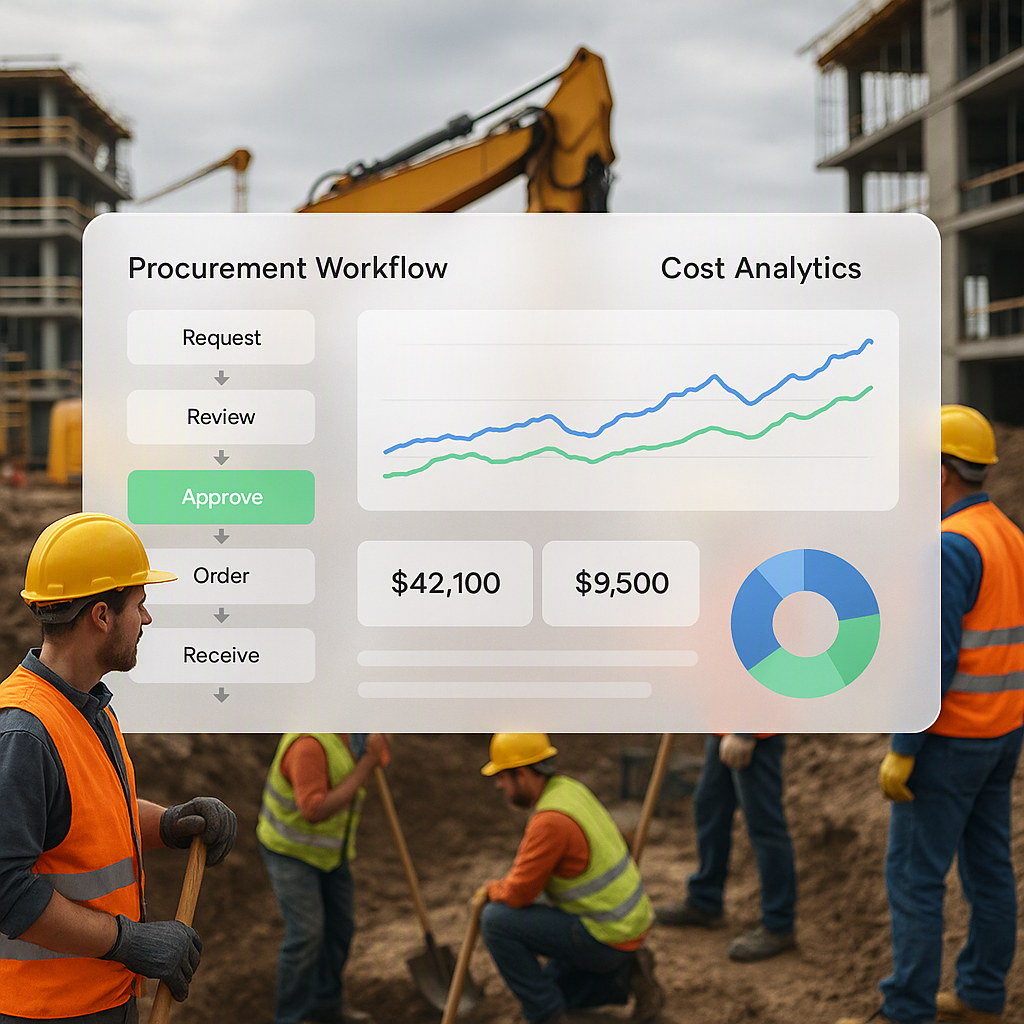
Centralizing and standardizing the process ensures every vendor is evaluated on the same parameters. Use tools to streamline the Material Requisition (MR) → Request for Quotation (RFQ) → Vendor Offer → Purchase Order (PO) cycle.
Actionable Step: Platforms such as ProjectsNext allow you to standardize templates for RFQs and ensure vendors submit their proposals in a comparable format. This eliminates bias and creates a process that’s audit-ready.
3. Quantify Non-Cost Factors
You might be thinking, "How do I score something subjective like quality or reliability?" The key is to transform subjective judgments into objective scores.
Here’s how:
- Quality Standards: Assign a score (e.g., 1-5) based on vendor certifications (ISO, BIS), customer feedback from previous projects, and warranty terms.
- Delivery Schedule: Evaluate the vendor’s track record on similar projects. Request historical on-time delivery data.
- Compliance: Verify GST numbers, PF/ESI compliance, and statutory deductions during the RFQ stage. Non-compliance can lead to heavy legal risks.
Pro Tip: Create a scoring rubric for each non-cost factor. For example, if a vendor has completed 90% of their past projects on time, they might score a 4/5 for delivery schedule.
4. Compare Apples to Apples
A common pitfall is comparing incomplete or non-standard bids. For instance, one vendor might quote only for materials, while another includes installation. Without standardization, you’re comparing apples to oranges.
Actionable Step: Ensure all vendors quote against the same Bill of Quantities (BOQ) and Scope of Work (SOW). ProjectsNext’s material procurement module automatically integrates BOQs into the RFQ system, ensuring that all vendors respond to identical requirements.
5. Automate Scoring and Weighting
Manually calculating weighted scores for multiple vendors is time-consuming and prone to human error. Automation tools can help streamline this process.
Actionable Step: Use procurement software that allows you to input criteria weights and vendor scores. The system will generate a consolidated score for each vendor, enabling clear, objective decision-making.
Common Mistakes to Avoid
- Focusing Solely on L1: The lowest bid often hides hidden costs—delays, poor quality, or add-on charges. A balanced L1 L2 analysis prevents these issues.
- Ignoring Vendor History: A vendor’s past performance is the single biggest predictor of future success. Always ask for references and project completion certificates.
- Skipping Compliance Checks: Non-compliant vendors can expose you to legal and financial risks. Verify GST, TDS, and statutory records before awarding contracts.
- Not Documenting the Process: Without a clear audit trail, disputes are inevitable. Use digital tools to maintain records of every step in the procurement process.
FAQ: Vendor Comparison Demystified
Q: Isn’t picking the lowest price enough?
A: No. The lowest price (L1) often comes with hidden risks—poor quality, delays, or additional charges. A balanced L1 L2 analysis prevents these issues by considering both cost and qualitative factors.
Q: How do I ensure fairness in scoring?
A: Use a standardized scoring system with predefined criteria and weights. Automate calculations to minimize bias and human error.
Q: What if all vendors have similar prices?
A: When prices are similar, qualitative factors become the deciding factor. Evaluate delivery timelines, warranties, compliance records, and vendor reliability to make a more informed decision.
Q: Can I do this manually in Excel?
A: While it’s possible, it’s not ideal. Manual processes are prone to errors, inconsistencies, and inefficiencies. Tools like ProjectsNext streamline the process, saving time and reducing errors.
Q: How do I handle disputes if a vendor underdelivers?
A: Document every step of the evaluation process and include detailed terms in the contract. This ensures you have evidence to enforce penalties or pursue legal action if necessary.
Comparison Table: L1 vs. L2 Factors
| Factor | L1 (Lowest Price) | L2 (Qualitative Factors) |
|---|---|---|
| Primary Focus | Cost | Quality, delivery, compliance |
| Advantage | Immediate cost savings | Long-term project success |
| Risk | Hidden costs (delays, poor quality) | Higher upfront cost but fewer risks |
| Key Evaluation Tools | Quoted price comparison | Weighted scoring on qualitative metrics |
Final Thoughts
Transparent procurement isn’t just about picking the cheapest vendor. It’s about balancing cost, quality, and compliance to protect your margins and deliver successful projects. By following a structured L1 L2 comparison process—and using tools to standardize and automate—you’ll make smarter, audit-proof decisions every time.
If you’re tired of procurement chaos and want a system that makes vendor comparisons seamless, ProjectsNext can help. Get started free →
Learn more at JobNext.ai - Construction ERP