
Fire Fighting Contracting: Managing Margins and Compliance Without Losing Sleep
Fire protection contractors in India and the GCC face unique challenges. Margins are thin, delays are costly, and compliance is non-negotiable. From GST filings in India to civil defense approvals in the Gulf, even small errors can lead to penalties or project shutdowns.
Many contractors struggle with inefficiencies in their workflows, especially in procurement. Without a structured process, material costs can spiral out of control, and mismatches between bill of quantities (BOQ) and purchase orders can create financial and operational headaches.
The Procurement Problem: Why It’s Killing Your Margins
Material procurement for fire protection projects involves sourcing pipes, sprinklers, pumps, and alarms from multiple vendors. Managing this manually or on Excel often leads to:
- Missed Approvals: Site teams may rush material requisitions (MRs) without proper approvals, leading to over-orders or incorrect specifications.
- Price Variations: Without a structured RFQ (Request for Quotation) process, fluctuating vendor rates can erode margins.
- Delayed Deliveries: Lack of vendor tracking can result in late deliveries, stalling project timelines.
These issues can significantly impact your margins, but they are preventable with the right workflow.
A Structured Solution: From MR to PO Without the Headache
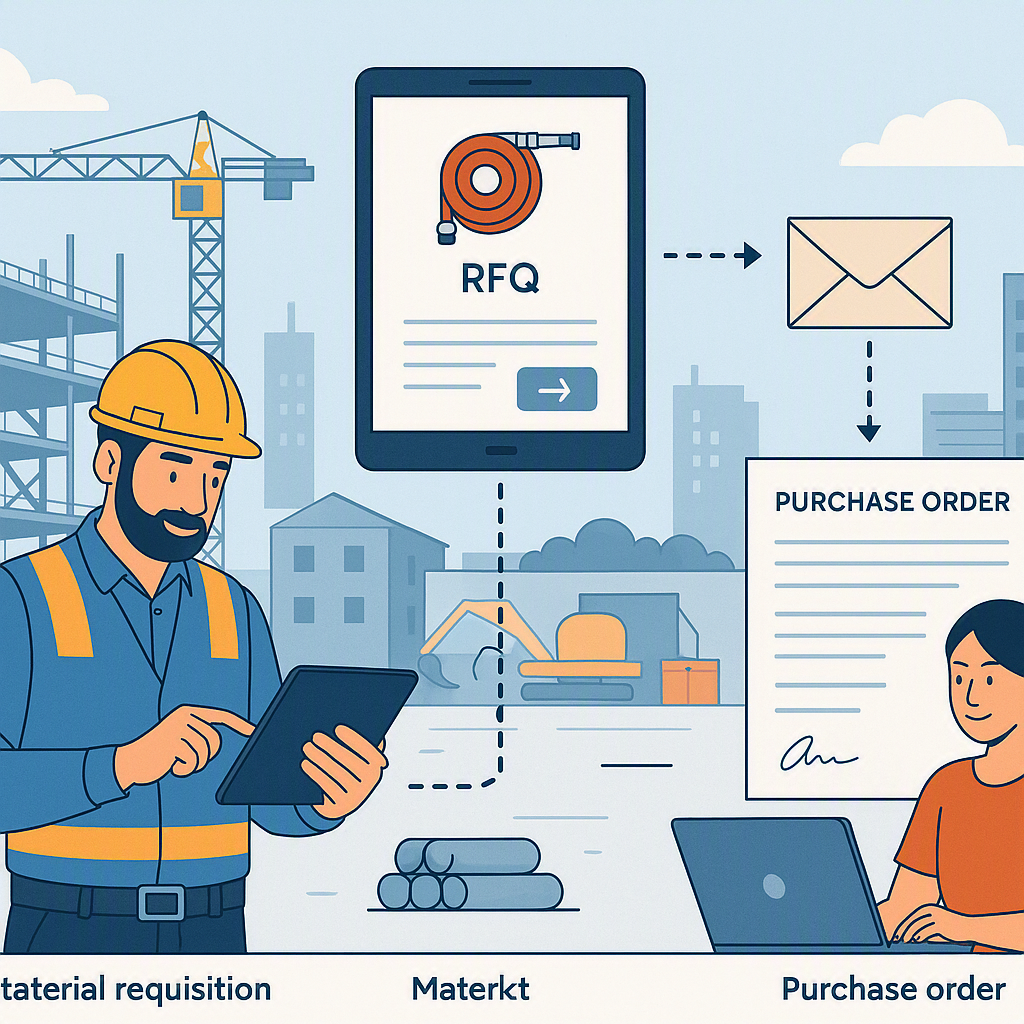
A streamlined MR → RFQ → Vendor Offer → PO workflow can transform procurement processes. Here’s how:
Step 1: Material Requisition (MR)
The process begins at the site, where the site engineer raises an MR specifying quantities and BOQ references. To avoid errors, implement a multi-level approval workflow (site → project manager → procurement head). This ensures checks at every stage.
Step 2: Request for Quotation (RFQ)
Once the MR is approved, procurement floats an RFQ to pre-vetted vendors. Using a standardized RFQ template helps ensure consistency in:
- Material specifications
- Delivery timelines
- Payment terms
This approach speeds up vendor responses and simplifies offer comparisons.
Step 3: Vendor Offer Comparison
Comparing vendor quotes manually can be time-consuming. A structured system that generates comparison tables can streamline this process. Key columns to focus on include:
- Unit rates
- Delivery lead time
- Payment terms
- Total landed cost
Illustrative example — If your BOQ estimates a material cost of ₹100 per unit and a vendor quotes ₹120, flag this early for renegotiation or consider alternate suppliers.
Step 4: Purchase Order (PO) Issuance
Convert the selected vendor’s offer into a purchase order. Ensure the PO references:
- BOQ item codes
- Approved quantities
- Delivery schedules
In India, include GST details and the vendor’s GSTIN to streamline input tax credit claims. In the GCC, ensure VAT compliance and alignment with approved vendor lists.
How This Protects Your Margins
This structured workflow helps:
- Prevent Over-Ordering: By tying MRs to BOQs, you avoid purchasing excess materials.
- Lock in Competitive Rates: A transparent RFQ process encourages vendors to offer better pricing.
Staying Compliant: The Hidden Costs of Getting It Wrong
Compliance is critical for fire protection contractors, especially in the GCC. Key areas to watch include:
- Civil Defense Approvals: In UAE and Saudi Arabia, fire protection systems must meet local civil defense standards. Missing documentation can delay handovers.
- Statutory Deductions: In India, GST, TDS, and labor cess deductions must align with government norms. Errors can lead to penalties or audits.
Structured workflows can help here too. For example, systems that auto-generate GST-compliant invoices and track statutory deductions can reduce errors and save time.
Common Mistakes to Avoid
Even with structured workflows, mistakes can occur. Watch out for:
- Skipping Approvals: Rushed MRs without proper approvals lead to downstream issues. Implement strict approval rules.
- Ignoring Vendor Performance: Cheapest isn’t always best. Track vendor delivery history to avoid delays.
- Mixing BOQs and Non-BOQs: Separate material requisitions for BOQ and non-BOQ items to avoid confusion.
FAQ
Q1: How do I handle urgent material requests?
Set aside a contingency budget for urgent purchases. Track these separately to avoid budget overruns.
Q2: What if vendors refuse to match my BOQ cost?
Negotiate bulk purchase discounts or consider alternate brands that meet project specifications.
Q3: Can this workflow work for smaller contractors?
Absolutely. Even a basic approval process can prevent over-orders and cost overruns.
The Bottom Line
Fire fighting contracting is challenging, but procurement chaos doesn’t have to eat into your margins. A structured MR → RFQ → PO workflow is essential for managing costs and ensuring compliance. By implementing these practices, contractors can protect their bottom line and avoid costly mistakes.
Learn more at JobNext.ai - Construction ERP