Why Billing is the Achilles' Heel of Construction ERP
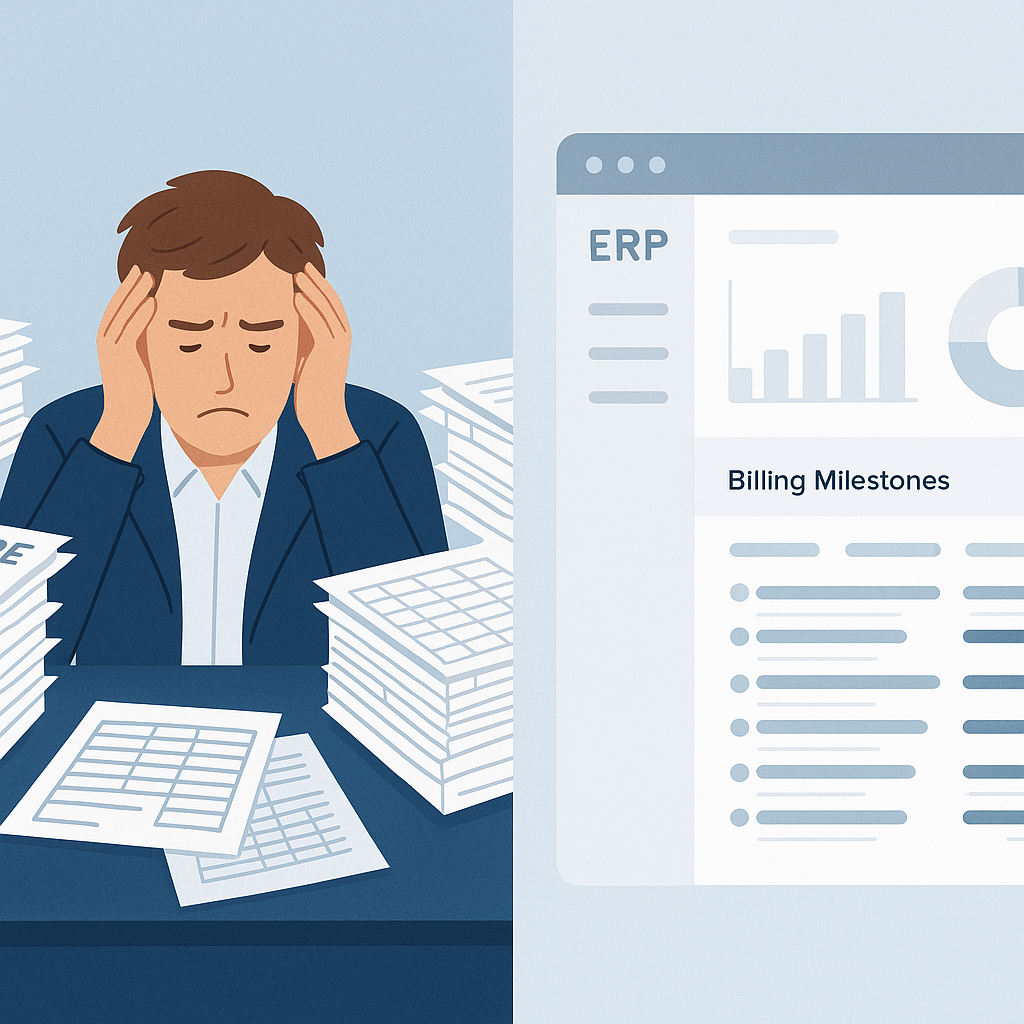
Contractors often underestimate how complex billing can get. Each project is different. Some use RA bills. Others follow a stage-wise model. Then there’s supply BOQ, one-time payments, or even combined methods. If your ERP can’t handle these variations, you’re looking at a lot of manual corrections — and missed revenue.
According to ERP Focus, one of the top pain points for contractors is revenue leakage. It’s not surprising. When billing workflows are spread across Excel sheets, disconnected systems, and email approvals, things slip through the cracks. A unified system isn’t just nice to have — it’s essential.
The Real Problem: Disconnected Systems
Let’s take a real-life scenario. Imagine a mid-sized contractor juggling five ongoing projects. One project uses an RA billing method, another bills monthly, and a third combines stage-wise and BOQ. Without a unified ERP, your team is updating data across multiple systems — manual entries, last-minute reconciliations, and plenty of room for errors.
We’ve seen this firsthand with clients at JobNext.ai. One contractor admitted they’d lost over ₹12 lakh in unbilled work over a year. The culprit? Fragmented tools and no consolidated billing framework.
What to Look for in ERP Billing Features
When comparing construction ERPs, don’t just tick boxes for "billing support." Dig deeper. Here’s what actually matters:
| Feature | Why It Matters |
|---|---|
| Multiple Billing Methods | Supports RA, stage-wise, BOQ, monthly, combined, and one-time billing. |
| Measurement-Based Workflows | Links subcontractor progress to billable milestones, reducing disputes. |
| Approval Chains | Ensures no bill is sent without proper review and sign-offs. |
| Real-Time Data Sync | Updates billing data instantly across projects, sites, and finance teams. |
| GST/TDS Compliance | Handles statutory deductions automatically, avoiding compliance penalties. |
Why JobNext Stands Out
JobNext is one of the rare ERPs built specifically for contractors. Its billing module supports six methods, including the tricky combined and measurement-based workflows. You can track subcontractor progress, link it to billable milestones, and ensure payments align with actual work done. And it’s GST and TDS-compliant — no more scrambling during tax season.
But what makes it even more practical? The system’s real-time data sync. Whether you’re working from a site in Dubai or your headquarters in Bangalore, every bill, payment, and approval is up-to-date. This blog post explains how this reduces cycle times by 20%.
How to Compare Construction ERP Options
Before you commit, test the billing module. Here’s how:
-
Run a Scenario Test: Take a past project and replicate its billing process in the ERP demo. See where it breaks down.
-
Check Adaptability: Can the system handle different billing methods for multiple projects at once?
-
Look for Approvals: Ensure there’s a multi-level approval workflow. This avoids unauthorized bills going out.
-
Audit the Compliance Features: Does it support GST/TDS deductions? Can it integrate with tools like Tally?
-
Ask About Customizations: No two contractors operate exactly the same way. Your ERP should adapt to your needs, not the other way around.
Conclusion: Don’t Let Billing Be an Afterthought
Your margins are already slim. Losing money to billing errors or missed revenue only makes things worse. By choosing a construction ERP with robust, flexible billing features, you’re not just avoiding problems — you’re actively improving cash flow.
JobNext has helped contractors across India and the GCC streamline their billing workflows, saving time and reducing errors. It’s worth exploring if you’re tired of dealing with billing chaos. Read more about how contractors benefit from cloud ERP.
For more insights on construction ERP solutions and how they can transform your operations, explore the JobNext.ai Blog.
Ready to see JobNext in action?
Multi-tenant SaaS ERP for construction, facilities management, and contracting — covering preconstruction, project execution, procurement, HR & payroll, equipment, finance, and 150+ analytics reports.
Get Started Free →