Are Construction ERPs Really That Different?
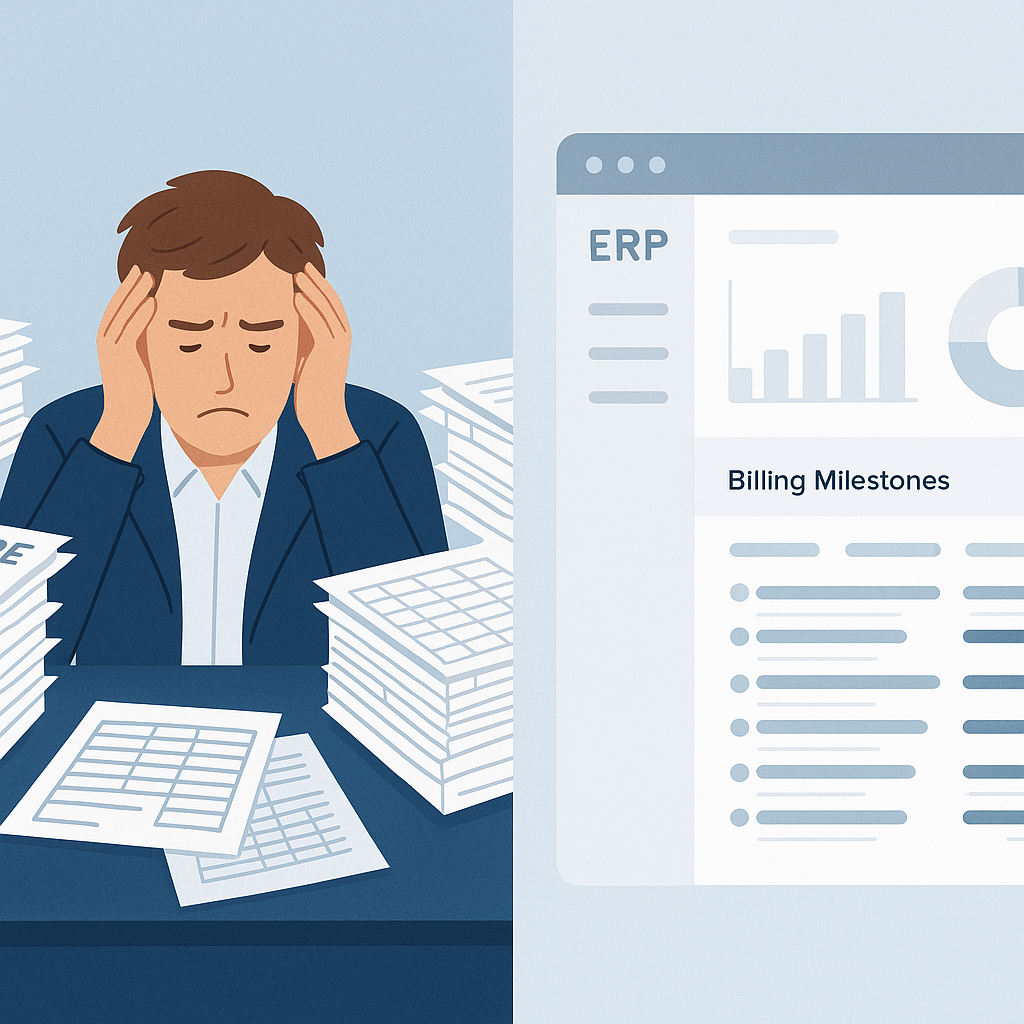
You’d think they’re all the same. Every ERP vendor promises better margins, seamless workflows, and total control. But let’s be honest — most systems fall short where it matters. For contractors, the real pain isn’t just managing projects. It’s the chaos of disconnected processes: manual procurement, billing errors, compliance headaches, and tracking profitability across BOQs.
What Contractors Should Actually Compare
When comparing construction ERP software, focus on the features that address YOUR biggest problems. Here are five critical areas:
- Integration Across Departments: Does the ERP replace separate tools for tendering, procurement, HR, and finance? Or will you still need spreadsheets to track RFQs?
- Billing Methods: Can it handle your preferred billing method — RA bills, stage-wise payments, or supply BOQ? Missing this feature creates revenue leakage.
- Procurement Workflow: Is the Material Request → RFQ → PO process structured? Or will your team keep chasing approvals manually?
- Compliance Support: For Indian contractors, GST/TDS compliance and Tally integration are non-negotiable. For GCC, payroll compliance is just as critical.
- Real-Time Profitability Tracking: Can the software show margins at the BOQ and scope level during execution? If not, you’ll find out too late.
Case Study: Why Real-Time Profitability Tracking Matters
Let’s look at a contractor running 15 concurrent projects — a mix of HVAC installations and EPC works in India. They used separate tools for tendering, procurement, billing, and finance. By the time they reconciled costs, margins had eroded by 8% due to scope creep and incorrect subcontractor payments.
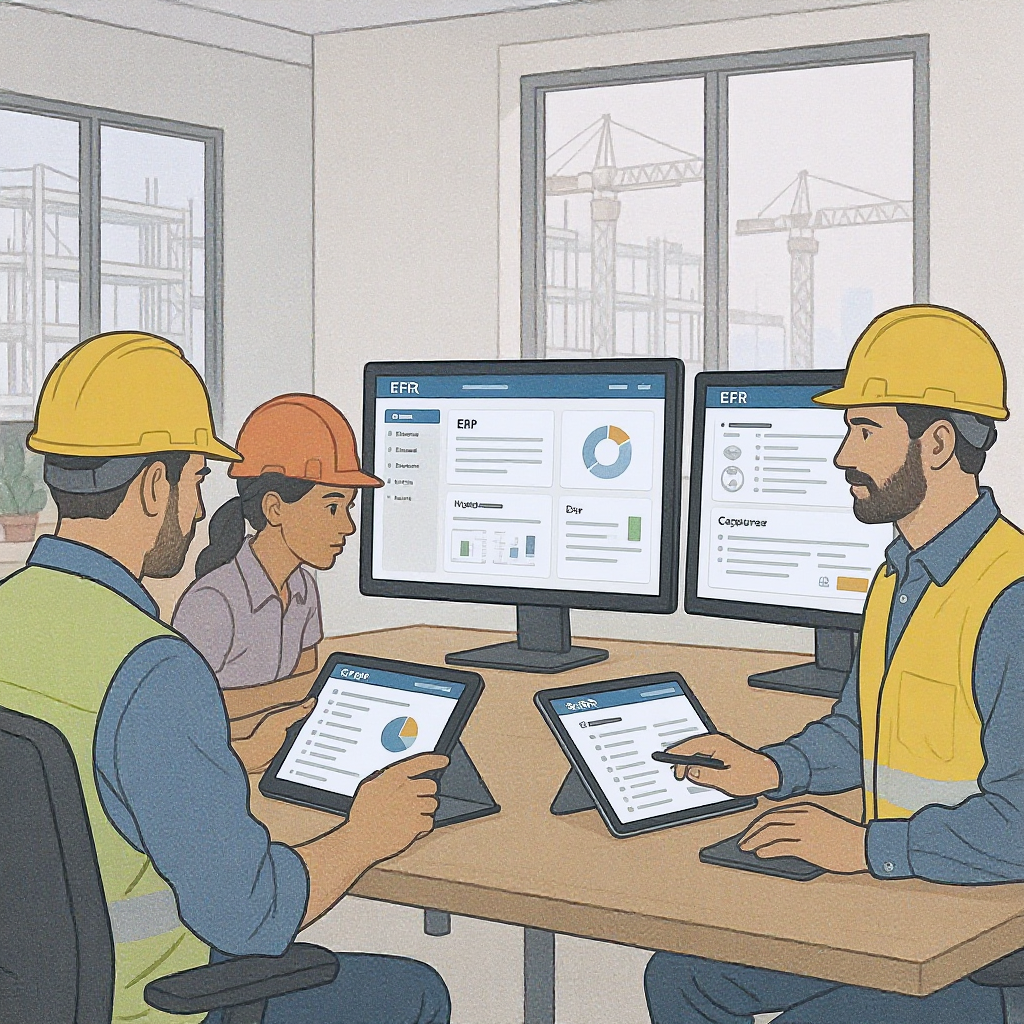
That’s where JobNext ERP solved the problem. Its profitability dashboards tracked actual costs against BOQ estimates in real time. The contractor could flag overruns early, renegotiate subcontract scopes, and cut losses.
This isn’t just a nice-to-have. For mid-size contractors, even a 3% margin leak can wipe out annual profits.
Comparison Table: JobNext vs Competitors
| Feature | JobNext ERP | Generic ERP A | Generic ERP B |
|---|---|---|---|
| Profitability Tracking | Scope & BOQ-based | Limited project-level | None |
| Billing Methods | 6 methods supported | 2 methods supported | 3 methods supported |
| Procurement Workflow | Structured MR→RFQ→PO | Basic purchase orders | Manual approvals |
| GST/TDS Compliance | Integrated + Tally | GST only | None |
| Role-Based Access | Multi-level approvals | Basic permissions | Limited roles |
What’s the Catch?
You might be thinking: “JobNext sounds great, but isn’t switching to a new ERP a nightmare?” Fair point. Migrating data from spreadsheets or old systems takes time. But here’s the upside — JobNext includes tools to import vendor databases, BOQs, and past payroll records without manual re-entry.
For contractors with 50-2000 employees, the ROI is clear. Margins improve, chaos decreases, and your team stops wasting time chasing approvals.
Final Thoughts
Choosing the best ERP software for construction isn’t about ticking boxes. It’s about solving YOUR operational problems. If margin erosion, disconnected systems, or billing errors keep you up at night, pick an ERP that addresses these issues directly.
JobNext works because it’s designed for contractors like you — EPC, HVAC, MEP, and everything in between. Learn more about JobNext here.
Ready to see JobNext in action?
Multi-tenant SaaS ERP for construction, facilities management, and contracting — covering preconstruction, project execution, procurement, HR & payroll, equipment, finance, and 150+ analytics reports.
Get Started Free →