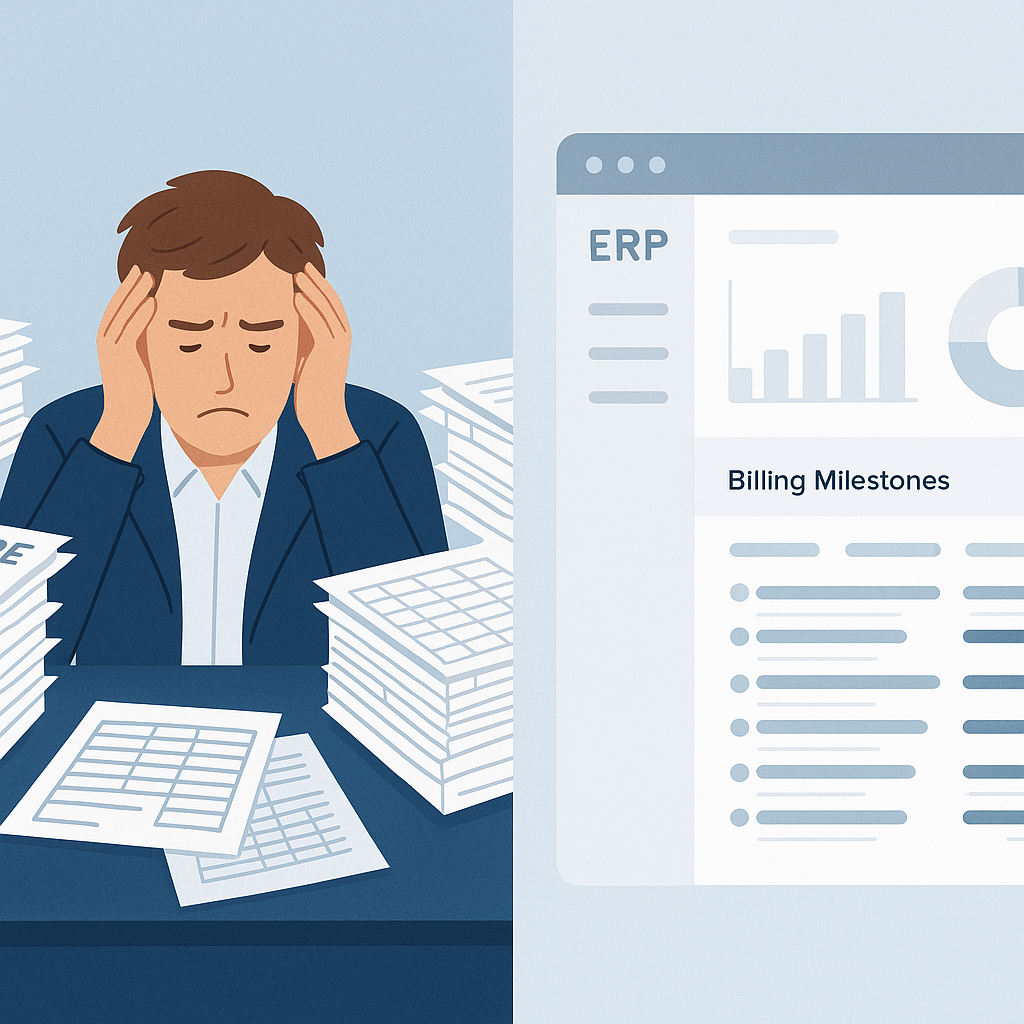
Why Comparing Construction ERPs Isn’t Straightforward
If you’re shopping for construction ERP software, you’ve probably seen the same buzzwords everywhere: “integrated,” “scalable,” “user-friendly.” But when you’re running multi-crore projects with razor-thin margins, you need more than marketing fluff. You need real tools that solve real problems — like tracking project profitability or ensuring GST compliance. So, how do you separate substance from hype?
The trick is to focus on 5 non-negotiable features. Let’s break them down.
1. Real-Time Project Profitability Monitoring
This is the feature that separates the best ERP software for construction from the also-rans. Why? Because margin erosion is the silent killer of contracting businesses. If costs spiral out of control mid-project, you’re stuck scrambling. A good ERP should let you track profitability in real time — across BOQs, scopes, and estimates.
Here’s an example: JobNext’s profitability tracking works directly off your BOQ. As soon as you update costs (materials, labor, subcontractor bills), the system recalculates your margin. No waiting until the month-end to find out you’re bleeding cash. You know immediately.
Pro tip: Look for ERPs that link profitability to WBS (Work Breakdown Structure). It’s the only way to get granular insights.
2. Structured Procurement Workflows
Procurement chaos is a common contractor headache. Without a structured workflow, MRs (Material Requests) get lost, approvals are delayed, and vendor negotiations turn into a free-for-all.
The best ERPs automate this entire process: MR → RFQ → Vendor Offers → PO. For instance, JobNext ensures that every MR is tied to a project and BOQ line item. This eliminates rogue purchases. Plus, approval chains are built in, so you won’t overspend without a manager’s sign-off.
What to avoid? ERPs that don’t connect procurement to project budgets. If your PO system works in isolation, you’re asking for cost overruns.
3. GST/TDS Compliance Out of the Box
If you’re operating in India, GST compliance isn’t optional. But not all ERPs handle it well. Some force you to do manual workarounds to calculate GST or TDS, which wastes time and increases error risk.
JobNext offers built-in GST/TDS compliance with automated calculations. It even integrates with Tally for statutory reporting. This isn’t just convenient; it’s critical for avoiding penalties.
Quick tip: Ask potential vendors if their ERP supports GCC-specific compliance (like WPS for payroll) if you’re working in the UAE or Saudi Arabia.
4. Subcontractor Management Tools
Subcontractor payment disputes can sink a project. If you’re not tracking measurements and progress accurately, you’ll either overpay or delay payments — both of which hurt relationships.
ERPs like JobNext simplify this by linking subcontractor work orders (WOs) to progress measurements. When a subcontractor submits a bill, the ERP checks it against actual progress before approving payment. It’s a small feature, but it prevents costly mistakes.
Pro tip: Avoid ERPs that handle subcontractors as just another vendor. Their workflows are more complex and need dedicated tools.
5. Multi-Tenant SaaS Architecture
Why does this matter? Two reasons: cost and scalability. A multi-tenant SaaS ERP means you’re not paying for servers, IT staff, or updates. Everything runs on the cloud. It’s especially useful for contractors managing multiple sites because everyone — from site engineers to HQ finance teams — gets real-time access to the same data.
JobNext, for example, is a multi-tenant SaaS ERP built specifically for contractors. It’s role-based, so each user only sees what they need. And updates happen automatically, so you’re always running the latest version.
One warning: Be cautious with on-premise solutions disguised as cloud software. If you’re still managing your own servers, it’s not true SaaS.
Final Thoughts
Choosing the right construction ERP isn’t about finding the one with the longest feature list. It’s about finding the one that actually solves your biggest headaches. If you’re tired of margin erosion, procurement chaos, or compliance nightmares, start by evaluating these 5 features.
And if you’re curious how JobNext stacks up, check out our detailed feature comparison tool here.
Ready to see JobNext in action?
Multi-tenant SaaS ERP for construction, facilities management, and contracting — covering preconstruction, project execution, procurement, HR & payroll, equipment, finance, and 150+ analytics reports.
Get Started Free →