Why This Matters
Let’s face it: most contractors don’t start with an ERP. You’re probably using a mix of Excel sheets, WhatsApp groups, and maybe QuickBooks. It works—until it doesn’t.
One missed RA Bill. A vendor payment delayed because someone forgot to approve the PO. Or worse, a project running at a loss because no one flagged that your subcontractor costs exceeded the original estimate. Sound familiar?
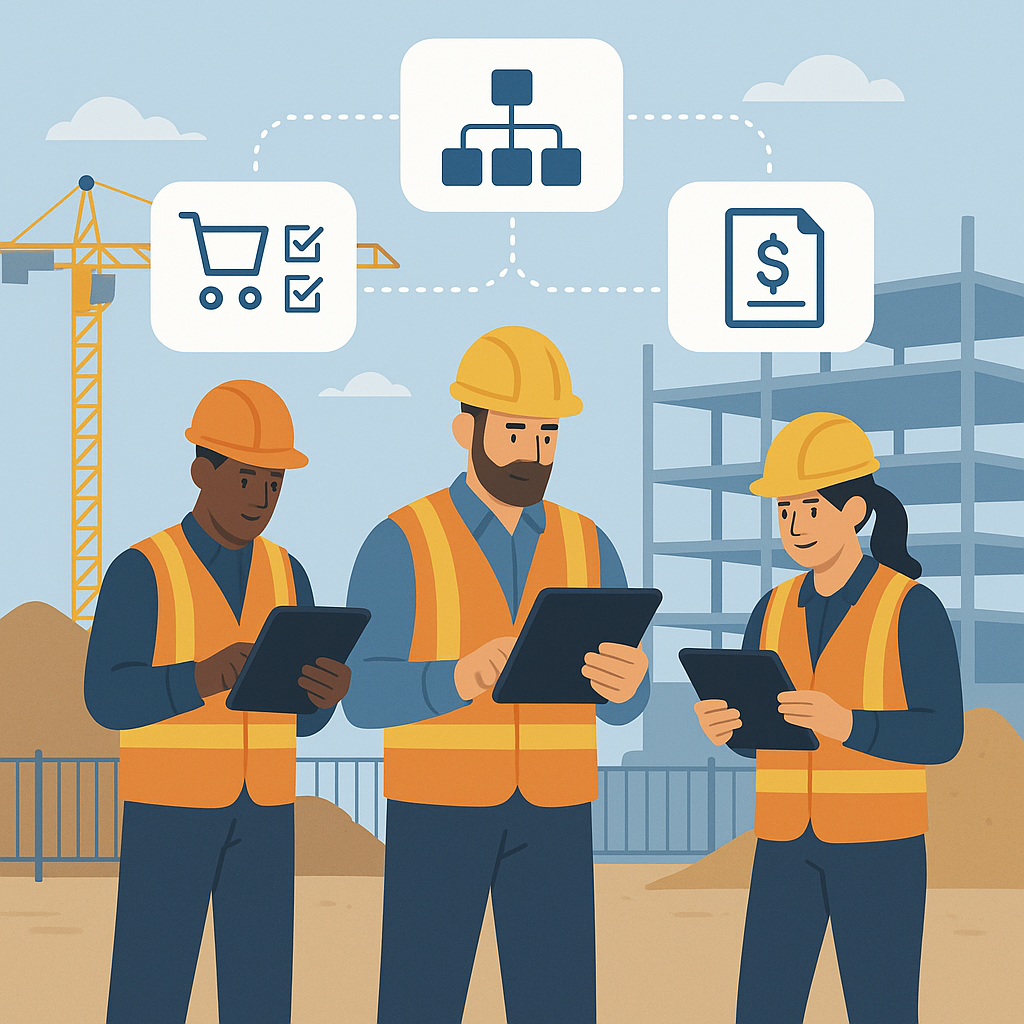
The problem isn’t that you or your team are careless. The problem is disconnected systems. And that’s why unified construction ERPs are essential if you’re serious about profitability.
The Problem with Disconnected Systems
Here’s the thing: tools like QuickBooks or Tally work fine for small businesses. But they’re not built for contractors managing multiple projects, vendors, and billing methods.
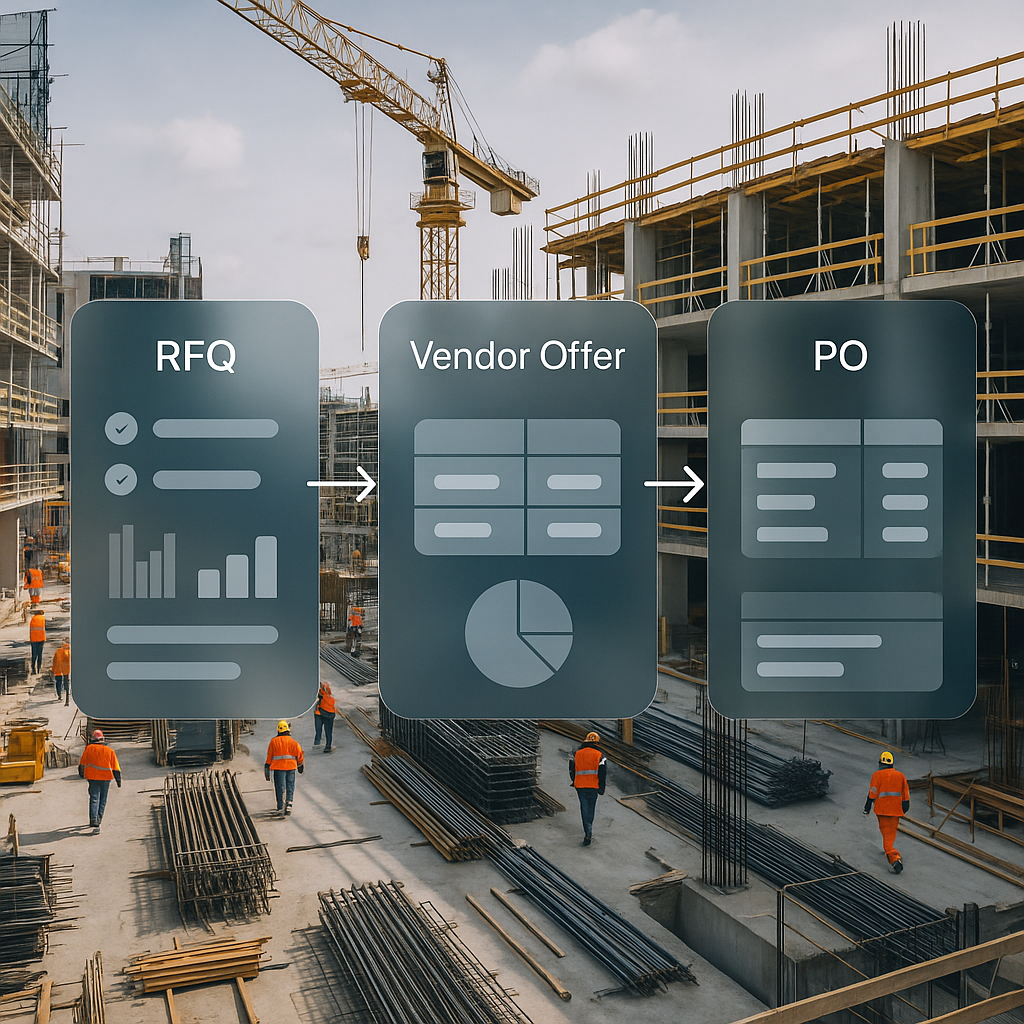
Take procurement, for example. In a typical setup, you’ll have:
- A Material Request (MR) on Excel.
- RFQs sent over email.
- Vendor offers sitting in someone’s inbox.
- POs tracked in yet another sheet.
Good luck tracing back who approved what when a dispute arises. And don’t even get me started on the chaos of GST compliance across these fragmented tools.
A unified ERP solves all this by integrating the entire workflow. In JobNext, for instance, the MR → RFQ → Vendor Offers → PO flow is not only tracked in one place but also includes approval chains. No more emails lost in the void or Excel sheets that only one person can edit.
Real-World Impact: Vendor Management
Let’s look at a real example. One of our clients, a mid-size EPC contractor in Saudi Arabia, was struggling with subcontractor cost overruns. They’d approve work orders and payments based on manual progress updates. Inevitably, errors crept in, and costs ballooned.
With JobNext, they shifted to measurement-based progress tracking. Every subcontractor’s work order, progress measurement, and payment were tied to the original BOQ scope. The result? They cut cost overruns by 15% within six months. Source: ProjectsNext.ai.
What About Compliance?
You might be thinking, "Okay, but does this help with GST and TDS?" Absolutely. Disconnected tools often mean scrambling to reconcile invoices and taxes at the end of the month. With a unified ERP like JobNext, every invoice and payment automatically syncs with GST/TDS calculations. Plus, there’s Tally integration if your finance team insists on using it. Source: ERP Focus.
The Skeptic’s Question
"Isn’t this overkill for a mid-size contractor?" Not really. Margins are razor-thin in construction. If you’re managing 10+ projects, even a small billing error or procurement delay can wipe out your profit on one job. A unified ERP isn’t just about convenience—it’s about protecting your bottom line.
How to Choose the Best Construction ERP
There are plenty of options out there—Sage, Penta, JobNext, etc. So, how do you decide? Here’s my take:
- Look for industry-specific features: General ERPs won’t handle RA billing, BOQ hierarchies, or multi-site attendance.
- Check for compliance support: Especially if you’re in India or GCC, GST/TDS compliance isn’t optional.
- Go for SaaS: Multi-tenant SaaS platforms like JobNext are easier to scale and don’t need heavy IT investment.
- Test the reports: If the ERP doesn’t give you real-time profitability dashboards, it’s not worth it. Source: SelectHub.
Bottom Line
If you’re still piecing together disconnected tools, you’re leaving money on the table. A unified construction ERP like JobNext doesn’t just simplify your workflows—it protects your margins. And in this business, that’s everything.
Ready to stop the chaos? It’s time to consider a unified ERP.
Ready to see JobNext in action?
Multi-tenant SaaS ERP for construction, facilities management, and contracting — covering preconstruction, project execution, procurement, HR & payroll, equipment, finance, and 150+ analytics reports.
Get Started Free →Learn more at JobNext.ai - Construction ERP