
Why Contractors in GCC and India Struggle with Project Management
Let’s start with the obvious: managing construction projects in GCC and India isn’t for the faint of heart. Between juggling multiple sites, handling subcontractors, and navigating local compliance, things can quickly spiral out of control.
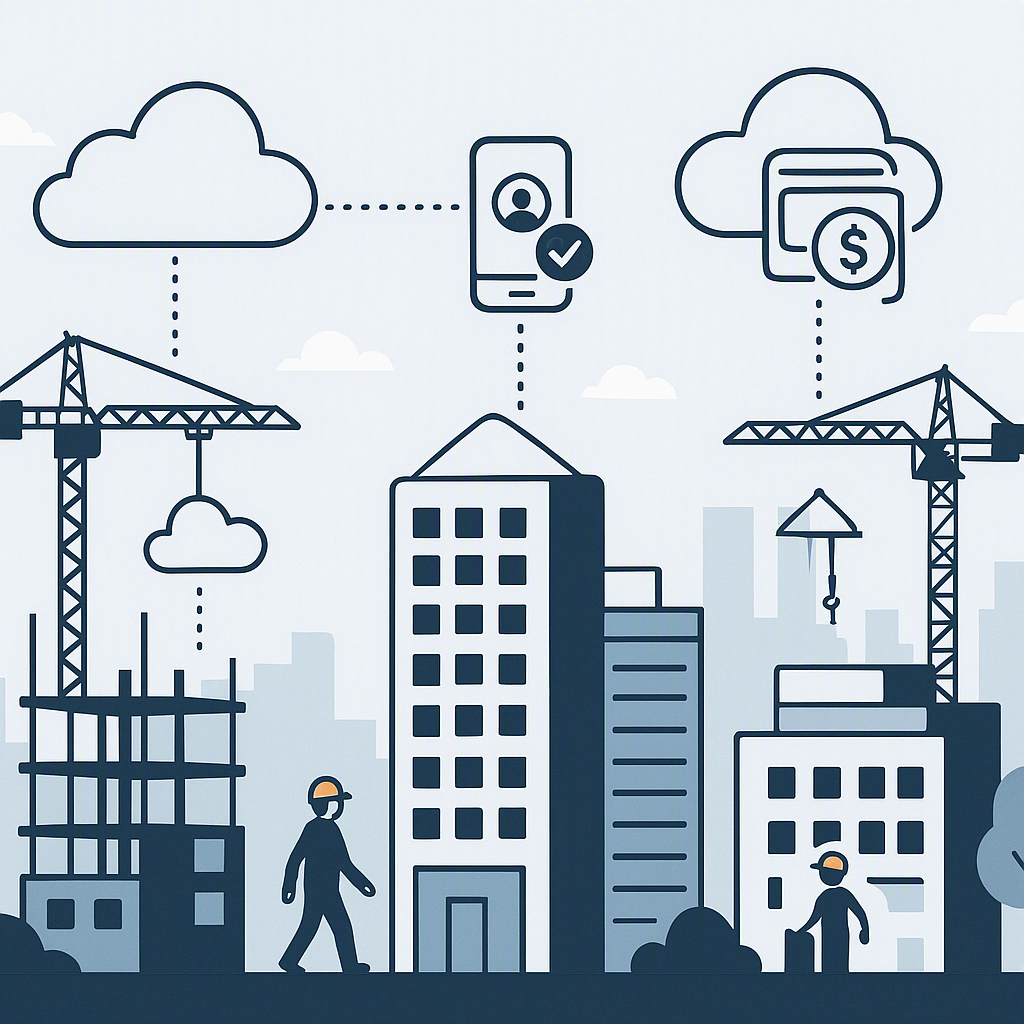
And then there’s the tech problem. Too many contractors rely on a patchwork of tools that don’t talk to each other. One system for procurement, another for payroll, a third for managing BOQs. Not to mention the spreadsheets in between. It’s chaos. What happens when you don’t know your project profitability until it’s too late to change course? You bleed margins.
The solution? A robust project management and planning tool designed specifically for contractors in this region. But not all tools are created equal. Let’s break down what you should be looking for in 2026 and explore some tools that can actually make a difference.
The Must-Have Features of a Contractor-Focused Tool
When we’re talking about contractors in India and the GCC, generic project management software won’t cut it. You need tools that align with the realities of this industry. Here are the non-negotiables:
1. Unified Platform
- Still using separate tools for tendering, procurement, billing, and HR? That’s a recipe for disaster. You need a platform that centralizes all these functions so you’re not constantly switching between systems.
- For example, if your material requisitions (MRs) are handled in one tool and your purchase orders (POs) in another, you risk delays due to manual data entry errors or miscommunication.
- A 2023 report from Deloitte highlights that fragmented systems are one of the primary causes of delays and cost overruns in construction projects across the GCC.
- Actionable step: Create a flowchart of your current processes. Identify how many tools are involved and where integrations or manual workarounds are costing you time.
2. BOQ-Based Planning
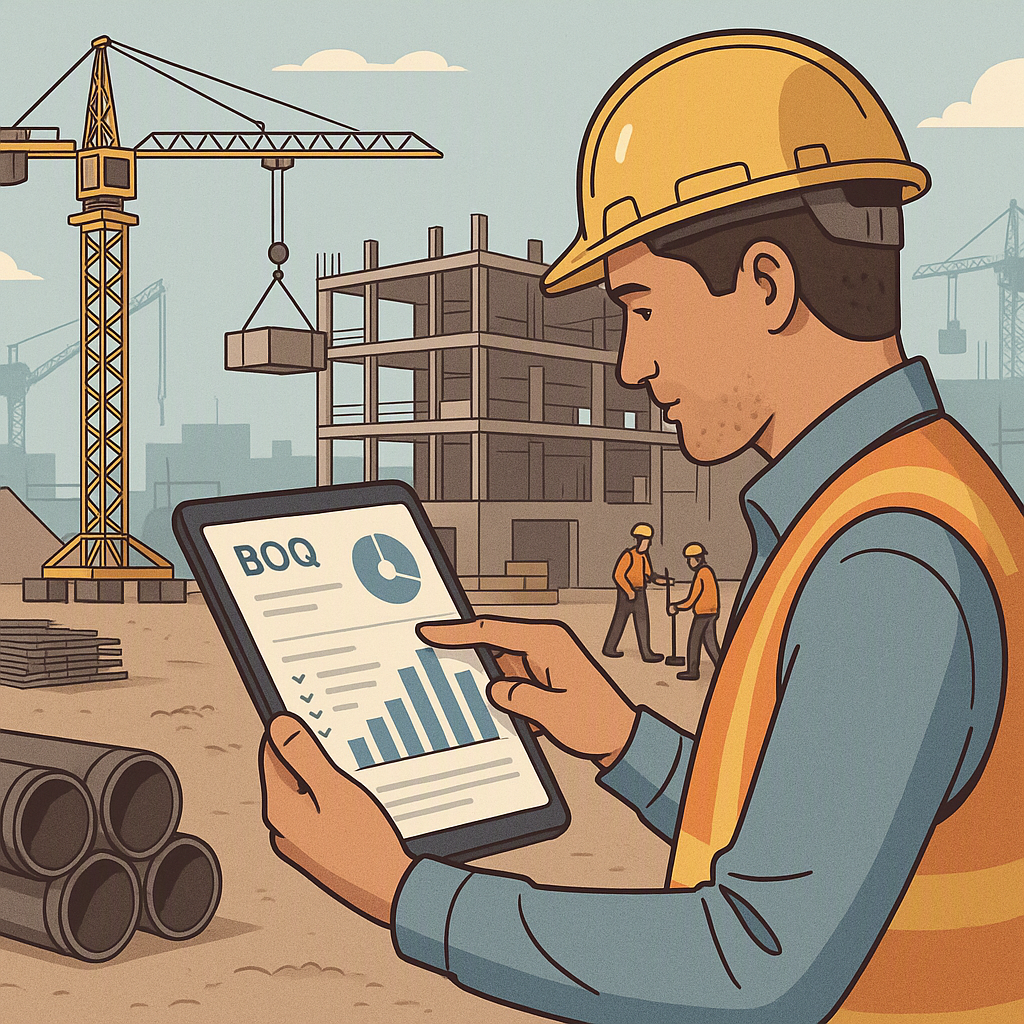
- Let’s face it: BOQs (Bill of Quantities) are the backbone of construction projects in this part of the world. Your tool must allow you to upload, track, and manage BOQs seamlessly. Bonus points if it integrates with resource planning and procurement workflows.
- Why does this matter? Without BOQ-based planning, you risk material shortages or over-purchasing, both of which can hurt your bottom line.
- According to the India Brand Equity Foundation, India’s construction sector is projected to grow at an annual rate of 6.6% through 2025, emphasizing the need for streamlined processes as competition and project sizes increase.
- Actionable step: Review your current BOQ management process. Ensure your tool offers features like BOQ import/export, real-time updates, and linkage to procurement.
3. Comprehensive Billing Methods
- Whether it’s RA bills, stage-wise payments, or monthly billing, your tool needs to support all the ways contractors get paid. If it doesn’t, expect revenue leaks.
- For instance, mismatches between work completed and invoices raised can delay payments and hurt cash flow.
- A study by KPMG in 2021 found that over 35% of construction projects in the GCC experience payment delays due to inefficient billing systems.
- Actionable step: List out your billing methods. Test whether your current tool can handle them without manual intervention.
4. Real-Time Profitability Tracking
- You don’t want to be crunching numbers three months after a project ends to figure out you lost money. A good tool will give you real-time updates on project margins so you can act before it’s too late.
- Imagine being able to spot cost overruns in labor or materials mid-project rather than post-completion.
- According to McKinsey & Company, construction projects in emerging markets like India and GCC countries often experience cost overruns between 20-45% due to poor monitoring systems.
- Actionable step: Set profitability benchmarks for your projects. Use tools that can track these against actuals in real time.
5. Local Compliance
- GST. TDS. Labour laws. If your software doesn’t handle these, you’ll spend hours every month untangling compliance issues. And let’s not forget statutory deductions like PF and ESI for your workforce.
- India introduced GST in 2017, and compliance has become non-negotiable for contractors operating in the country. Similarly, GCC countries have implemented VAT systems, adding another layer of complexity to accounting for contractors.
- Actionable step: Check whether your tool offers compliance templates and automated workflows for tax filings and deductions.
6. Subcontractor and Vendor Controls
- This is where many contractors bleed money. Without proper measurement-based tracking and payment controls, you’re setting yourself up for cost overruns.
- Actionable step: Choose tools that allow you to link subcontractor payments to milestones or measurable outputs.
7. Mobile Accessibility
- With projects spread across multiple sites, your team needs real-time updates on the go. Whether it’s approving a work order or tracking attendance, mobile apps are no longer optional.
- Actionable step: Test the mobile app of your preferred tool. Ensure it covers core functionalities like approvals, updates, and tracking.
Tools That Stand Out in 2026
So, what are the top project management and planning tools that meet these criteria? Let’s go through a few options.
1. ProjectsNext
Okay, we’re biased. But there’s a reason ProjectsNext is built the way it is: because we’ve seen the problems contractors face, and we’ve designed a tool to solve them.
Take the MR → RFQ → Vendor Offers → PO workflow, for example. One of the biggest complaints we hear from contractors is how chaotic procurement can get. Material requisitions are sent on WhatsApp or email, quotes arrive in random formats, and approvals are delayed because someone is always on-site. ProjectsNext fixes this with a structured, end-to-end procurement workflow that includes multi-level approval chains. No more “missing” vendor quotes or unauthorized POs.
And let’s not forget GST-compliant invoicing. We’ve built Tally integration right into the platform, so you’re not scrambling to reconcile your accounts at the end of the quarter.
2. Procore
Procore is a big name, but it’s worth mentioning that it’s not always the best fit for small to mid-size contractors in India or GCC. Why?
For starters, it’s expensive. And while it’s great for large-scale projects with deep pockets, it’s less tailored to local needs like BOQ management or GST compliance. That said, its document management and collaboration tools are top-notch, especially for international projects where multiple stakeholders are involved.
3. Buildertrend
Buildertrend is popular among contractors, especially in residential construction. It’s user-friendly and has strong scheduling features. But here’s the catch: it lacks the depth needed for complex projects, particularly those with multiple billing methods or heavy subcontractor management. It’s a good option for smaller projects but may not scale well for mid-size contractors running multiple sites.
Comparison Table: ProjectsNext vs Procore vs Buildertrend
| Feature | ProjectsNext | Procore | Buildertrend |
|---|---|---|---|
| BOQ Management | ✅ | ❌ | ❌ |
| GST & Local Compliance | ✅ | ❌ | ❌ |
| Subcontractor Controls | ✅ | ✅ | ❌ |
| Cost | $$ | $$$ | $$ |
| Mobile Accessibility | ✅ | ✅ | ✅ |
| Scalability for Large Projects | ✅ | ✅ | ❌ |
Lessons from the Field: Why Tools Matter
A recent article on JobNext.ai highlighted how structured workflows can prevent delays in data center construction. The same principle applies to all types of projects. When your team isn’t on the same page, timelines slip. And when timelines slip, costs skyrocket.
It’s not just about having a tool — it’s about having the right tool. Many contractors I’ve worked with initially thought they could get by with spreadsheets and piecemeal software. But every single one eventually hit a wall. Either they couldn’t scale, or they started bleeding money through inefficiencies they couldn’t see.
If you’re dealing with disconnected systems, margin erosion, or compliance headaches, ProjectsNext can help. Get started free →
Learn more at JobNext.ai - Construction ERP