Why Disconnected Systems Are Killing Small Contractors
Let’s cut to the chase. If you’re running a construction firm with 100 employees and juggling multiple projects, you probably rely on a handful of tools. One for accounting, another for billing, maybe Excel for procurement tracking, and WhatsApp for team communication. Sound familiar? It’s working—barely. But here’s the harsh truth: disconnected systems cost you more than you think.
Real Problem: Margin Erosion
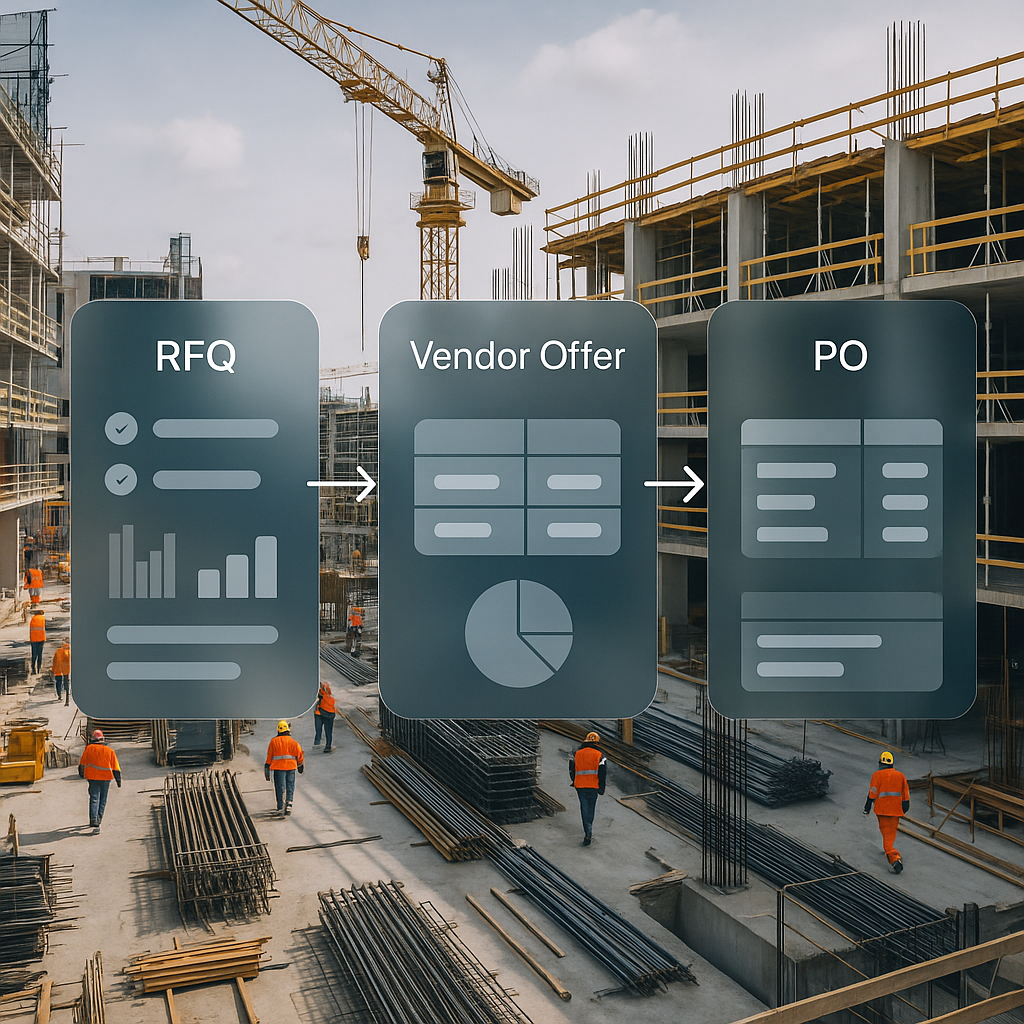
Margins are tight in construction. The smallest mistake—a missed procurement approval, an underbilled RA bill—can snowball into thousands of rupees lost. Take procurement as an example. Without a unified workflow, material requests (MRs), RFQs, vendor offers, and purchase orders often sit in silos. Mistakes creep in. Did you approve the PO? Is it tied to the right BOQ scope? Did the vendor overcharge?
A unified ERP fixes this by connecting the dots. JobNext, for instance, lets you start with an MR, track RFQs, compare vendor quotes, and issue the PO—all in one system. No chance of missing approvals or overspending. And every transaction ties back to the specific scope of work, so you know exactly how each purchase impacts project profitability. That’s real transparency.
The Billing Nightmare
Disconnected billing systems are another silent killer. Small contractors often underbill or overbill—both bad news. Underbilling means you’re losing revenue. Overbilling ticks off clients and delays payments. With six different billing methods (RA bills, stage-wise, monthly, supply BOQ, combined, one-time), it’s easy to mess up.
Unified ERPs simplify this. They let you manage all billing types in one place, automatically pulling from project data like WBS scopes and BOQs. JobNext even flags unbilled scopes, so nothing slips through the cracks. Revenue leakage? Gone.
Compliance Headaches
India’s GST and TDS laws aren’t forgiving. Mess up your filings, and you’re staring at penalties. Many small contractors use Tally for GST compliance but struggle to sync it with their project data. That’s where unified ERPs come in.
JobNext integrates directly with Tally. All your project transactions—billing, procurement, payroll—automatically sync for statutory reporting. No manual uploads, no errors. Plus, it handles statutory deductions like PF and ESI for GCC payrolls. It’s built for compliance without the chaos.
What About Equipment and HR?
Disconnected systems don’t just hurt finance. Equipment utilization and HR are equally vulnerable. Tracking machinery usage across sites in Excel? It’s a recipe for underutilization. Managing attendance, payroll, and leave for 150 field staff? Good luck without a unified system.
With ERPs like JobNext, you can track asset lifecycles end-to-end. From procurement to depreciation to disposal, every asset is accounted for. HR is just as streamlined—attendance, payroll, and site-specific staff allocation all flow through one system. No manual tracking, no payroll errors.
Why Wait?
You might be thinking, “I’m too small for an ERP.” But here’s the reality: you’re not. The smallest contractors lose the most from disconnected tools because they don’t have the margins to absorb inefficiencies. Unified ERPs aren’t just for giants—they’re essential for survival.
Want proof? Companies with 50-200 employees using JobNext have seen margin improvements of up to 15% just by eliminating cost tracking gaps. That’s game-changing for small firms.
Stop bleeding money. Invest in a unified ERP. You’ll wonder how you managed without it.
Ready to see JobNext in action?
Multi-tenant SaaS ERP for construction, facilities management, and contracting — covering preconstruction, project execution, procurement, HR & payroll, equipment, finance, and 150+ analytics reports.
Get Started Free →Learn more at JobNext.ai - Construction ERP