Why Small Contractors Can't Afford to Ignore Unified Construction ERPs
Imagine this: You're managing five projects across two states. Cement deliveries are delayed, subcontractor invoices pile up, and your accountant just flagged a GST compliance issue. Meanwhile, you’re still working off spreadsheets, WhatsApp messages, and scattered software. Sound familiar? That’s the chaos small contractors live with daily. And it’s killing margins.
The Real Problem: Disconnected Systems
Many contractors rely on a patchwork of tools: Excel for BOQs, WhatsApp for site updates, standalone billing software, and an HR system that doesn’t talk to anything else. The result? Data silos, inefficiency, and missed opportunities.
For example, consider procurement. A site engineer raises a material request (MR) for cement. It gets approved via email, sent to vendors via WhatsApp, and recorded in Excel. Somewhere along the way, the numbers don’t match. You order 100 bags, but the reconciliation shows 90 delivered. What happens next? Often, contractors overpay or run into project delays because there’s no unified system to track and resolve these discrepancies.
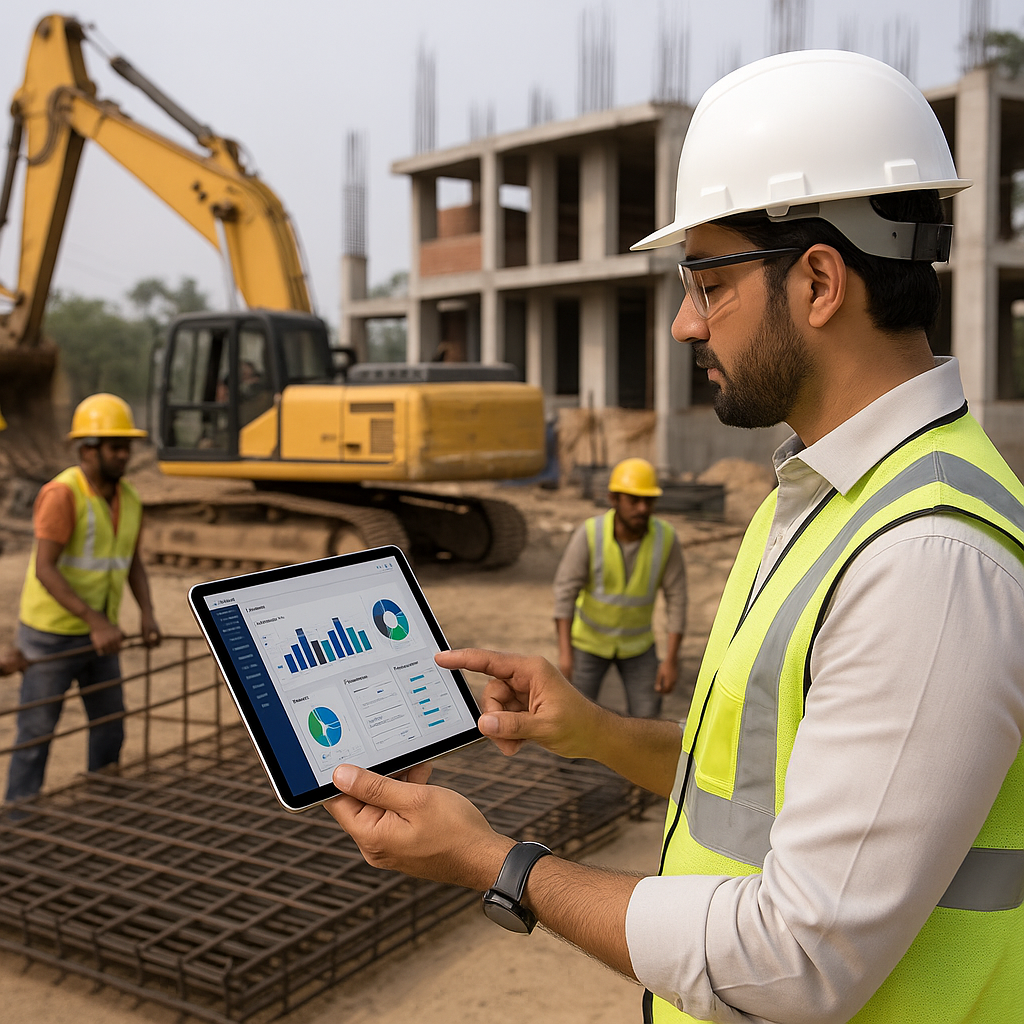
Unified ERPs eliminate these issues. They provide a single platform where MRs flow seamlessly into vendor RFQs, POs, and goods receipt notes. Everything is tracked in real-time. No manual gaps. No misplaced approvals. No more wondering where your money went.
Actionable Steps to Fix Procurement Issues
- Centralize Material Requests: Ensure all MRs are created and tracked in a single system. Unified ERPs allow site engineers to generate MRs that are automatically routed for approval.
- Digitize Vendor Communication: Send RFQs and POs directly from the ERP. This ensures traceability and reduces miscommunication.
- Integrate Inventory and Procurement: Match goods receipts with purchase orders in real-time. If there’s a mismatch, the ERP flags it for immediate resolution.
Comparison: Manual Systems vs. Unified ERP
| Feature | Manual Systems | Unified ERP |
|---|---|---|
| Material Request Approval | Email/WhatsApp (prone to loss/delay) | Automated workflows |
| Vendor Communication | Scattered (phone, email, WhatsApp) | Centralized and traceable |
| Reconciliation | Manual (error-prone) | Automatic matching of POs and receipts |
| Data Accessibility | Limited (stored on individual devices) | Centralized dashboard |
Why Real-Time Profitability Monitoring Matters
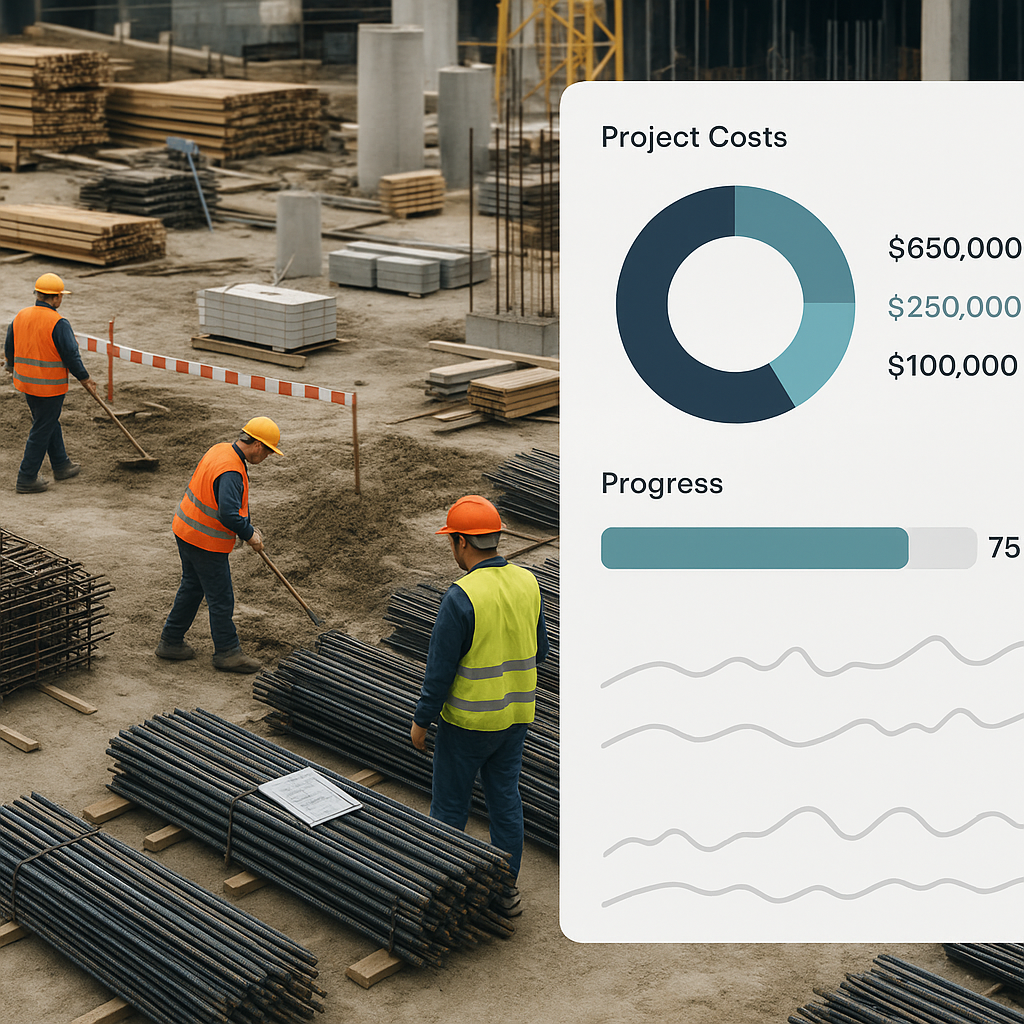
Margins in construction are razor-thin. If you’re not tracking costs in real-time, you’re bleeding money without realizing it. Here’s a typical scenario:
- You win a project with a ₹10 crore BOQ.
- Midway through, you realize you’ve spent ₹6 crore on materials and labor.
- Your site team insists they’re only 40% complete.
At this point, you’re stuck. You can’t abandon the project, but if costs keep spiraling, you’ll lose money. Worse, without real-time data, you don’t know where the overruns are happening. Is it labor? Materials? Subcontractor payments?
Unified ERPs solve this by providing real-time project profitability tracking. Instead of guessing, you can:
- Compare Estimated vs. Actual Costs: Track costs across BOQs, materials, and labor to identify overruns early.
- Allocate Resources Efficiently: Use data to adjust resource allocation on the fly, preventing further overruns.
- Make Data-Backed Decisions: Know when to renegotiate contracts, optimize procurement, or revise timelines.
How to Get Started with Profitability Tracking
- Set Up BOQ Templates: Use your ERP to create a detailed BOQ for each project. Break it down by material, labor, and subcontractor costs.
- Monitor Daily Costs: Input expenses daily to ensure real-time updates. Many ERPs allow site staff to upload expenses directly via a mobile app.
- Schedule Weekly Reviews: Use the ERP’s profitability dashboard to review project performance weekly. Identify and address cost overruns immediately.
GST Compliance Isn’t Optional
For Indian contractors, compliance with GST, TDS, PF/ESI deductions, and other statutory requirements is non-negotiable. Yet, disconnected systems make compliance a nightmare. You’re manually reconciling invoices, calculating GST, and hoping you didn’t miss a statutory deduction.
Unified ERPs simplify this process. Here’s how:
- GST-Compliant Invoicing: Generate tax-compliant invoices directly from the ERP. No need for manual calculations.
- Automated TDS Deductions: The system automatically calculates and deducts TDS for vendor and subcontractor payments.
- Seamless Accounting Integration: Many ERPs integrate with accounting software like Tally, ensuring accurate financial records.
For example, issuing RA bills with proper GST becomes a one-click process. This not only saves time but also reduces the risk of errors that could lead to penalties.
Steps to Simplify Compliance
- Choose an ERP with Indian Taxation Support: Ensure the system supports GST, TDS, and PF/ESI calculations.
- Integrate with Your Existing Accounting Software: If you’re using Tally or QuickBooks, look for ERPs that offer seamless integration.
- Automate Tax Filing: Many ERPs generate GST and TDS reports that are ready for filing, saving you hours of manual work.
Subcontractor Management: A Hidden Profit Lever
Subcontractor management is often overlooked, but it’s a critical area where costs spiral out of control. Without a unified system, you’re relying on manual measurements, ad-hoc work orders, and delayed payments. This creates disputes and cost overruns.
Unified ERPs streamline subcontractor management by:
- Tracking Progress: Measurement sheets are updated in real-time, ensuring accurate progress tracking.
- Tying Payments to Milestones: Payments are released only after milestone completion, reducing disputes and overpayments.
- Creating Transparency: Subcontractors can access their work orders and progress updates, reducing miscommunication.
Example Workflow for Subcontractor Payments
- Work Order Creation: Issue a ₹50 lakh work order for plastering 10,000 sq. ft.
- Progress Measurement: Site engineers record progress (e.g., 6,000 sq. ft. completed).
- Payment Release: ERP calculates payment based on progress (e.g., ₹30 lakh for 6,000 sq. ft.).
This measurement-based approach ensures you’re paying only for work done. It’s a simple but effective way to control costs.
Common Objections (and Why They Don’t Hold Up)
“We’re too small for an ERP.”
Actually, small contractors benefit the most. When every rupee counts, avoiding cost overruns and billing errors is critical. Unified ERPs often pay for themselves by preventing these mistakes.
“It’s too complicated.”
Modern ERPs are designed for ease of use. You don’t need a full-time IT team. Many systems offer pre-configured templates for Indian contractors, including GST and BOQ formats.
“We can’t afford it.”
Can you afford not to? Think about the cost of delayed payments, GST penalties, or material wastage. Unified ERPs prevent these issues, saving you money in the long run.
FAQs
1. How does a unified ERP help with HR and payroll?
It centralizes attendance, leave, and payroll data. For multi-site operations, this is a game-changer. You can allocate staff across sites, track attendance remotely, and ensure accurate payroll processing, even for compliance with PF and ESI regulations.
2. Are ERPs customizable?
Yes, many are. For example, you can set up approval workflows, customize BOQ templates, or integrate with tools like Tally and Razorpay-X. This ensures the ERP aligns with your specific business processes.
3. What’s the ROI on an ERP?
It varies, but the biggest savings come from better cost tracking, compliance, and subcontractor management. Many contractors see ROI within the first year, especially when cost overruns and billing errors are reduced.
4. Can ERPs handle multi-project management?
Absolutely. Unified ERPs are designed to manage multiple projects simultaneously. You can track resource allocation, profitability, and progress for each project from a single dashboard.
5. Do I need special training to use an ERP?
Most modern ERPs are user-friendly and come with training modules or support teams to help you get started. Many also offer mobile apps for site staff, making adoption easier.
Final Thoughts
Unified ERPs aren’t just for big players. Small contractors need them to survive and grow. From real-time profitability tracking to GST compliance, the benefits are clear. If you’re still relying on spreadsheets and scattered tools, it’s time to rethink your approach.
If you're ready to fix these problems, ProjectsNext can help. Built specifically for Indian contractors, it’s tailored to your needs. Get started today →.
Learn more at JobNext.ai - Construction ERP