MEP Contractors and the Digital Gap: Closing the Technology Divide in Mechanical, Electrical, and Plumbing Operations
The MEP (Mechanical, Electrical, and Plumbing) sector sits at an interesting inflection point. According to industry analysis from EC&M, 64% of MEP contractors describe themselves as "moderate adopters" of digital technology. That sounds reasonable until you realize what it actually means: most firms have partially digitized a few workflows but have not connected them into anything resembling an integrated operation.
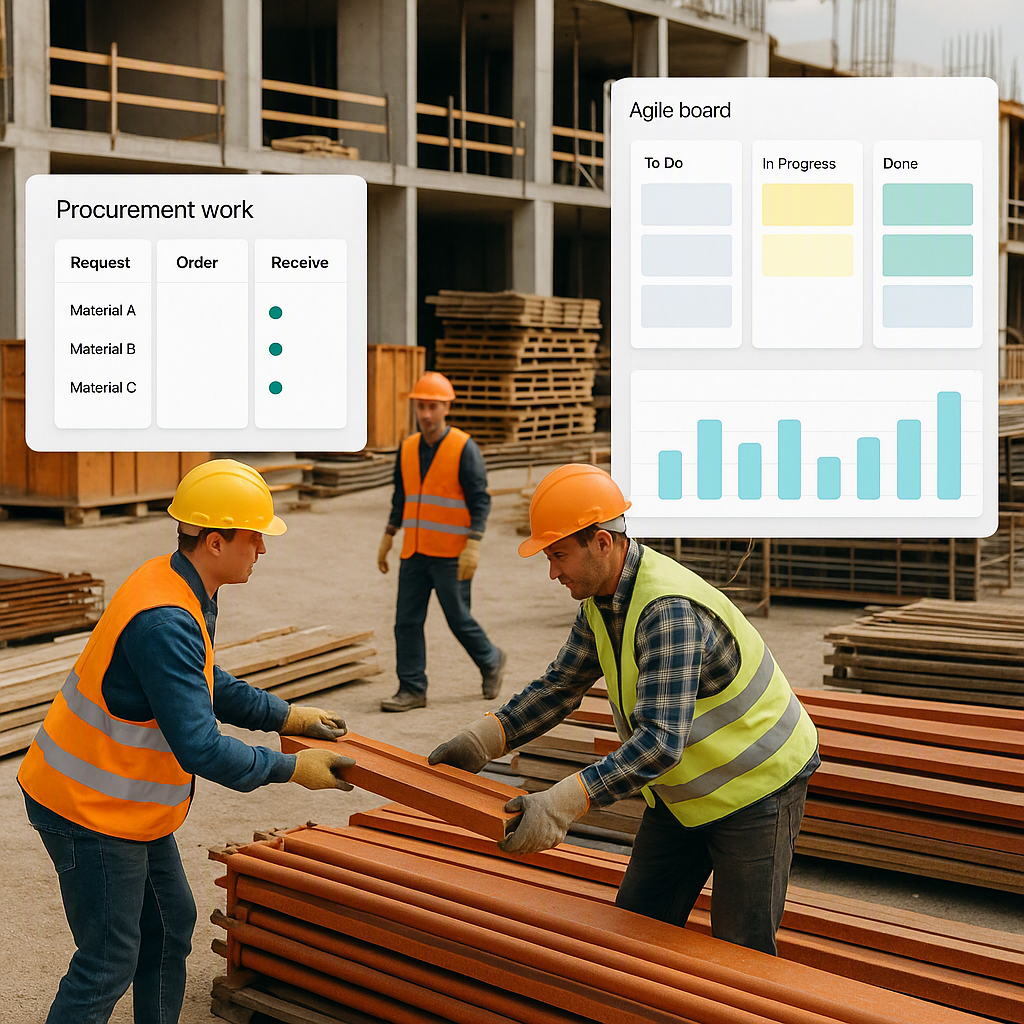
The moderate adopter typically has estimating software that does not talk to their project management tool, a payroll system disconnected from field time capture, and procurement managed through a combination of email, phone calls, and a whiteboard in the warehouse. They are digital on the surface and analog underneath.
Meanwhile, the top 15-20% of MEP firms — the ones winning larger contracts and growing faster — have integrated their operations end-to-end. The gap between these leaders and the moderate middle is widening every year.
What Makes MEP Different
MEP contractors, as well as allied trades such as HVAC, fire protection, electrical, plumbing, interiors/fit-out, and EPC (Engineering, Procurement, and Construction), face specific challenges that general construction technology often handles poorly:
Coordination Complexity
MEP systems must fit within the spatial envelope left by the structural design, and they must coordinate with each other. A duct run cannot occupy the same space as a cable tray, which cannot conflict with a sprinkler pipe. On complex commercial projects, coordination consumes 15-25% of project engineering hours.
BIM and VDC (Virtual Design and Construction) have transformed this process for leading firms, enabling 3D clash detection before construction begins. But BIM generates enormous amounts of data — quantities, specifications, spatial relationships — that need to flow into procurement, estimation, and project management systems to realize their full value.
Prefabrication Is Reshaping Operations
Robotic MEP prefabrication is moving from concept to reality. Prefabrication — assembling MEP components in a controlled shop environment and installing completed assemblies on site — reduces field labor by 25-40% and dramatically improves quality.
But prefabrication shifts work from the jobsite to the shop, fundamentally changing how MEP contractors plan, procure, and schedule. Your ERP needs to manage both shop fabrication and field installation workflows, tracking materials through cutting, assembly, testing, delivery, and installation.
Labor Is the Critical Constraint
The 2025 MEP Innovation Conference highlighted labor availability as the defining challenge for MEP contractors. Experienced journeymen electricians and pipefitters are retiring faster than apprentices can replace them. Technology that helps less experienced workers perform at higher levels — through guided installation, digital work instructions, and automated quality checks — is not a luxury. It is a survival strategy.
The Five Stages of MEP Digital Maturity
Based on our work with MEP contractors across India and the GCC (Gulf Cooperation Council) — including UAE, Saudi Arabia, Qatar, Oman, Bahrain, and Kuwait — we see five distinct stages of digital capability:
Stage 1: Paper and Spreadsheets
Estimating in Excel, scheduling on whiteboards, procurement via phone, timesheets on paper. This still exists among smaller firms in both India and the GCC, and it works until it does not — usually when a project exceeds ₹2 crore or AED/SAR 1 million, or the team grows past 30 people.
Stage 2: Point Solutions
Individual tools for specific functions — estimating software, standalone accounting (e.g., Tally in India or Gulf-specific multi-company accounting systems), perhaps a project management app. These tools work well independently but create data silos. The estimator's material quantities do not connect to the buyer's purchase orders, which do not connect to the accountant's job costs.
Stage 3: Moderate Integration (Where 64% Sit)
Some systems connected, but gaps remain. Perhaps estimating feeds into project management, and accounting integrates with payroll, but procurement, field reporting, and equipment tracking remain disconnected. Most firms at this stage experience the frustration of partial visibility — enough data to know something is wrong, not enough to know what to do about it.
Stage 4: Integrated Platform
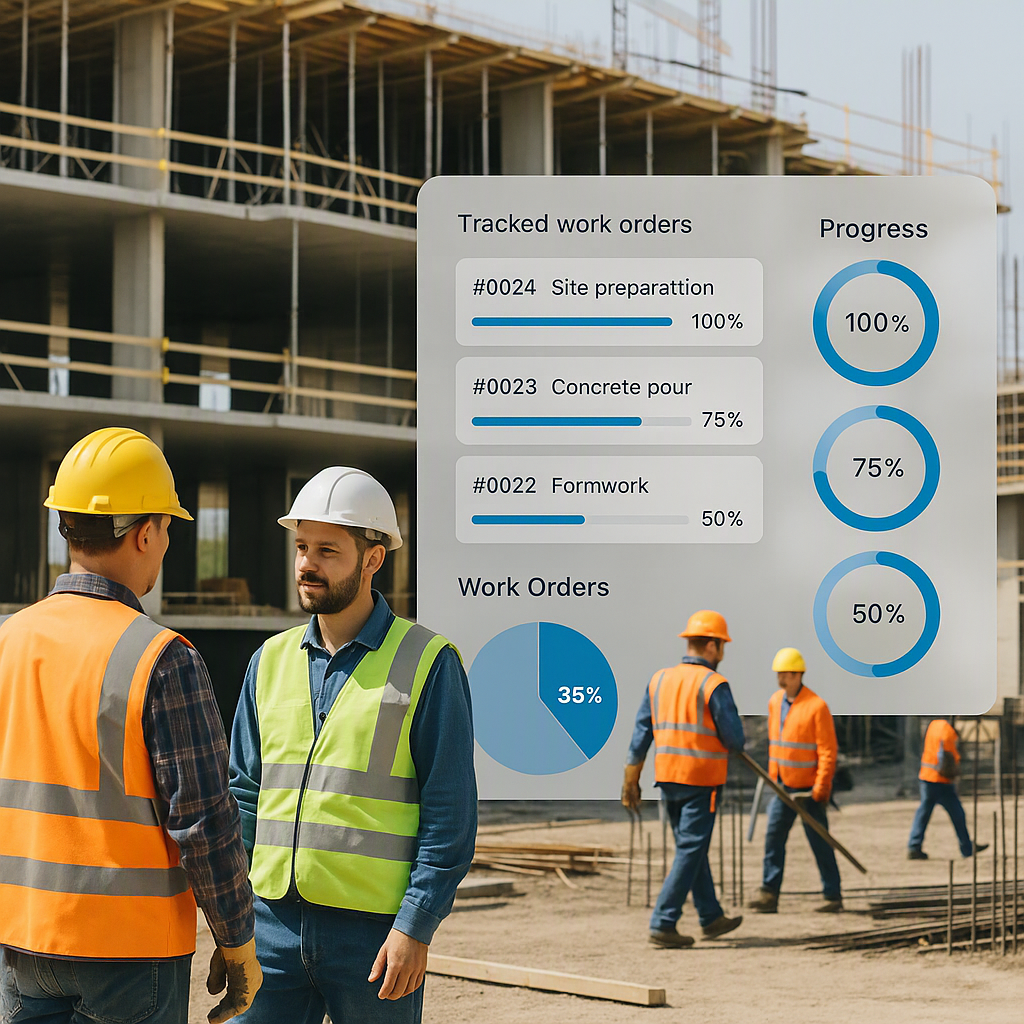
All core functions — estimating, project management, procurement, field operations, HR, payroll, finance, analytics — operate on a single platform or tightly integrated ecosystem. Data flows automatically between modules. The project manager sees real-time cost status without requesting a report.
Stage 5: Predictive and Autonomous
Data from integrated systems feeds AI/ML models that predict outcomes, recommend actions, and automate routine decisions. Procurement systems that auto-reorder based on installation schedule. Maintenance systems that predict equipment failure before it happens. This stage is emerging but not yet widespread in MEP.
Closing the Gap: A Practical Roadmap for the Moderate Adopter
If your firm is at Stage 2 or 3, here is a realistic path to Stage 4:
Year 1, Q1-Q2: Foundation
- Audit your current tools. Map every software system, spreadsheet, and manual process. Identify where data is re-entered between systems.
- Select an integrated platform. Choose a construction-specific ERP that handles MEP workflows — BOQ estimating, material management, subcontractor coordination, and field reporting.
- Implement core financials. Get job costing, billing, and payroll on the new platform. Ensure compliance with GST in India or VAT in the GCC. This is the foundation everything else builds on.
Year 1, Q3-Q4: Operational Integration
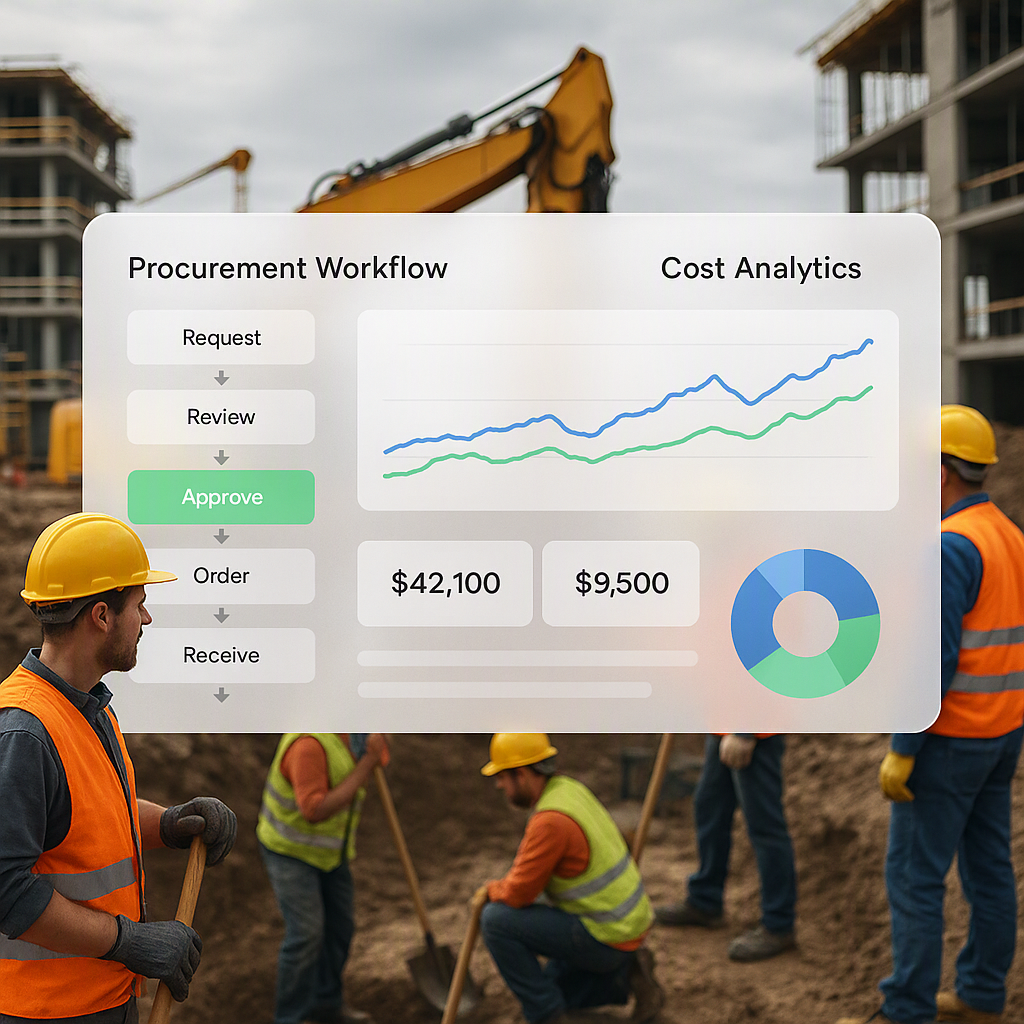
- Add procurement. Connect purchasing to project budgets. Every PO checked against the BOQ before approval.
- Deploy field tools. Mobile time capture, daily reporting, and safety documentation. Start with one project and expand.
- Integrate estimating. Ensure that completed project costs flow back into your estimating database for future bids.
Year 2: Optimization
- Add equipment and asset management. Track tools, vehicles, and equipment with utilization reporting.
- Implement analytics. Dashboards showing project health, cash position, labor productivity, and backlog across all active work.
- Explore BIM integration. If your clients require or value BIM, connect your model to your ERP for quantity extraction and coordination.
The BIM-to-ERP Connection
This is where MEP firms across India and the GCC have the biggest opportunity. BIM models contain precise quantities for every fitting, length of pipe, meter of cable, and piece of equipment. When those quantities flow directly into your estimating and procurement systems, you eliminate manual takeoffs entirely.
Trimble's MEP solutions demonstrate this vision: 3D scanning captures as-built conditions, VDC tools design the systems, and integrated platforms manage fabrication and installation. The leading MEP firms are already operating this way.
For mid-market MEP contractors, full BIM-to-ERP integration may be a second-year objective. But choosing an ERP platform that supports this integration ensures you are building on a foundation that can grow with your capabilities.
The Cost of Standing Still
MEP firms that remain at Stage 2 face compounding disadvantages:
- Bidding accuracy suffers without historical cost data from completed projects
- Cash flow lags when billing cycles depend on manual processes
- Labor waste increases without real-time tracking and scheduling optimization
- Client expectations grow for digital collaboration and transparent reporting
- Recruiting suffers as younger workers choose firms that use modern tools
The MEP service market is projected to reach $405 billion by 2035. The firms that capture the growth will be the ones that operate efficiently, bid accurately, and deliver transparently. All three require integrated technology.
The moderate middle is not a sustainable position. The question for every MEP contractor — whether in India or the GCC — is whether they will move toward the leaders or risk falling behind.
Learn more at JobNext.ai - Construction ERP