How AI-Powered ERP Solutions Can Improve Construction Procurement
I used to think manual procurement processes were fine. Painful, sure, but manageable. After all, most contractors I worked with were already juggling spreadsheets, WhatsApp groups, and disconnected accounting systems. Everyone seemed to get by. If it isn’t broken, why fix it?
Then a project I worked on fell apart. And I mean fell apart.
The Day the Numbers Didn’t Add Up
A few years ago, I was consulting for a mid-sized contracting firm. They had just landed a significant project—a government contract to build a new community hospital. It looked like a straightforward project at first: predictable material requirements, a reasonable budget, and plenty of time to deliver. But halfway through, an issue came up: the steel costs had ballooned beyond the original estimate.
The problem? Their procurement process was a mess. Material requisitions (MRs) were scattered across emails, WhatsApp chats, and verbal requests. There was no central system to track approvals, and purchase orders (POs) often went out late. Price negotiations with vendors were inconsistent because nobody had visibility into historical pricing. Worse, materials arrived at the site in the wrong quantities, leading to delays and rushed orders at inflated prices.
By the time the project wrapped up, the company had overspent significantly. They had won the bid, but they lost money on the job.
Why Did I Miss the Problem?
Looking back, I should’ve seen it coming. But I didn’t, and here’s why: it’s easy to underestimate how much inefficiency costs you. On paper, the company’s old-school approach seemed functional. People knew the processes (more or less), and orders were getting placed, materials were arriving, and vendors were being paid—eventually.
What I didn’t account for was how much time was being wasted chasing approvals, how often orders were duplicated or delayed, and how difficult it was to spot price creep without a centralized system. Multiply that across a big job with hundreds of line items, and it’s no surprise things fell apart.
The Typical Procurement Chaos
If you’re a contractor in India or the GCC, this probably sounds familiar:
- Material requests are scattered: Site engineers send MRs through WhatsApp or email, with no structured format. Some requests get lost. Others are incomplete, leading to back-and-forth delays.
- No standardized process for vendor quotes: You call or email a few suppliers and hope for the best. Often, the vendor you’ve always used is the one you stick with, even if their prices have crept up over time.
- Approvals are a bottleneck: Managers are bombarded with calls and emails asking, “Can you approve this PO?” If they’re traveling or busy, the process grinds to a halt.
- Surprises at the site: Materials arrive late, in the wrong quantities, or with incorrect specifications. By the time anyone notices, it’s too late to fix without extra costs.
Does this sound like a system that scales? Of course not.
Hidden Costs of Manual Procurement
Manual procurement doesn’t just waste time—it eats into your margins. For instance:
- Delayed materials lead to idle labor: If workers can’t proceed with the project because materials haven’t arrived, you’re paying for unproductive hours.
- Rush orders inflate costs: Last-minute purchases almost always come at a premium.
- Lost vendor insights: Without visibility into past pricing and vendor performance, you can’t negotiate effectively.
These inefficiencies add up, especially on large-scale projects. According to a McKinsey report, poor procurement practices can increase project costs by as much as 15–25%. That’s a hit most contractors simply can’t afford.
What Changed My Mind
After that project failed, I started paying more attention to procurement. I asked questions, compared workflows across multiple contractors, and looked into tools built specifically for construction. That’s when I came across structured, AI-powered ERP solutions like ProjectsNext, which integrate procurement into a single, unified workflow.
Here’s the kicker: it wasn’t just about going digital. You can replace a spreadsheet with a software tool and still end up with the same chaos if the process isn’t right. What stood out to me was how an ERP system could enforce structure and discipline—automatically.
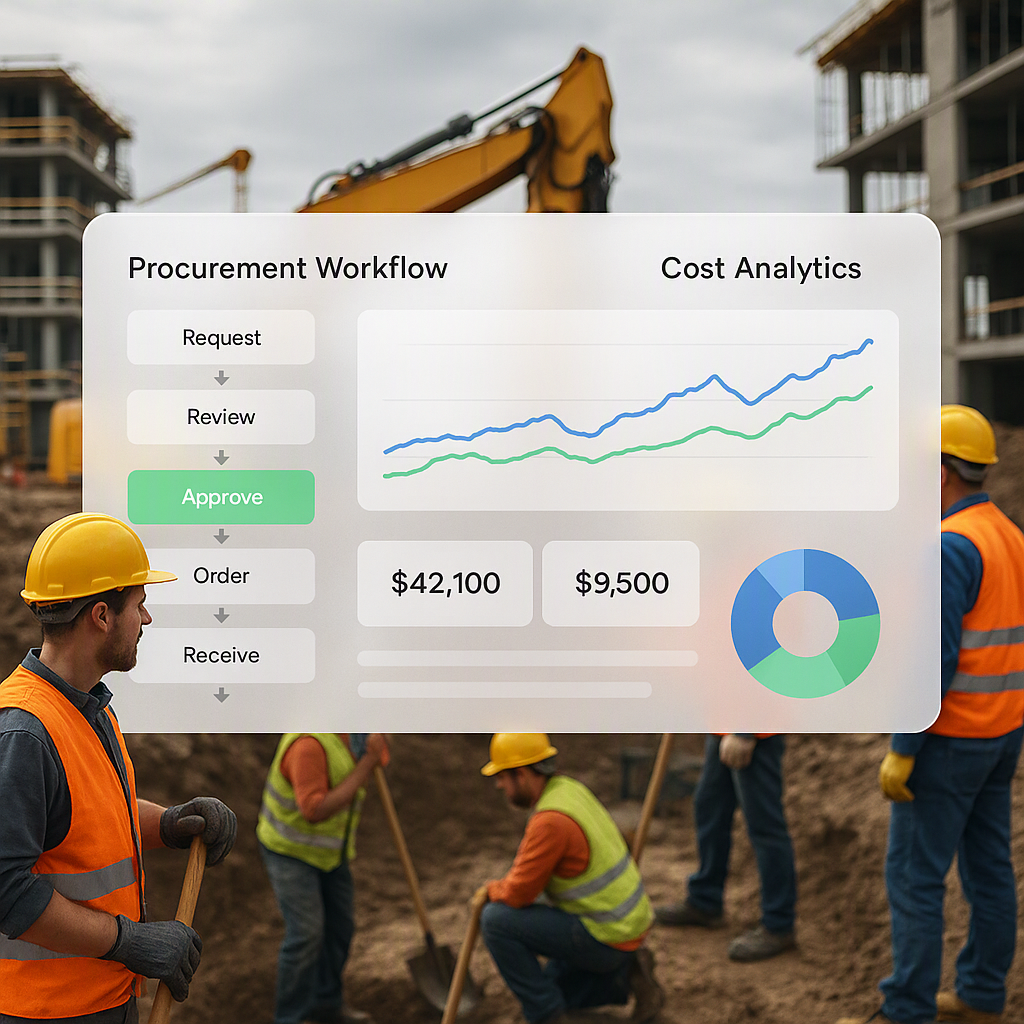
The MR → RFQ → PO Workflow: Why It Works
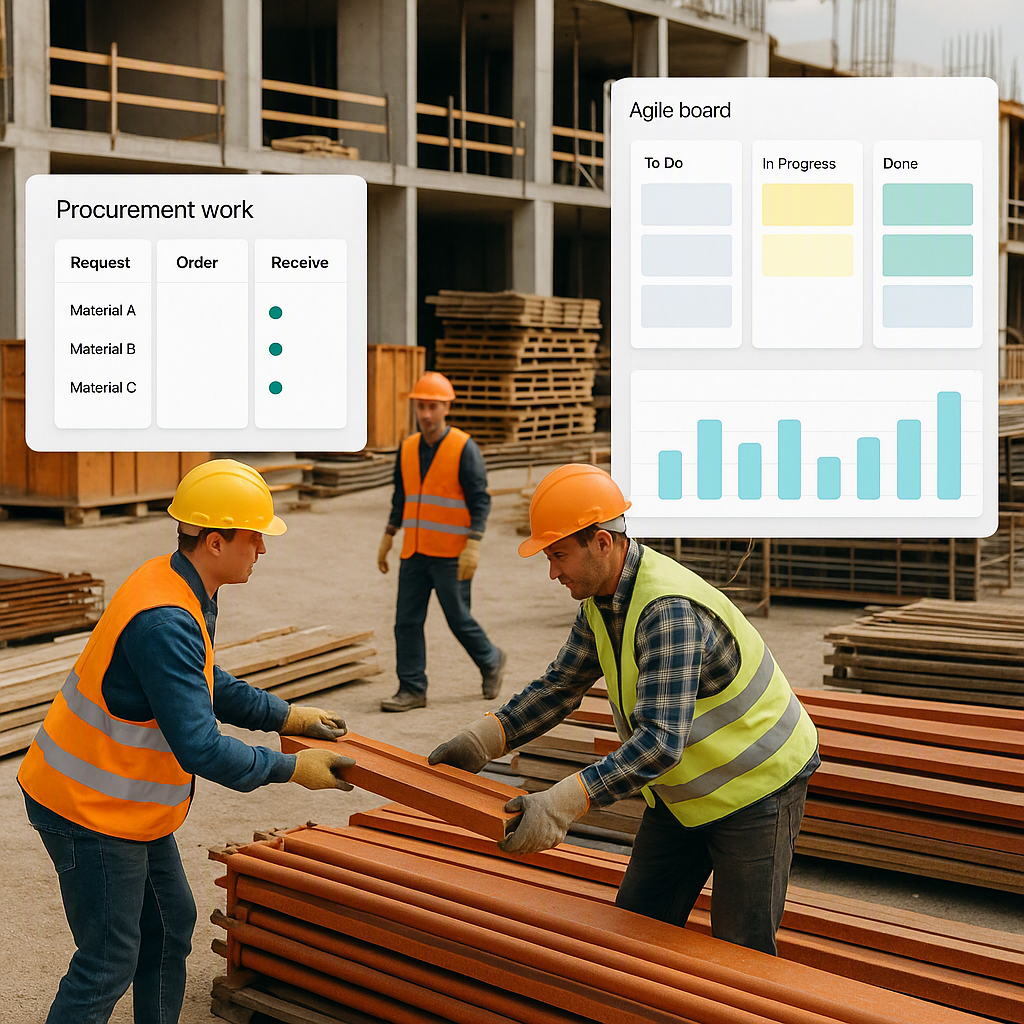
One of the biggest game-changers I’ve seen is the MR → RFQ → PO workflow. Here’s how it works:
1. Material Requisition (MR)
All material requests are submitted through a standardized form in the system. Site engineers fill out specific details—item description, quantity, urgency, and even the BOQ reference. No more random WhatsApp messages at 11 PM.
Actionable Step: Train site engineers to use standardized templates for every MR submission. If necessary, implement mandatory fields that must be filled before submission.
2. Request for Quotation (RFQ)
Once an MR is approved, the system generates an RFQ that goes out to pre-qualified vendors. This ensures you’re always getting competitive quotes—no more relying on the same “trusted” supplier every time.
Actionable Step: Build and maintain a vendor database with pre-qualified suppliers, including their pricing history and performance metrics.
3. Purchase Order (PO)
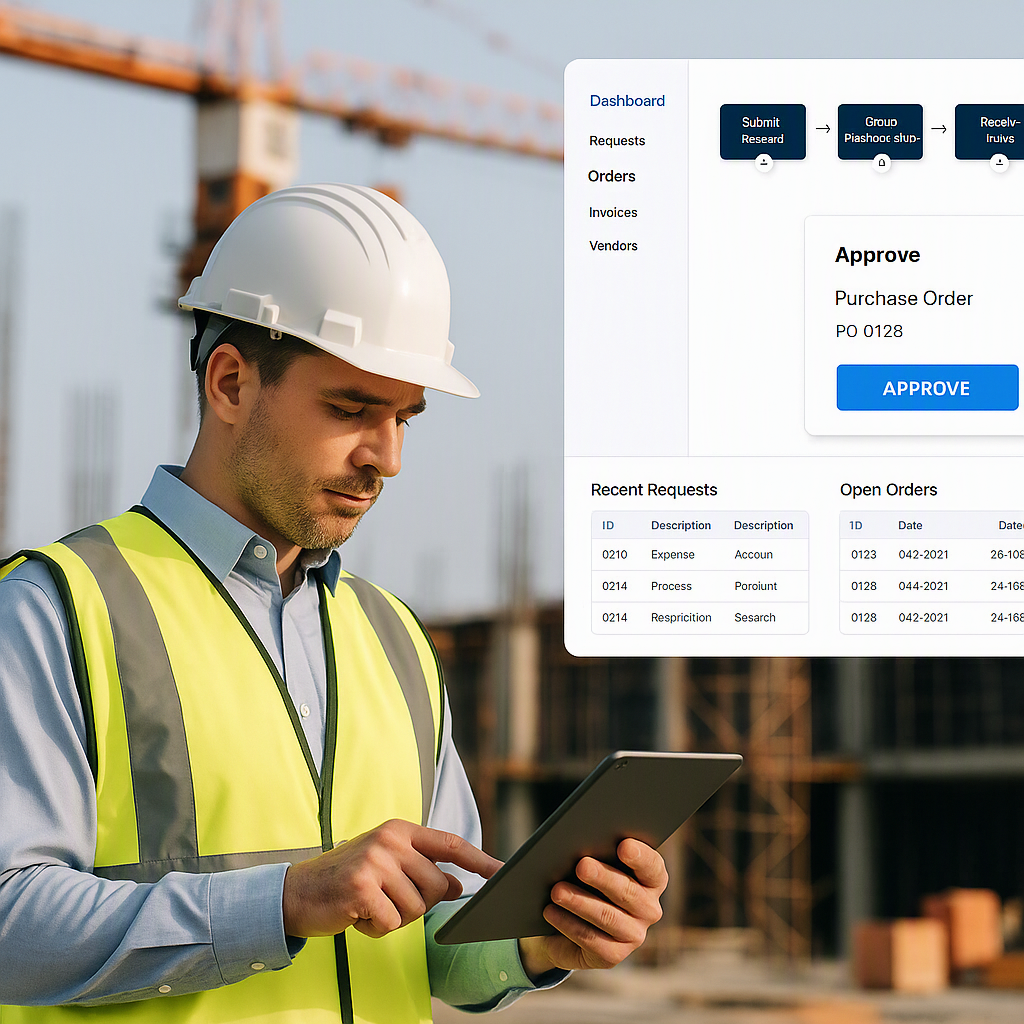
After vendor quotes are reviewed and approved (with clear audit trails), the system generates a formal PO. No more guesswork about what was ordered, who approved it, or what the agreed-upon price was.
Actionable Step: Set up automated PO generation once RFQs are approved to reduce manual intervention and prevent errors.
The beauty of this workflow is that it’s not optional. It forces compliance by design. If you’ve ever tried to get a site engineer to follow a process, you know how much of a win that is.
How AI Takes It a Step Further
Here’s where AI comes in. A good ERP system doesn’t just automate workflows—it makes them smarter.
AI-Driven Features That Matter
- Vendor Insights: AI can analyze pricing trends to flag when a supplier’s prices are increasing or identify which vendors consistently deliver on time.
- Forecasting: Predict future material needs based on past projects, helping you avoid over-ordering or last-minute rush orders.
- Approval Automation: Auto-approve requests within predefined thresholds, ensuring smoother workflows.
Actionable Step: Use AI-powered dashboards to visualize vendor performance and identify savings opportunities. Regularly review flagged trends.
These features aren’t just nice-to-have—they’re essential for managing costs and timelines effectively. According to McKinsey, companies that adopt digital procurement tools see cost savings of 10–15% within the first year.
Comparison Table: Manual vs. AI-Powered Procurement
| Aspect | Manual Process | AI-Powered ERP |
|---|---|---|
| MR Submission | Scattered via WhatsApp, emails | Centralized, standardized forms |
| Vendor Quotes | Inconsistent, often limited to one supplier | Competitive RFQs sent to multiple vendors |
| Approvals | Delayed due to manual follow-ups | Automated within predefined rules |
| Vendor Insights | No visibility into historical pricing or trends | AI-driven pricing analysis and performance metrics |
| Material Forecasting | Reactive, based on urgent needs | AI predicts future requirements |
What We Do Differently Now
After that failed project, I’ve made it a point to steer contractors away from manual procurement workflows. Here’s what we focus on instead:
- Centralization: Use a single system—whether it’s an ERP like ProjectsNext or something else—that connects MRs, RFQs, and POs in one place.
- Vendor Data: Build a database of vendors with historical pricing, delivery times, and quality ratings.
- Approval Limits: Set clear rules for who can approve what, and automate smaller approvals.
Final Thoughts
Implementing AI-powered ERP solutions isn’t easy—it takes time, training, and buy-in. But the cost of sticking to manual workflows is far higher. If you’re tired of procurement chaos, tools like ProjectsNext can help you simplify the MR → RFQ → PO process and unlock the full potential of your procurement strategy.
Learn more at JobNext.ai - Construction ERP