
Subcontractor Cost Overruns: A Silent Killer for Your Margins
If you’ve ever wrapped up a project and wondered where the profit margin went, chances are subcontractor cost overruns played a part. It’s one of those issues that sneaks up on you. Everything looks fine on paper until the final invoices roll in, and suddenly you’re staring at costs you didn’t plan for.
Why does this keep happening? Because managing subcontractors is messy. You’re dealing with progress measurements, unverified claims, vague work orders, and sometimes, just plain bad communication. And when you’re running multiple projects, even small overruns start adding up in a big way.
But here’s the good news: overruns aren’t inevitable. With the right processes and tools, you can catch leaks before they sink your margins. Here are five practical ways to prevent subcontractor cost overruns, as outlined in ProjectsNext.ai’s guide published on October 2, 2026:
1. Start with Clear Work Orders
The root of most disputes? Ambiguity. Vague scopes of work lead to misaligned expectations, and before you know it, subcontractors are billing for work you didn’t anticipate. A clear, detailed work order (WO) can eliminate 90% of those headaches.
What Does a Good WO Look Like?
A well-drafted work order should include:
- Scope: List exact tasks, deliverables, and exclusions. Be as specific as possible. For example, instead of saying "install flooring," specify "install 800 square meters of 12mm laminate flooring, including underlay. Excludes removal of existing flooring."
- Milestones: Tie payments to measurable progress. For instance, payment for plastering could be tied to completion of each floor or specific square footage.
- Rates: Lock in unit rates (e.g., per square meter, per hour) rather than agreeing to lump-sum pricing. Unit-based rates make it easier to identify deviations.
Actionable Steps to Create Better Work Orders
- Use templates to standardize work orders across projects.
- Get input from multiple stakeholders, like project managers and site engineers, to ensure nothing is missed.
- Review work orders with subcontractors before signing to eliminate misunderstandings.
Skipping these steps often leads to disputes and inflated costs, especially when subcontractors begin charging for "extra work" that wasn’t explicitly excluded in the scope.
2. Use Measurement-Based Payment Approvals
One of the smartest shifts I’ve seen is moving from "percent complete" estimates to actual measured quantities. Why? Because percentages are subjective. Measurements are not.
Why Measurement-Based Approvals Work
Percent-complete estimates are prone to errors and overestimation, especially when subcontractors have financial pressure to claim more progress than they’ve achieved. Measurement-based approvals, on the other hand, rely on tangible data—like square footage completed, cubic meters poured, or tons installed.
For example, instead of asking your site engineer to "guesstimate" that a subcontractor has completed 75% of a plastering job, have them measure the actual square footage completed. Digital platforms like ProjectsNext make this kind of tracking seamless.
Actionable Steps to Implement Measurement-Based Approvals
- Train your site engineers or supervisors on measurement techniques for common tasks (e.g., calculating cubic meters for concrete).
- Use digital tools or apps to record measurements on-site and generate instant reports.
- Tie payment approvals directly to these reports. Avoid releasing payments based on verbal agreements or rough estimates.
This approach not only eliminates guesswork but also creates accountability. Subcontractors know they’ll only be paid for what’s actually verified, reducing disputes and inflated invoices.
3. Implement a Structured Procurement Workflow
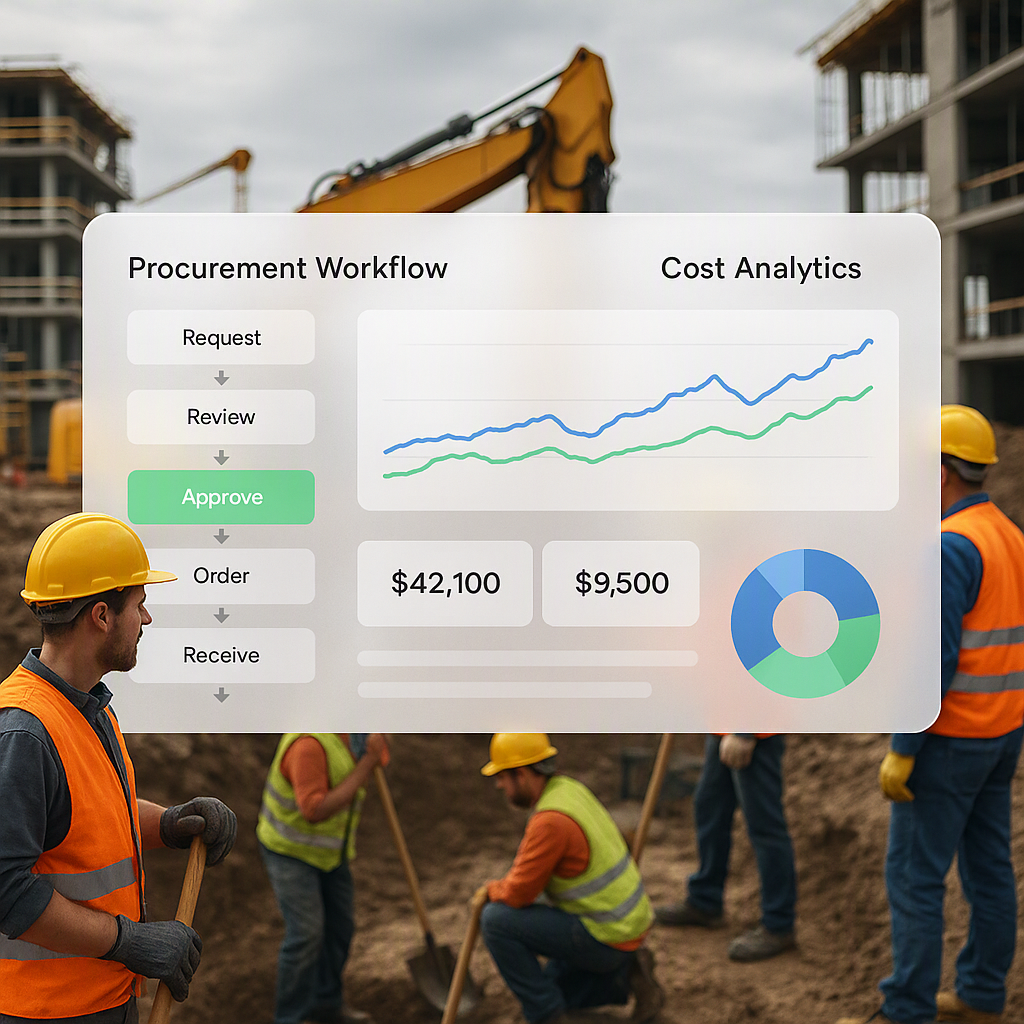
If you’re still managing procurement over WhatsApp or email, it’s time to stop. Disorganized procurement processes are a breeding ground for cost overruns. Without structure, you’re likely to miss critical steps like comparing vendor offers or tracking approvals.
Elements of a Good Procurement Workflow
- Material Requisition (MR): Site engineers or managers raise requests specifying exactly what’s needed.
- Request for Quotation (RFQ): Invite vendors/subcontractors to provide competitive quotes.
- Vendor Comparison: Evaluate offers side-by-side, considering both cost and quality.
- Purchase Order (PO): Issue formal orders with locked-in rates, quantities, and delivery timelines.
Actionable Steps to Improve Procurement
- Use project management tools to centralize procurement workflows. Platforms like ProjectsNext allow you to manage RFQs, POs, and approvals in one place.
- Set up a checklist for every procurement cycle to ensure no step is skipped.
- Regularly audit preferred vendors for pricing competitiveness to avoid over-reliance.
Teams that ignore RFQs or skip vendor comparisons often end up overpaying, either because they’re locked into inflated rates or because they’re unaware of better options. Without a structured system, small errors in procurement can snowball into lakhs of rupees in losses, as noted in the blog "Locking Supplier Rates Can Save Contractors Lakhs."
4. Lock Subcontractor Rates Early
Costs don’t just creep up—they spike. Labor markets fluctuate, materials become scarce, and suddenly your subcontractor is asking for a rate revision halfway through the project. You can’t always avoid these increases, but you can minimize them by locking rates early.
Balancing Rate Locking with Escalation Clauses
While locking rates protects you from sudden increases, it’s critical to include fair escalation clauses for long-term projects. These clauses should specify:
- The percentage increase allowed for labor or materials.
- Trigger conditions for escalation (e.g., inflation above X%, material shortages).
- Documentation required for rate revisions.
Actionable Steps to Lock Rates
- Negotiate rates during the tender phase, ensuring they account for projected market fluctuations.
- Document all rate agreements in a centralized system.
- Review escalation clauses with legal advisors to ensure fairness and enforceability.
Teams that fail to lock rates often face mid-project renegotiations, which can derail budgets. This is especially true for projects in regions where labor costs can rise unpredictably due to market conditions.
5. Track Subcontractor Costs in Real Time
Most cost overruns go unnoticed because they aren’t tracked until it’s too late. Real-time cost tracking gives you visibility into subcontractor expenses as they occur, helping you catch deviations early.
Why Real-Time Tracking Matters
For example, say you’ve budgeted ₹10 lakh for subcontractor labor on a project. If you’re tracking costs in real time, you’ll immediately see if the first few invoices are pushing you over budget. This allows you to course-correct—whether that means renegotiating rates, revising work scopes, or reallocating resources.
Actionable Steps to Implement Real-Time Tracking
- Use integrated project management tools that connect budgets, progress tracking, and subcontractor billing.
- Set up alerts for cost deviations (e.g., invoices exceeding budget thresholds).
- Conduct weekly reviews of subcontractor costs to ensure alignment with project budgets.
Many teams rely on spreadsheets or manual reports to track costs, which leads to delays in identifying overruns. Automating this process reduces errors and speeds up decision-making.
Common Mistakes to Avoid
- Skipping Verification: Always verify progress before approving payments. Rushing approvals leads to inflated costs.
- Ignoring Change Orders: Track every scope change. Even small changes can snowball into major overruns if left unchecked.
- Overlooking Compliance: Ensure subcontractors meet GST, TDS, and labor law requirements. Non-compliance can lead to penalties.
Conclusion
Subcontractor cost overruns aren’t inevitable. They’re a symptom of disorganized workflows and poor visibility. By implementing clear work orders, measurement-based payments, structured procurement workflows, early rate locking, and real-time cost tracking, you can regain control over project costs.
If subcontractor costs are eating into your margins, tools like ProjectsNext are designed to help. With features like structured procurement, real-time tracking, and progress-based approvals, you can keep your projects on budget and on track. Get started free →
Learn more at JobNext.ai - Construction ERP