
Subcontractor Costs: A Silent Profit Killer
Subcontractor cost overruns are sneaky. One day the numbers look fine, and the next, you're explaining a 15% budget blowout to your client. Why does this happen so often? Miscommunication, poor tracking, and loose contract management top the list. But the good news? You can prevent it. Let’s talk about five practical ways to keep these costs in check, along with actionable methods and tools to manage them effectively.
1. Get the Scope Right from Day 1
Ever found yourself arguing with a subcontractor over what “included” actually means? A vague scope of work is a magnet for disputes and surprise costs. It’s your job to ensure everyone has the same understanding from the start.
Actionable Steps:
-
Use a Detailed BOQ (Bill of Quantities): Break down work into clear, line-item tasks. Each task should have well-defined unit rates, quantities, and deliverables. For example, instead of saying "Install flooring," specify the type of flooring, square footage, thickness, and any finishing details.
-
Define Assumptions and Exclusions: Make sure the BOQ includes a section for assumptions (what is included) and exclusions (what is not). This avoids disputes later when something is left ambiguous.
-
Have a Kickoff Meeting: Before the project starts, hold a meeting with your subcontractors to review the BOQ and contract terms in detail. Encourage questions to clarify expectations upfront. In fact, according to reports from the Construction Industry Institute (CII), projects that include formal kickoff meetings reduce the risk of scope-related disputes by nearly 20%.
-
Document Scope Changes Immediately: If anything changes during the project, update the BOQ and ensure all parties sign off. Treat this as non-negotiable.
Why It Matters:
When you drill down into the scope with precision, you reduce the wiggle room for “interpretation.” Even a 10% improvement in scope clarity can prevent costly misunderstandings, especially on large-scale projects. In 2022, a study by Dodge Construction Network found that unclear scopes were one of the top three contributors to project cost overruns.
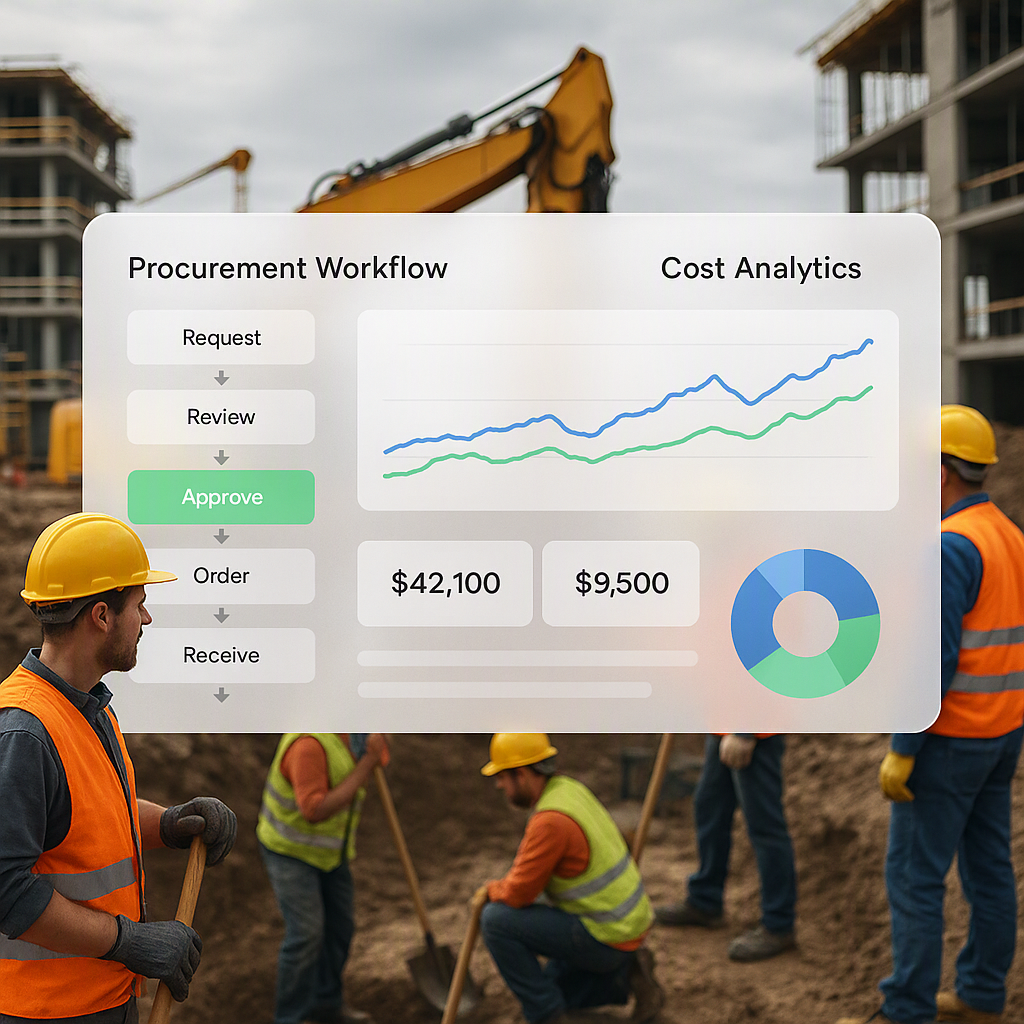
2. Use a Structured Procurement Workflow
Here’s where things often go sideways: material procurement. Subcontractors may underbid to win the job, then hit you with change orders because they didn’t account for material price changes. It’s predictable, but also preventable.
Actionable Steps:
-
Centralize Material Requisitions (MRs): Require all subcontractors to submit formal MRs for materials they need. Avoid verbal requests or informal messaging platforms like WhatsApp.
-
Implement RFQs (Requests for Quotations): For each MR, seek at least three vendor quotes to ensure competitive pricing. Document these quotes to create a paper trail. According to the Chartered Institute of Procurement & Supply (CIPS), competitive RFQs can reduce material costs by up to 10%.
-
Use Purchase Orders (POs): Finalize material purchases with POs that clearly state pricing, delivery timelines, and payment terms. Ensure the PO matches the budgeted line items in the BOQ.
-
Leverage Digital Tools: Tools like ProjectsNext can automate this workflow, saving time and reducing errors. Digital systems can also provide real-time updates on material costs and delivery schedules.
Why It Matters:
A structured procurement workflow ensures transparency and accountability. It eliminates the chaos of informal communication and prevents unexpected material costs from derailing your budget. The Construction Management Association of America (CMAA) recommends digital procurement tools as a standard for projects exceeding $5 million.
3. Track Subcontractor Progress in Real-Time
This one’s non-negotiable. If you’re not tracking progress against the BOQ in real-time, you’re flying blind. Subcontractor billing often ties to work progress, so if you don’t catch discrepancies early, they compound.
Actionable Steps:
-
Adopt Digital Progress Tracking: Use software to monitor daily or weekly progress. Tools like ProjectsNext allow you to link progress measurements directly to subcontractor payments.
-
Standardize Work Measurements: Define a consistent method for measuring work progress. For example, if you’re tracking excavation, use cubic meters completed rather than rough estimates.
-
Conduct Regular Site Inspections: Have site engineers physically verify progress. Cross-check their reports with subcontractor claims to catch discrepancies early. In large-scale projects, inspections conducted weekly can reduce disputes by up to 25%, as reported by the American Society of Civil Engineers (ASCE).
-
Involve Stakeholders: Share progress data with your clients and subcontractors. Transparency builds trust and ensures everyone is on the same page.
Why It Matters:
Tracking progress in real-time helps you catch overbilling or underperformance early. It also strengthens your position during payment disputes, as you’ll have objective data to back your claims. This methodology aligns with the Earned Value Management (EVM) system, which is widely recognized as a gold standard for tracking project performance.
4. Enforce Approval Workflows for Change Orders
Change orders are a reality in construction. But that doesn’t mean they should be a free-for-all. Without a proper approval process, you’re inviting chaos.
Actionable Steps:
-
Create a Multi-Level Approval Chain: At a minimum, require approvals from three roles: the site engineer (to verify necessity), the project manager (to align with scope), and the finance controller (to check budget impact).
-
Set Thresholds for Approval: For minor changes (e.g., under ₹50,000), a simpler approval process may suffice. For larger changes, involve senior management. According to PwC’s 2021 report on construction project governance, approval thresholds can reduce approval delays by up to 30%.
-
Document Everything: Use standardized forms for change order requests. Include details like the reason for the change, cost impact, and timeline adjustments.
-
Automate Where Possible: Platforms like ProjectsNext allow you to set up role-based access and automated approval workflows. This reduces delays and ensures accountability.
Why It Matters:
A structured change order process prevents unnecessary costs and scope creep. It also ensures changes are properly documented, which is crucial for client transparency.
5. Audit Subcontractor Invoices Regularly
Subcontractor invoices are often the final frontier for cost overruns. If you’re not auditing them closely, you’re leaving money on the table.
Actionable Steps:
-
Match Invoices to BOQs: Compare every invoice against the original BOQ and approved work measurements. Look for discrepancies in quantities, rates, or terms. This practice aligns with ISO 9001 standards for quality management.
-
Verify Materials Used: Cross-check material invoices with delivery notes and site records to ensure you’re not billed for materials that were never delivered.
-
Spot Check High-Value Items: Focus extra attention on large-ticket items like concrete or steel. These often account for the biggest discrepancies.
-
Use Automation: Many ERP systems, including ProjectsNext, can automate invoice matching and flag inconsistencies for review. This saves time and reduces errors.
Why It Matters:
Auditing invoices isn’t just about catching mistakes—it’s about protecting your margins. Even small discrepancies can add up to significant losses over the course of a project. In 2023, KPMG reported that rigorous invoice audits can save up to 3% of a project’s total budget.
Common Mistakes to Avoid
- Skipping Scope Reviews: If you’re too busy to review scopes, you’re too busy to make money. Prioritize it.
- Relying Solely on Trust: Trust is good, but documentation is better. Get everything in writing.
- Ignoring Small Overruns: A ₹50,000 overrun might seem minor, but over multiple projects, it adds up fast.
- Delaying Invoice Reviews: The longer you wait to audit invoices, the harder it is to resolve disputes. Don’t procrastinate.
FAQ
Q: How do I start tracking subcontractor progress? A: Begin with a simple system, like a shared spreadsheet, before investing in software. Make sure it’s updated daily to avoid discrepancies.
Q: What if my subcontractors resist structured workflows? A: Be upfront. Explain how the system benefits them by reducing disputes and ensuring faster payments. Once they see the advantages, most will cooperate.
Q: Are change orders always bad? A: No, they’re often necessary. The key is to manage them with a proper approval process and clear documentation.
Q: Can I prevent overruns without software? A: Yes, but it’s harder. Manual processes can work, but they’re prone to errors. Software makes tracking and auditing more efficient.
Q: What’s the best way to deal with underperforming subcontractors? A: Address issues immediately. Use progress tracking data to have objective conversations and, if necessary, adjust their scope or replace them.
Decision Framework: Software vs. Manual Processes
| Aspect | Manual Processes | Digital Tools (e.g., ProjectsNext) |
|---|---|---|
| Speed | Slow and prone to delays | Fast, with real-time updates |
| Accuracy | Prone to human error | Automated, reduces errors significantly |
| Cost | Low upfront cost, high long-term cost | Higher upfront cost, cost-saving long term |
| Scalability | Limited | Highly scalable |
| Transparency | Medium | High |
If you’re tired of fighting subcontractor cost overruns, ProjectsNext can help. It offers tools like structured procurement workflows, real-time progress tracking, and automated invoice audits. Get started with ProjectsNext →
Learn more at JobNext.ai - Construction ERP