
5 Ways to Prevent Subcontractor Cost Overruns (Without Losing Sleep)
Subcontractor cost overruns aren’t just a headache—they’re a profit killer. One blowout and your project margins can vanish faster than you can say "change order." The worst part? These overruns are almost always preventable with the right systems in place.
Here’s the good news: you don’t have to leave it to chance. With some upfront planning and the right processes, you can keep subcontractor costs under control. Let’s dive into five practical ways to make it happen.
1. Start with Clear and Detailed Work Orders
A vague work order is a ticking time bomb. If you’re sending subcontractors into the field with incomplete or unclear scopes, you’re just asking for trouble. Why? Because they’ll base their pricing on assumptions—and those assumptions might not match yours. The result? Disagreements, unexpected costs, and delays.
Why Detailed Work Orders Matter
Work orders are the foundation of any subcontractor agreement. When they lack precision, they open the door to miscommunication, scope creep, and disputed costs. For example:
- If you hire an MEP subcontractor to "install lighting" without specifying the type, quantity, or location of fixtures, you’re leaving room for them to charge extra for tasks they think fall outside of the original agreement.
- Without milestones or timelines in your work order, there’s no accountability for progress or payments, leading to potential delays and unplanned expenses.
A 2020 survey conducted by Dodge Data & Analytics found that 35% of construction professionals experienced project delays or cost increases due to unclear scopes of work. This highlights the critical importance of precision in work orders.
How to Create Effective Work Orders
Instead, create detailed work orders that include:
- Clearly defined scopes: Instead of vague phrases like "Install lighting," specify "Install 20 LED light fixtures, model XYZ, including wiring and mounting, in rooms A and B."
- Measurement-based milestones: Break down tasks into measurable deliverables, such as "Complete wiring of 500 meters by Week 2."
- Payment schedules tied to progress: Link payments to verified milestones to ensure you’re only paying for work completed.
Tools to Simplify Work Orders
Digital tools like ProjectsNext allow you to generate structured work orders with all these details baked in. Integrating them with your BOQ (Bill of Quantities) ensures that your subcontractors have a clear understanding of the scope, minimizing disputes. Check out this guide on subcontractor management to learn more about avoiding disputes and delays.
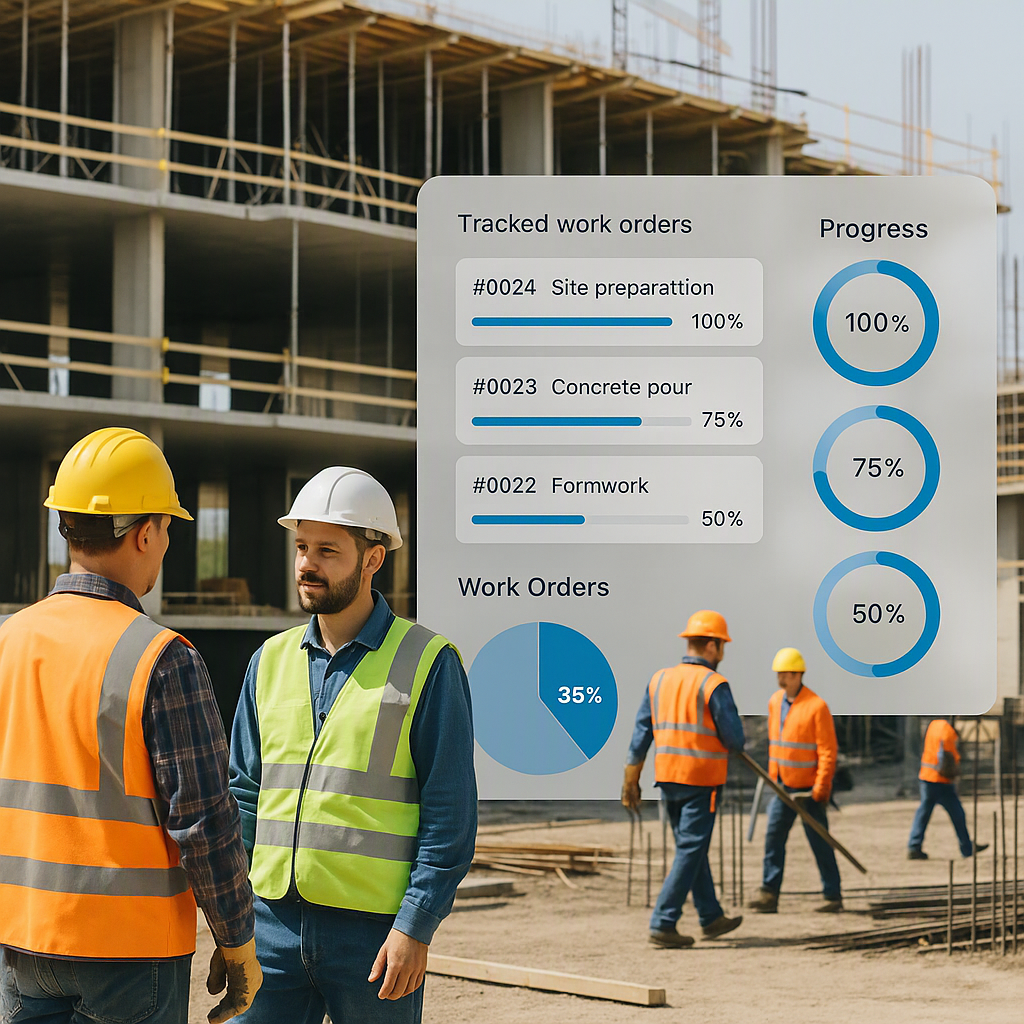
2. Track Progress with Measurable Milestones
Here’s a hard truth: if you’re tracking progress based on "gut feelings" or verbal updates, you’re flying blind. Subcontractors might overstate progress to get paid faster, leaving you to foot the bill for incomplete or delayed work.
Why Milestone-Based Tracking Works
Milestone-based tracking creates accountability. Instead of relying on subjective progress updates, you have concrete deliverables against which to measure performance. This method ensures that payments are made only when specific tasks are completed to your satisfaction.
According to the Construction Industry Institute (CII), projects that use milestone-based tracking systems reduce schedule overruns by up to 15%. This statistic underscores the value of measurable deliverables.
Steps to Implement Milestone Tracking
- Define measurable deliverables: Break down your project into key stages that can be easily tracked. For example, instead of "finish electrical work," set a milestone like "install conduit in 10 rooms by Week 3."
- Assign responsibility: Ensure that site engineers or supervisors are responsible for verifying progress on-site. This prevents subcontractors from overstating their progress.
- Tie payments to milestones: Ensure subcontractors are paid only after achieving verified deliverables. For example, "40% payment upon completion of flooring in Area A."
Tools for Milestone Tracking
Platforms like ProjectsNext offer built-in milestone tracking, allowing you to monitor progress in real time. This transparency ensures you know exactly where your project stands and can take corrective action before it’s too late.
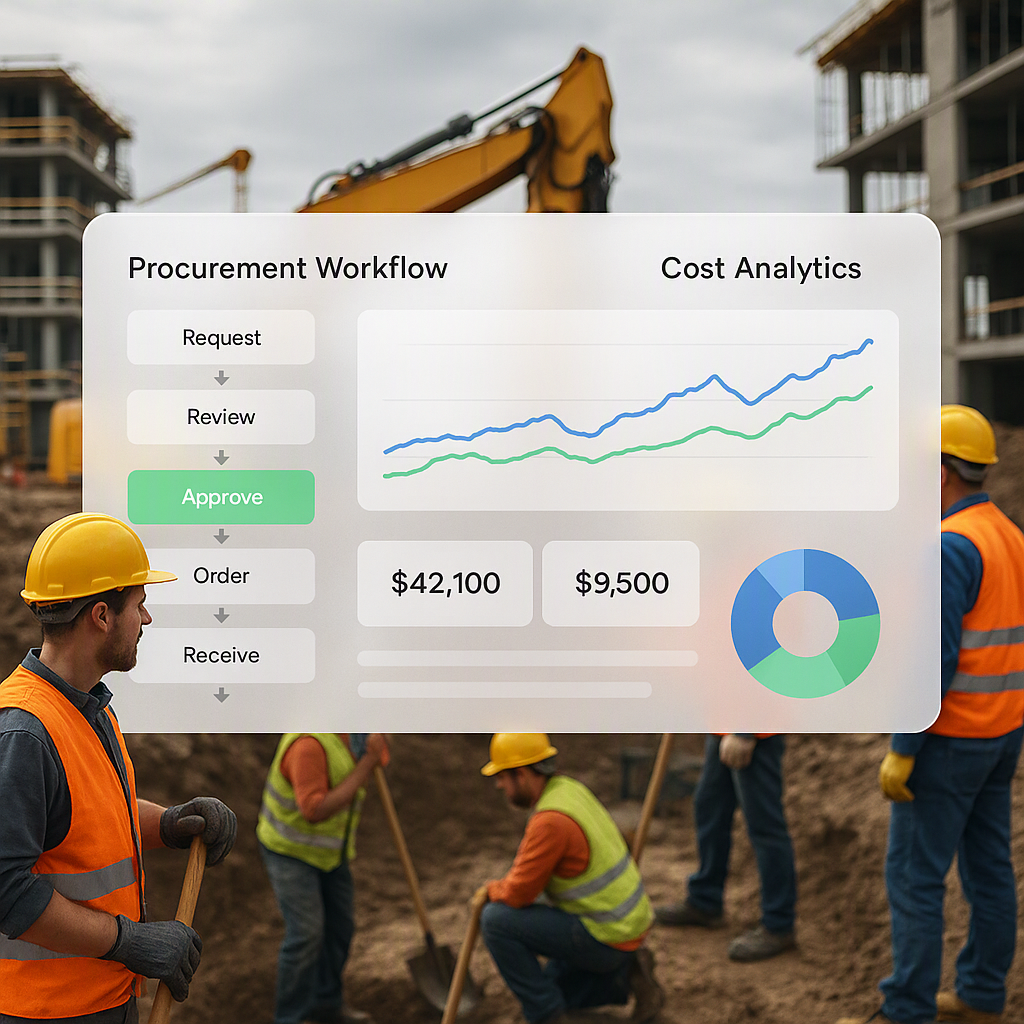
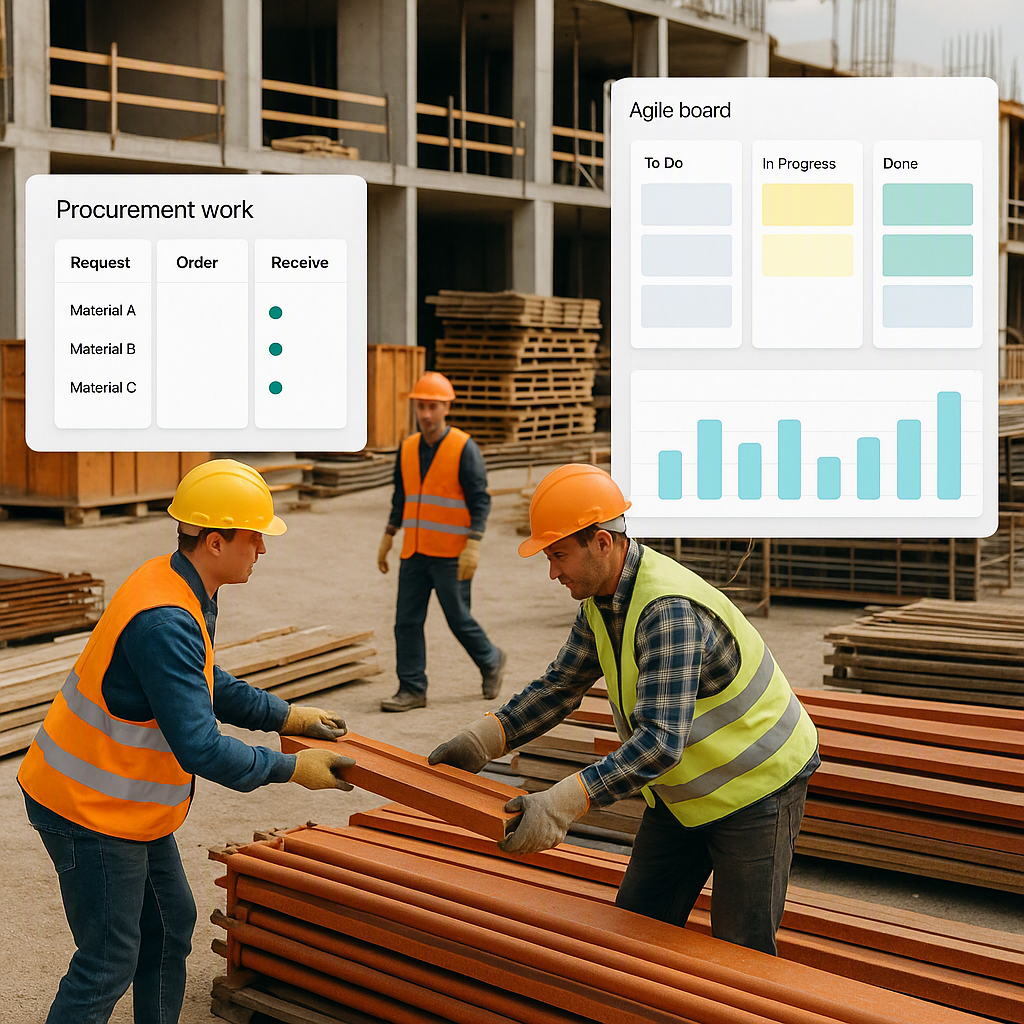
3. Standardize Your Procurement Workflow
A chaotic procurement process can lead to overpriced materials, delays, and miscommunications with subcontractors. Ever ordered materials only to realize they weren’t needed yet? Or worse, didn’t arrive when they should have?
Why Procurement Standardization Matters
An unstructured approach to procurement can derail your entire project. For instance:
- Late material deliveries can cause subcontractors to miss deadlines, leading to cost overruns.
- Over-ordering materials due to poor planning can eat into your budget.
- Disconnected communication between site teams and purchasers can result in ordering the wrong items.
McKinsey & Company reported in a 2016 study that construction projects consistently lose between 20% and 25% of their productivity due to poor procurement practices. This inefficiency directly impacts cost control.
Steps to Standardize Procurement
- Implement a Material Requisition (MR) process: Ensure the site team submits detailed requests specifying the type, quantity, and urgency of materials needed.
- Use a Request for Quotation (RFQ) system: Invite multiple suppliers to submit bids, fostering competition and ensuring you get the best value.
- Issue formal Purchase Orders (POs): Once you’ve selected a supplier, issue a clear PO that includes pricing, delivery timelines, and terms.
Tools to Streamline Procurement
Using software like ProjectsNext can tie these steps together, providing you with a seamless procurement workflow. As highlighted in this blog post, standardizing procurement can significantly reduce costs and ensure materials arrive on time.
4. Use Real-Time Cost Tracking
How many times have you realized you’re over budget... after it’s too late to fix it? Without real-time visibility, you’re always playing catch-up.
Why Real-Time Tracking is Crucial
Real-time cost tracking gives you the ability to identify and address budget deviations as they occur. For subcontractors, this means actively monitoring:
- Labor costs: Are subcontractors working more hours than planned?
- Material usage: Are materials being wasted or misallocated?
- Equipment hours: Are you paying for idle equipment?
According to a 2019 report from the Associated General Contractors of America (AGC), real-time cost tracking can reduce budget overruns by up to 30%, thanks to its ability to flag overspending early.
Actionable Steps for Real-Time Tracking
- Consolidate data from all sites: Use a platform that aggregates cost data from every site in real time.
- Set budget alerts: Establish thresholds for labor, material, and equipment costs, and set up alerts to notify you of overruns.
- Audit cost reports weekly: Regularly review cost reports to identify trends and address issues before they escalate.
Recommended Tools
Platforms like ProjectsNext offer dashboards that consolidate cost data across all your sites. This ensures you’re never in the dark about where your money is going.
5. Control Change Orders
Change orders are the silent assassins of your budget. Sure, some changes are unavoidable—clients change their minds, or site conditions force adjustments. But many are preventable with better planning.
How to Manage Change Orders Effectively
- Lock down scopes before work starts: Don’t begin until everyone agrees on what’s included (and what’s not).
- Document every change: Use a formal process to approve and track changes. No verbal agreements.
- Revisit your BOQ: Any change should tie back to the original budget and scope.
In a 2022 Construction Management Association of America (CMAA) study, over 40% of budget overruns were attributed to poorly managed change orders. This reinforces the need for a structured process.
Tools for Change Order Management
In ProjectsNext, change orders can be tied directly to the original BOQ and work order. This ensures that nothing gets lost and allows you to manage client expectations effectively.
Decision Framework: Preventing Subcontractor Cost Overruns
| Problem | Solution | Recommended Tool |
|---|---|---|
| Vague work orders | Create detailed, measurable scopes | ProjectsNext |
| Lack of progress visibility | Use milestone-based tracking | ProjectsNext |
| Chaotic procurement processes | Standardize procurement workflow | ProjectsNext |
| Lack of real-time cost tracking | Implement real-time cost tracking | ProjectsNext |
| Uncontrolled change orders | Use formal change order processes | ProjectsNext |
If subcontractor cost overruns are keeping you up at night, ProjectsNext can help. Our platform is designed to streamline workflows, track costs in real-time, and give you the control you need to protect your margins. Get started free →
Learn more at JobNext.ai - Construction ERP